Automated Sales Follow-Ups: How Much Is Too Much?
You've got automation tooling that could send a follow-up 90 seconds after every meeting. The question isn't whether you can. It's where the line is between "efficient" and noise that kills the deal. The answer isn't about volume — it's about where human judgment lives in the process. Most reps get this backwards: they debate how many touches to send when the real question is who's making the call to send each one.
The Real Choice Here Isn't Automation vs. Manual
Every conversation about automated sales follow-up emails eventually collapses into a false binary: automate everything or write everything by hand. Neither framing is useful.
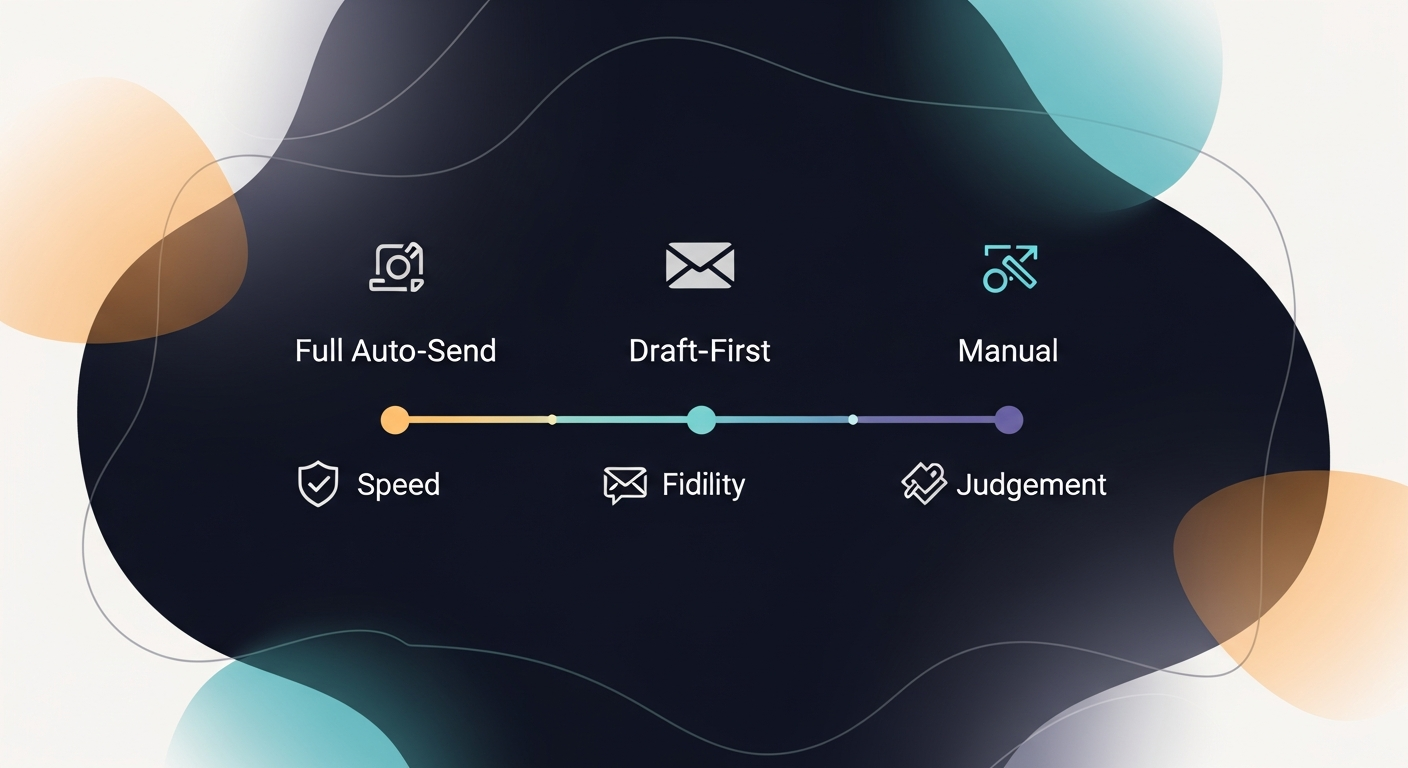
The actual spectrum has three positions:
- Full auto-send — tooling triggers and sends the email, no human review. Fast. Scalable. Dangerous in the wrong context.
- Manual every time — rep writes the follow-up from scratch after every call. High fidelity. Serious time tax.
- Draft-first automation — AI drafts based on the transcript, rep reviews and sends. Speed of automation, judgment of a human.
Most advice you'll find online argues for one of the first two. The third is where most of the real leverage lives — and it's the approach that changes the actual question from "how much automation?" to "where does the human stay in the loop?"
The Criteria That Actually Matter
Before scoring any approach, you need to know what you're scoring against. Four criteria actually move deals:
- Speed-to-send. Research from MIT and InsideSales consistently shows response rates drop sharply after the first hour. The rep who sends within 30 minutes of a meeting is playing a different game than the one who sends the next morning.
- Voice fidelity. Does the email sound like the rep, or does it sound like a template? Prospects who just spent 45 minutes on a call with a human will notice a tonal whiplash immediately.
- Deal-stage sensitivity. A follow-up after a first discovery call is a different instrument than a follow-up after a late-stage negotiation. Auto-send doesn't know the difference. The rep does.
- Cognitive load on the rep. Writing a follow-up from scratch after back-to-back calls isn't just slow — it's a real cognitive tax that compounds across a week. Thirty minutes per call, five calls a day, adds up fast. Reps cut corners or skip entirely, not because they don't care but because the load is unsustainable.
Full Auto-Send: Fast, Cheap, and Often Deaf
Full automation scores well on exactly one criterion: speed. The email goes out immediately, no delays, no backlog. For cold outbound sequences — bulk prospecting where personalization is minimal — that speed has genuine value.
Everywhere else, the cracks show.
Voice fidelity is the first casualty. Auto-generated emails trained on generic templates drift toward the same 12 phrases everyone's already filtering out. A prospect who just had a specific conversation about their migration timeline doesn't want a follow-up that reads like it was written for a different company's different problem.
Deal-stage sensitivity is the second. Auto-send can't read the room. It doesn't know that the last 10 minutes of the call were tense, that the champion is wavering, or that this follow-up needs a softer touch than usual. It sends the same email regardless. In early-stage deals that might be fine. In late-stage deals it can actively damage trust.
A 2023 Litmus study found that 45% of recipients mark email as spam based on the sender's name or subject line alone — a signal that emails that feel impersonal get filtered before they're read. Auto-send amplifies that risk every time it fires without context.
Manual Every Time: High Fidelity, Zero Scale
All-manual is the status quo for most of the people reading this. You get off a call, open a blank email, and reconstruct what happened well enough to write something coherent. The follow-up reflects your voice, your read of the deal, your judgment about what matters.
That's genuinely valuable. Authenticity shows. A well-crafted post-meeting email written by a human who was actually in the room is still one of the best tools in sales.
The problem is scale. Thirty-plus minutes per follow-up, compounded across a full week of calls, means manual becomes a bottleneck. Reps start procrastinating. Follow-ups go out the next morning instead of the same evening. Some don't go out at all.
The speed criterion kills all-manual. Not because the emails are bad — they're often the best emails in the process — but because great emails sent 18 hours late lose to decent emails sent in 30 minutes. The cognitive load also degrades quality over time. The fifth follow-up a rep writes on a Thursday afternoon isn't as good as the first one they wrote Monday morning.
Manual wins on voice fidelity and deal-stage sensitivity. It loses on speed and scale. For reps running five-plus calls a day, that tradeoff eventually breaks.
Draft-First Automation: The Approach That Earns Both
Draft-first is the middle path, and it scores better across all four criteria than either extreme.
- Speed: The draft is ready in under a minute. The rep reviews, edits, sends. Total time: 5-8 minutes instead of 30.
- Voice fidelity: The draft is grounded in the actual transcript from that specific call, not a generic template. With tools that learn from your edits over time — voice-fingerprint being the right label for this — drafts get closer to your natural register the more you use them.
- Deal-stage sensitivity: The human is still in the loop. The rep reads the draft, catches the tone problems, adds the line that only makes sense given what happened in the last five minutes of the call. The automation handles the scaffolding; the rep handles the judgment.
- Cognitive load: Editing a solid draft is a fraction of the cognitive work of writing from scratch. Reps can close the loop on five calls in the time it used to take to write two.
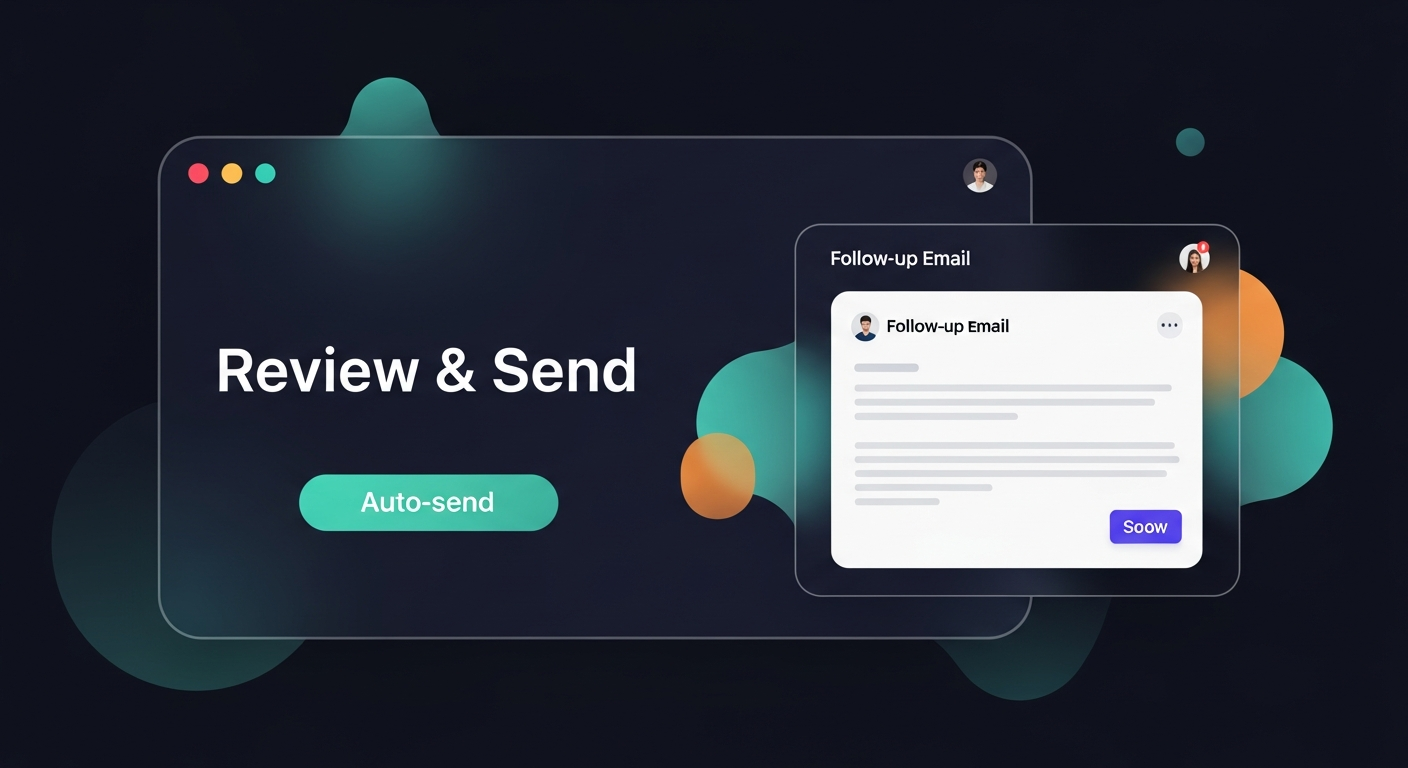
This is the category ReplySequence sits in — a BYOT post-meeting follow-up layer that takes transcripts from Fireflies, Otter, Fathom, or any other recorder the rep already uses and turns them into a draft for review, not an auto-send. The draft is out in 60 seconds; the rep decides what goes.
Which Approach Fits Your Situation
There's no universal answer. Here's how to match the approach to the context:
Solo AE running your own pipeline:
Draft-first wins. You don't have the bandwidth to write everything manually, and you can't afford the relationship risk of auto-sending generic emails into deals you care about. Draft-first gives you speed without giving up control.
SDR team at volume:
Draft-first with voice-fingerprint. Consistency matters at scale, but template drift is a real problem when 10 reps are sending off the same follow-up skeleton. A system that learns from each rep's edits keeps the voice from homogenizing.
Enterprise with complex multi-thread deals:
Manual wins on the final touches — the email after a hard negotiation session, the note to a new stakeholder who just entered the deal. But draft-first handles the standard recap emails efficiently. Use both. Don't write every recap from scratch; do write every sensitive outreach by hand.
Pure volume cold prospecting sequences:
Full auto has a narrow legitimate case here — but only for cold outreach, never for post-meeting follow-ups. Once you've had a real conversation with a real person, auto-send without review is the wrong tool. The meeting earned a human-reviewed response.
—-
The question was never really "how much automation is too much." It's "where does the human judgment stay in the loop?" Pull it out entirely and you get speed without trust. Keep it everywhere and you get trust without scale. Draft-first is the one approach that doesn't force you to give up either.
How ReplySequence handles this
ReplySequence takes any meeting transcript — paste it in from Zoom, Teams, Meet, WebEx, Fireflies, Granola, or wherever — and drafts a context-rich follow-up email in about 8 seconds. You review it, make any edits, and approve. Deal intelligence builds automatically.