Follow-Up Emails After Sales Calls That Close
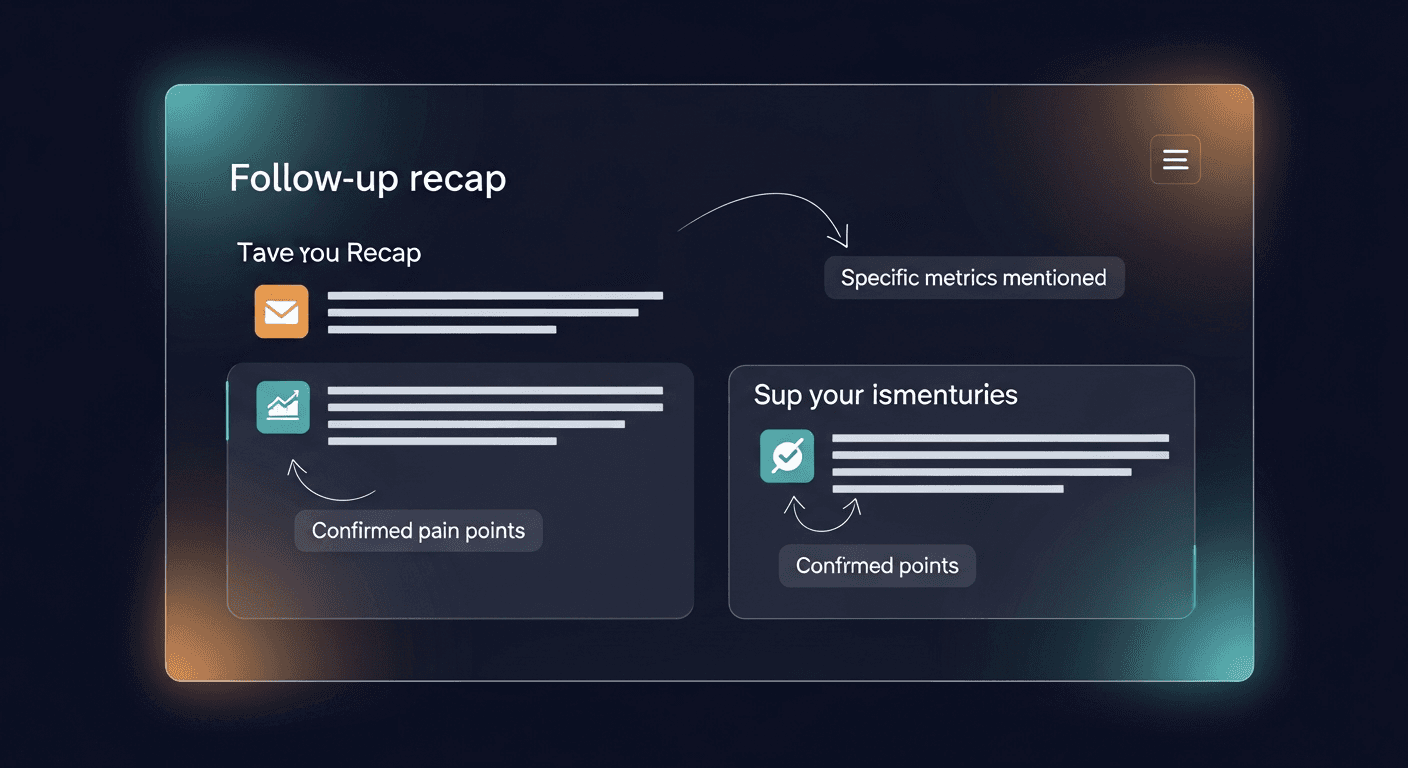
A follow-up email after a sales call should land within an hour when possible, reference specific details from the conversation (not templated placeholders), and end with one clear next step. That's the advice. What's changed in 2026 is that the transcript from your call (whether it came out of Fireflies, Otter, Granola, Fathom, Zoom, Teams, or Meet) is the best possible input for writing that email. Every pain point, number, objection, and commitment is already captured verbatim. Writing from memory or scribbled notes throws most of that away.
This post walks through what makes a follow-up email convert, what kills one, and the bring-your-own-transcript workflow that lets a solo seller hit same-hour follow-up without spending 15 minutes per call. The goal isn't more automation for its own sake: it's closing the gap between "transcript exists" and "follow-up sent" so deals don't die in that window.
- Generic templates that could apply to any prospect at any company
- Seller-focused language that emphasizes what you want instead of what they need
- Missing context that forces prospects to re-remember your entire conversation
- Vague next steps that create decision paralysis instead of momentum
- Delayed timing that arrives too late to capitalize on the conversation's energy
When a prospect ends a call with you, they're juggling 15 other priorities. Your sales follow-up email needs to cut through that noise by making their decision ridiculously easy.
The Anatomy of High-Converting Follow-Up Emails After Sales Calls
Subject Line: Reference Something Specific
Your subject line should immediately signal "this is personalized" rather than "this is automated." Skip the generic "Great connecting today" and reference something specific from your conversation:
- "Re: Your Q2 pipeline acceleration goal"
- "Next steps for the customer success team transition"
- "[Company Name] implementation timeline, April 15 start"
Subject lines that reference concrete details from the call see 41% higher open rates than generic alternatives. This simple change tells your prospect this email contains information relevant to them specifically.
Opening: Confirm Shared Understanding
The first paragraph of your post-meeting email should accomplish one critical task: confirm that you heard them correctly. This builds trust and gives prospects a chance to correct any misunderstandings before they derail your deal.
Instead of: "Thanks for taking the time to chat today. I really enjoyed learning about your business."
Write: "Based on our call, you're looking to reduce your sales team's admin time by at least 6 hours per week so your reps can focus on high-value activities. You mentioned that manual follow-up tasks are currently eating up 30% of their day, and your VP of Sales wants to see improvement by Q3."
This approach proves you were listening and creates a foundation of accuracy. If you got something wrong, the prospect will correct you, which is valuable information. If you got it right, you've built credibility.
Body: Recap with Structure
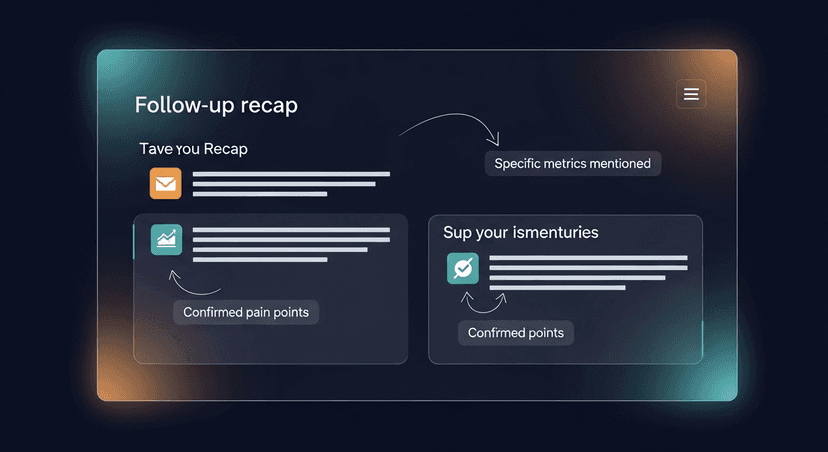
Organize your call recap email using clear sections that make it scannable. Busy prospects won't read walls of text, but they will scan well-structured content. Use this framework:
What We Discussed:
- Current challenge: [specific problem they described]
- Business impact: [quantified consequence they mentioned]
- Timeline: [their deadline or urgency]
- Decision-makers involved: [who needs to approve this]
What You Shared:
- Goal: [their desired outcome in their words]
- Success metrics: [how they'll measure improvement]
- Concerns: [objections or questions they raised]
What We Agreed On:
- Next step: [specific action with owner and deadline]
- Resources to review: [any materials you promised to send]
- Follow-up date: [when you'll reconnect]
This structure transforms your sales follow-up into a mutual agreement document rather than a one-sided pitch. It positions both parties as collaborators working toward the same goal.
Value Add: Include Something Beyond the Recap
The difference between a good follow-up and a great one is additional value. Don't just summarize, enhance the conversation with something new:
- A relevant case study from a similar company that achieved results
- An industry benchmark that provides context for their challenges
- A one-page comparison addressing a specific concern they raised
- An introduction to a customer who solved the same problem
- A custom video walking through how the solution would work for their use case
One enterprise software company increased their follow-up response rates by 34% simply by including a 2-minute custom Loom video in every post-meeting email. The video showed their solution configured for the prospect's specific use case, making the value immediately tangible.
Next Steps: Remove All Ambiguity
Vague next steps kill momentum. "Let's circle back next week" creates zero accountability. Instead, your call recap email should end with crystal-clear actions:
Weak: "Let me know if you have any questions, and we can set up another call to discuss further."
Strong: "Here's what we agreed to:
- You: Share the proposal with Sarah (CFO) by Friday, March 28
- You: Send over your current workflow documentation
- Me: Prepare custom ROI analysis based on your team size (will send by Thursday)
- Us: Regroup on Tuesday, April 1 at 2pm PT to address Sarah's questions
I've sent a calendar invite for our April 1 call. If that timing doesn't work, here's my calendar link to grab a time that does: [link]"
Notice how this assigns specific owners and deadlines to each action. It also proactively handles scheduling to reduce friction.
Timing: When to Send Follow-Up Emails After Sales Calls
Timing dramatically impacts whether your sales follow-up email gets read and acted upon. Research from sales engagement platforms shows:
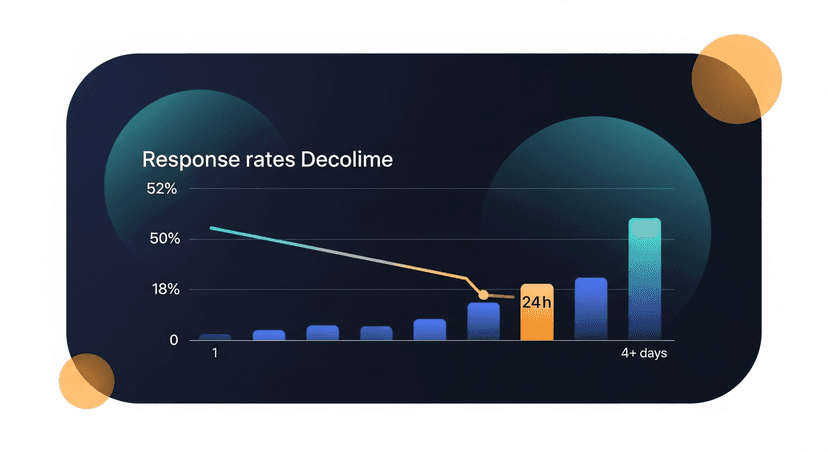
- Within 1 hour: 52% response rate (highest, but often impractical at scale)
- Within 24 hours: 47% response rate (the sweet spot)
- 2-3 days later: 31% response rate
- 4+ days later: 18% response rate
The data is clear: send your post-meeting email within 24 hours maximum. The longer you wait, the more your conversation fades from your prospect's mind and the more competing priorities crowd out your deal.
For important calls with senior decision-makers, aim for same-day follow-up. For discovery calls earlier in the funnel, next-business-day is acceptable. Whatever you do, don't let more than 48 hours pass.
> ReplySequence does this automatically, paste a transcript and see a draft at replysequence.com/demo.
Template: High-Converting Sales Follow-Up Email
Here's a proven template you can adapt for your follow-up emails after sales calls:
—-
Subject: Next steps for [specific outcome they want]
Body:
Hi [Name],
Thanks for the detailed conversation today. Based on what you shared, [restate their primary goal and main challenge in their words].
Here's what I heard:
Current situation:
- [Specific pain point #1 with quantified impact]
- [Specific pain point #2 they mentioned]
- [Timeline or urgency factor]
Your goals:
- [Primary outcome they want to achieve]
- [How they'll measure success]
- [Deadline or timeframe]
Concerns to address:
- [Objection or question #1]
- [Objection or question #2]
Resources I mentioned:
- [Attachment/link]: Case study showing how [similar company] achieved [relevant result]
- [Attachment/link]: ROI calculator for your team size
Agreed next steps:
- Me: Send custom implementation plan by [specific date]
- You: Review with [stakeholder name] and gather questions
- Us: Regroup on [specific date/time] to finalize details
I've sent a calendar invite for [date/time]. If you need to adjust, grab any time that works here: [calendar link]
Looking forward to helping you [specific outcome],
[Your name]
—-
This template works because it's structured around the prospect's needs, confirms mutual understanding, and removes friction from next steps.
Common Mistakes That Tank Follow-Up Email Response Rates
Mistake #1: Waiting Too Long
Every hour you delay reduces the chance your prospect remembers key details. Strike while the conversation is fresh, both in your mind and theirs.
Mistake #2: Making It About You
Your post-meeting email should focus on their challenges, their goals, and their next steps. Avoid language like "I wanted to follow up" or "I'm excited to show you." Instead, use "Based on what you shared" and "Here's what we agreed."
Mistake #3: Sending Without Proofreading
A typo in your prospect's company name or a incorrect detail from the call destroys the credibility you built. Always review for accuracy before sending.
Mistake #4: Forgetting Mobile Optimization
67% of professionals check email primarily on mobile devices. If your call recap email requires horizontal scrolling or has massive paragraphs, it won't get read. Use short paragraphs (2-3 sentences max), bullet points, and clear section headers.
Mistake #5: No Clear Call-to-Action
Every sales follow-up email should end with one specific, low-friction action you want the prospect to take. Not three options, not "let me know what you think": one clear next step.
Real-World Example: Before and After
Before (Generic):
Subject: Following up
Hi John,
Great speaking with you today! I think our solution would be a great fit for your team. As discussed, we can help streamline your processes and save time.
Let me know if you'd like to set up another call to discuss pricing and next steps. I'm happy to answer any questions.
Best,
Sarah
After (Specific):
Subject: Reducing your team's 8-hour weekly admin burden
Hi John,
Thanks for walking me through how your sales team currently handles post-call follow-up. I heard that your 12 reps are each spending 8+ hours per week on manual email tasks, which is costing you roughly 96 hours of selling time weekly.
You mentioned you need to show ROI improvement by Q3 to secure budget for the full team rollout.
What we agreed:
- I'll send you a custom analysis showing time savings for a 12-person team (by tomorrow, March 25)
- You'll review with Lisa (VP Sales) and send her questions
- We'll regroup Thursday, March 27 at 10am PT to discuss implementation
Attached is the case study I mentioned, how a similar-sized SaaS sales team reduced admin time by 73% in 6 weeks.
Calendar invite sent for Thursday. If you need to reschedule: [calendar link]
, Sarah
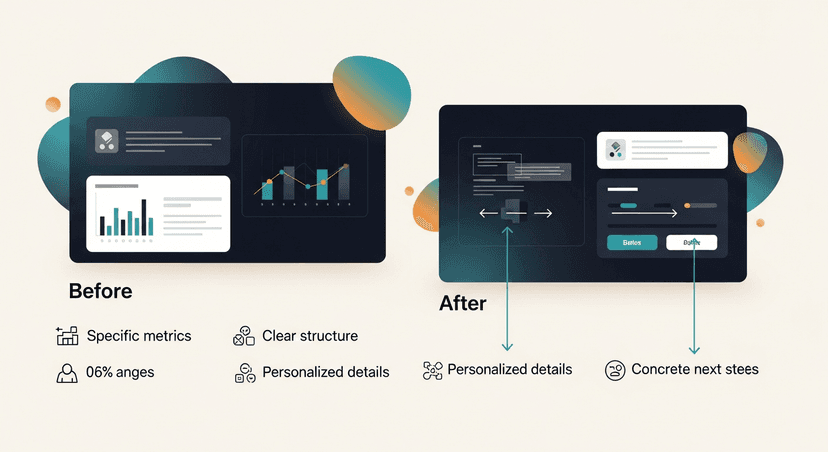
The second version references specific numbers from the conversation, confirms the decision-making process, includes promised resources, and creates clear accountability. It transforms a forgettable generic email into a valuable reference document.
How Technology Can Scale Personalized Follow-Ups
Writing detailed, personalized follow-up emails after sales calls is time-consuming. A rep who takes 10-15 minutes per email and has 5 calls per day spends over 4 hours weekly just on follow-ups.
This is where tools like ReplySequence become game-changing. By automatically capturing call details and generating personalized post-meeting emails based on what was actually discussed, sales teams can maintain the quality of custom follow-ups without the manual effort.
The best sales follow-up systems:
- Capture conversation details automatically from call recordings or notes
- Generate personalized recaps that reference specific points discussed
- Prompt for value-adds like relevant case studies or resources
- Enforce timing best practices by sending within optimal windows
- Track engagement so you know when prospects open and click
Teams using ReplySequence report sending follow-ups 3-4x faster while maintaining response rates 40% higher than their previous manual process. The technology handles structure and speed; the rep adds strategic value and relationship nuance.
Measuring Follow-Up Email Effectiveness
You can't improve what you don't measure. Track these metrics for your sales follow-up emails:
Open rate: Industry benchmark is 40-50% for post-meeting emails. Below 35% suggests subject line or timing issues.
Response rate: Aim for 30-40% response within 48 hours. Lower rates indicate your CTAs aren't clear or your value proposition isn't compelling.
Time to response: Faster responses correlate with deal velocity. Track whether prospects reply within hours, days, or not at all.
Meeting conversion: What percentage of your follow-up emails lead to the next scheduled meeting? This shows whether your next steps are actionable.
Deal influence: Tag deals where strong follow-ups played a role versus deals that progressed despite weak follow-ups. This reveals the real business impact.
Run A/B tests on subject lines, email length, and CTA formats. Even small improvements compound when you're sending dozens of follow-up emails weekly.
Advanced Strategies for Complex Sales
Multi-Stakeholder Follow-Ups
When multiple decision-makers attended your call, send a unified recap but customize the opening paragraph for each stakeholder:
"Hi [Name], thanks for joining today's call. I know your primary concern is [their specific area], here's how we're addressing that..."
Then include the full recap that's identical across all stakeholders. This ensures everyone has the same information while making each person feel heard.
Video Follow-Ups
For high-value opportunities, record a 90-second video recap. Walk through your screen showing how their specific use case would work, reference details from the call, and outline next steps. Embed it in your email.
Video follow-ups see 2.3x higher engagement than text-only emails because they're more personal and harder to ignore.
The "Did I Get This Right?" Approach
For complex technical sales, frame your post-meeting email as a confirmation request:
"I want to make sure I captured your requirements accurately. Could you review this summary and flag anything I missed or misunderstood?"
This collaborative framing increases response rates because you're asking for help rather than pushing a sale. It also surfaces misalignments early.
Start Improving Your Sales Follow-Up Today
The follow-up emails you send after sales calls are often more important than the calls themselves. They create written records, build credibility, and drive momentum toward closed deals. Yet most reps treat them as administrative afterthoughts rather than strategic sales tools.
Implement these strategies starting with your very next call:
Send within 24 hours to capitalize on conversation momentum
Structure for scannability with clear sections and bullet points
Confirm understanding by recapping their goals in their words
Add unique value beyond just summarizing what was said
Create clear next steps with specific owners and deadlines
Measure and improve based on open rates, responses, and deal influence
If you're looking to scale this process without sacrificing personalization, ReplySequence helps sales teams automatically generate detailed, accurate follow-up emails after every call. Instead of spending 15 minutes writing each recap, you'll spend 2 minutes reviewing and customizing AI-generated drafts that already include all the key details. Learn more at replysequence.com and transform your post-call follow-up from a time sink into a competitive advantage.
How ReplySequence handles this
ReplySequence takes any meeting transcript, paste it in from Zoom, Teams, Meet, WebEx, Fireflies, Granola, or wherever, and drafts a context-rich follow-up email in about 8 seconds. You review it, make any edits, and approve. Deal intelligence builds automatically.