The 10-Minute Rule for Closing Deals
# The 10-Minute Rule for Closing Deals
There's a window after every sales call where your prospect is most likely to say yes. It's smaller than you think, and most reps miss it completely.
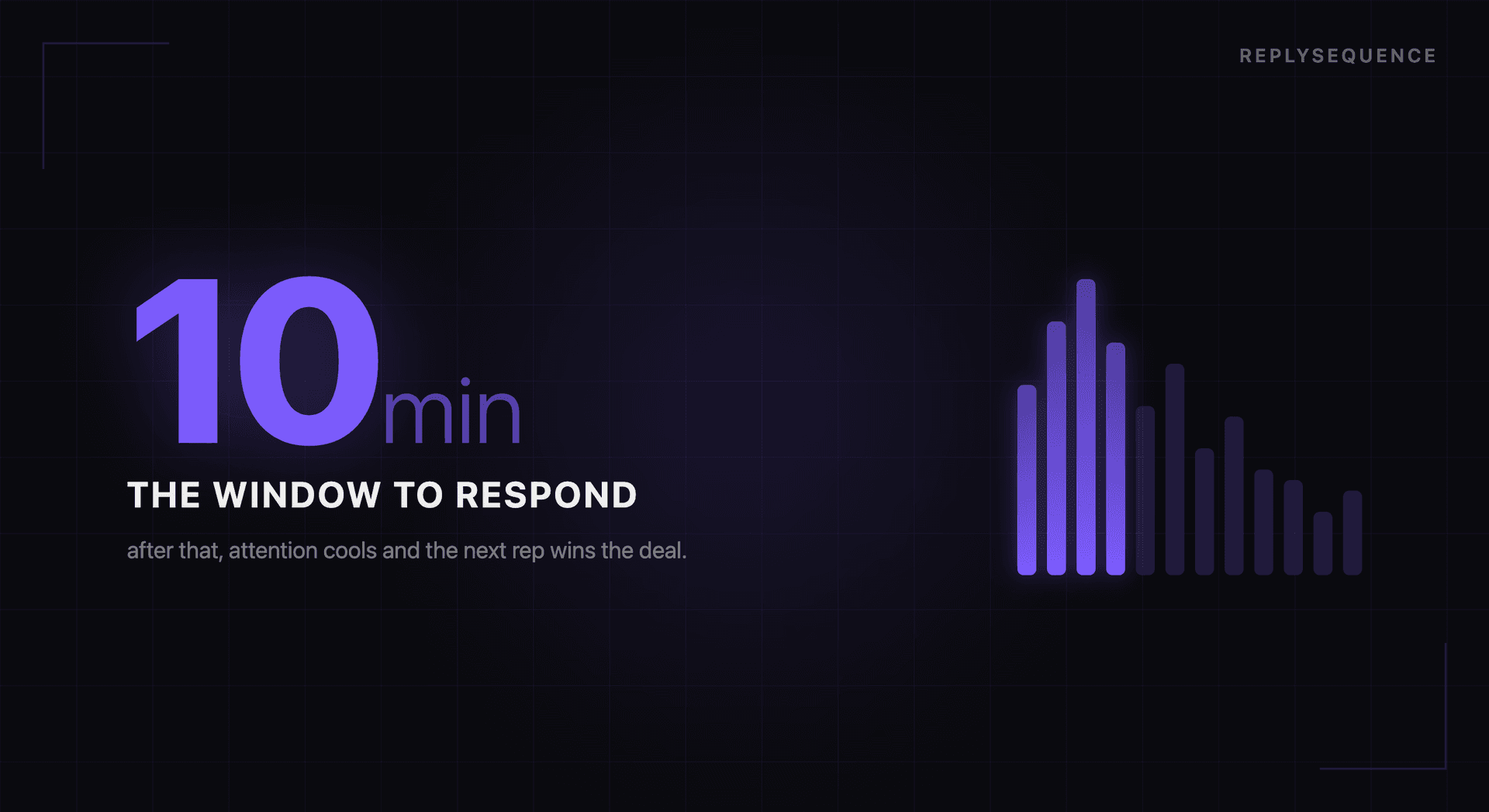
I call it the 10-minute rule: send your follow-up within 10 minutes of hanging up, or accept that your close rate just dropped by two-thirds. This isn't motivational sales advice. It's pattern recognition backed by psychology, data, and the lived experience of every founder who's ever watched a hot lead go cold.
The Rule
Within 10 minutes of ending a sales call, the prospect should have a follow-up email in their inbox. Not a "thanks for your time" one-liner. A real recap, what you discussed, what was agreed, what happens next, and when.
That's it. That's the rule.
It sounds simple because it is. The hard part isn't knowing you should do it. The hard part is actually doing it when you've got three more calls stacked back-to-back, your CRM needs updating, and your manager just pinged you about a forecast.
But the reps who figure out how to send fast, specific follow-ups consistently are the ones who close. Everyone else is playing catch-up, literally.
The Research Behind It
The psychological foundation here is the peak-end rule, first described by Daniel Kahneman. It says people judge an experience based on two things: the most emotionally intense moment and how it ended. Not the average of the whole experience. The peak and the end.
Apply this to sales. Your prospect just had a 30-minute discovery call. There was probably a moment where they got excited, when you nailed their pain point, when the demo clicked, when they said "that's exactly what we need." That's the peak. Now, how does the experience end?
If you follow up in 10 minutes with a sharp recap that references that peak moment, the ending matches the energy. The whole experience gets encoded as positive. But if the ending is silence, if they don't hear from you for hours or days: the experience ends with nothing. The peak fades. The urgency disappears. They move on.
There's quantitative evidence too. Research from Lead Connect found that 78% of deals go to the vendor that responds first. InsideSales.com (now XANT) published data showing that the odds of qualifying a lead drop by 10x if you wait more than five minutes to respond after initial contact. The exact numbers vary by study, but the direction is always the same: faster follow-up, higher close rates. Every time.
Harvard Business Review published a study of 1.25 million sales leads and found that companies who contacted prospects within an hour were 7x more likely to have a meaningful conversation than those who waited even 60 minutes longer. Scale that down to follow-up emails after calls and the same principle holds, speed signals seriousness.
How to Actually Implement This
Knowing the rule and following the rule are two different things. Here's what works:
Block post-call time. If you have calls scheduled back-to-back with zero buffer, you will never follow up in 10 minutes. Period. Build 10-15 minutes of white space after every external call. Protect it like you'd protect the call itself. Your calendar is not just for meetings: it's for the work that makes meetings matter.
Use a follow-up structure, not a blank page. The blank compose window is the reason most follow-ups take 20 minutes instead of 5. Have a go-to structure:
- Two or three bullet points covering what you discussed
- Action items with names and dates
- A proposed next step
When you have the structure memorized, filling in the specifics takes two minutes. You're not writing an email from scratch. You're completing a template with details from the call you just finished.
Stop trying to make it perfect. A fast, honest, slightly rough follow-up beats a polished one sent the next day. Every time. Prospects don't grade your emails on prose quality. They grade them on relevance and speed. "Here's what we talked about, here's what's next, let me know if I missed anything", sent in 8 minutes, will outperform a beautifully crafted three-paragraph email sent at 9am tomorrow.
How AI Changes the Equation
Here's where I'll be direct: the 10-minute rule is hard to follow manually at scale. If you're running 4-6 calls a day, writing a specific, accurate follow-up for each one in under 10 minutes requires superhuman recall and typing speed. Most reps can't do it. Most reps shouldn't have to.
This is the problem I built ReplySequence to solve. Your Zoom or Meet call ends. The transcript gets processed by AI that pulls out the key discussion points, action items, objections raised, and commitments made. A follow-up email draft lands in your inbox, personalized, accurate, and ready to review, before you've even opened your next meeting link.
You still own the send. You review it, tweak it if needed, and hit send. But the 15-minute writing process just became a 30-second review. The 10-minute rule becomes trivially easy to follow because the hard part, recalling what was said, structuring the email, making it specific, is already done.
This isn't about replacing the rep. It's about removing the friction that stops good reps from doing what they already know they should do. Follow-up is where deals go to die. AI makes sure you show up before the window closes.
The Window Is Smaller Than You Think
Every sales follow-up best practice eventually comes back to the same thing: be fast, be specific, be consistent. The 10-minute rule puts a number on "fast" so you can actually hold yourself to it.
Your prospect's attention is a decaying asset. The moment they hang up, a dozen other priorities start competing for the mental real estate you just earned. A follow-up sent in 10 minutes keeps you in pole position. A follow-up sent tomorrow puts you at the back of the line.
If you want to see what a 10-minute follow-up looks like when AI handles the heavy lifting, try the demo. Upload a transcript or connect your Zoom account. The draft is ready before the call is cold.
How ReplySequence handles this
ReplySequence takes any meeting transcript, paste it in from Zoom, Teams, Meet, WebEx, Fireflies, Granola, or wherever, and drafts a context-rich follow-up email in about 8 seconds. You review it, make any edits, and approve. Deal intelligence builds automatically.