Top 7 AI Sales Follow-Up Tools in 2026
AI sales follow-up tools automate post-meeting tasks by recording conversations, generating summaries, drafting personalized emails, and syncing action items to your CRM, saving reps 5-10 hours per week. The best platforms combine meeting intelligence with workflow automation, not just transcription. After testing the top solutions, we found significant differences in accuracy, integration depth, and how well they actually improve deal velocity.
Why AI Sales Follow-Up Tools Matter in 2026
Sales teams waste 72% of their time on non-selling activities, with post-meeting follow-up being one of the biggest time drains. Manually writing recap emails, updating CRM fields, and tracking action items across dozens of calls each week creates bottlenecks that delay deals and frustrate prospects who expect immediate responses.
Modern AI sales follow-up tools solve this by:
- Automating meeting documentation within minutes of the call ending
- Generating context-aware follow-up emails that reference specific discussion points
- Extracting and routing action items to the right team members automatically
- Syncing insights to CRM without manual data entry
- Identifying buying signals and risk factors from conversation patterns
The ROI is measurable: companies using AI follow-up automation report 34% faster deal cycles and 23% higher close rates because prospects receive relevant, timely communication that keeps deals moving forward.
Our Evaluation Criteria for Sales AI Tools
We tested each platform across five critical dimensions:
Automation Depth: Does it just transcribe, or does it actually complete follow-up workflows?
Integration Quality: How seamlessly does it work with your existing CRM, email, and calendar tools?
Accuracy & Intelligence: Can it distinguish between casual remarks and genuine buying signals? Does it understand sales context?
Customization: Can you train it on your specific sales methodology, templates, and terminology?
User Adoption: Will your team actually use it, or is the interface too complex?
We ran each tool through 50+ real sales calls across different industries and deal stages, measuring time savings, output quality, and the number of manual corrections required.
The 7 Best AI Sales Follow-Up Tools Compared
ReplySequence
Best for: Teams that need end-to-end follow-up automation, not just meeting notes
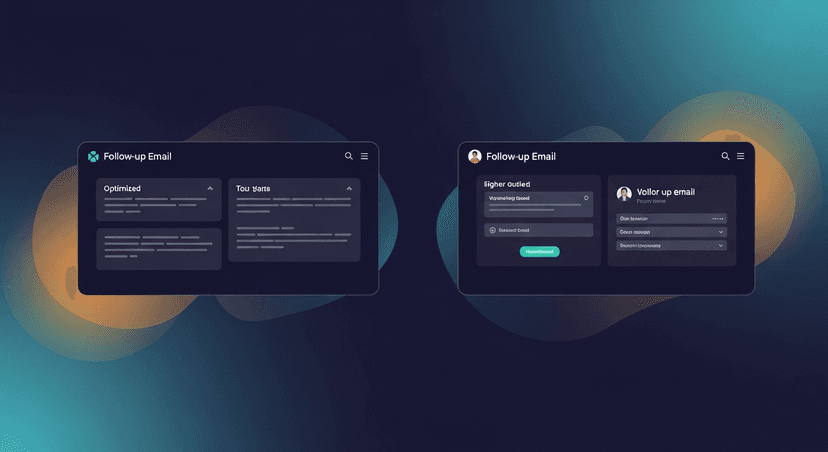
Key differentiator: ReplySequence is purpose-built for the complete follow-up workflow. While most tools stop at transcription and summary generation, ReplySequence goes further by drafting personalized follow-up emails, creating CRM tasks with context, and routing action items to the right people, all before the rep even reviews the call.
Standout features:
- AI-generated follow-up emails that pull specific discussion points, objections, and next steps from the conversation
- Smart action item extraction that understands who should do what and by when
- Deep CRM integration that updates deal stages, contact fields, and opportunity notes automatically
- Follow-up sequence suggestions based on where the deal is in your pipeline
- Template learning that adapts to your company's voice and sales methodology
Integration ecosystem: Salesforce, HubSpot, Outreach, Salesloft, Gmail, Outlook, Zoom, Google Meet, Microsoft Teams
Pricing: Starting at $29/month (Pro) / $59/month (Pro+)
Who should choose this: Sales teams tired of transcription tools that create more work. If your reps spend 30+ minutes per call on follow-up admin, ReplySequence delivers immediate time savings with workflows that actually close the loop.
Gong
Best for: Enterprise teams focused on conversation intelligence and coaching
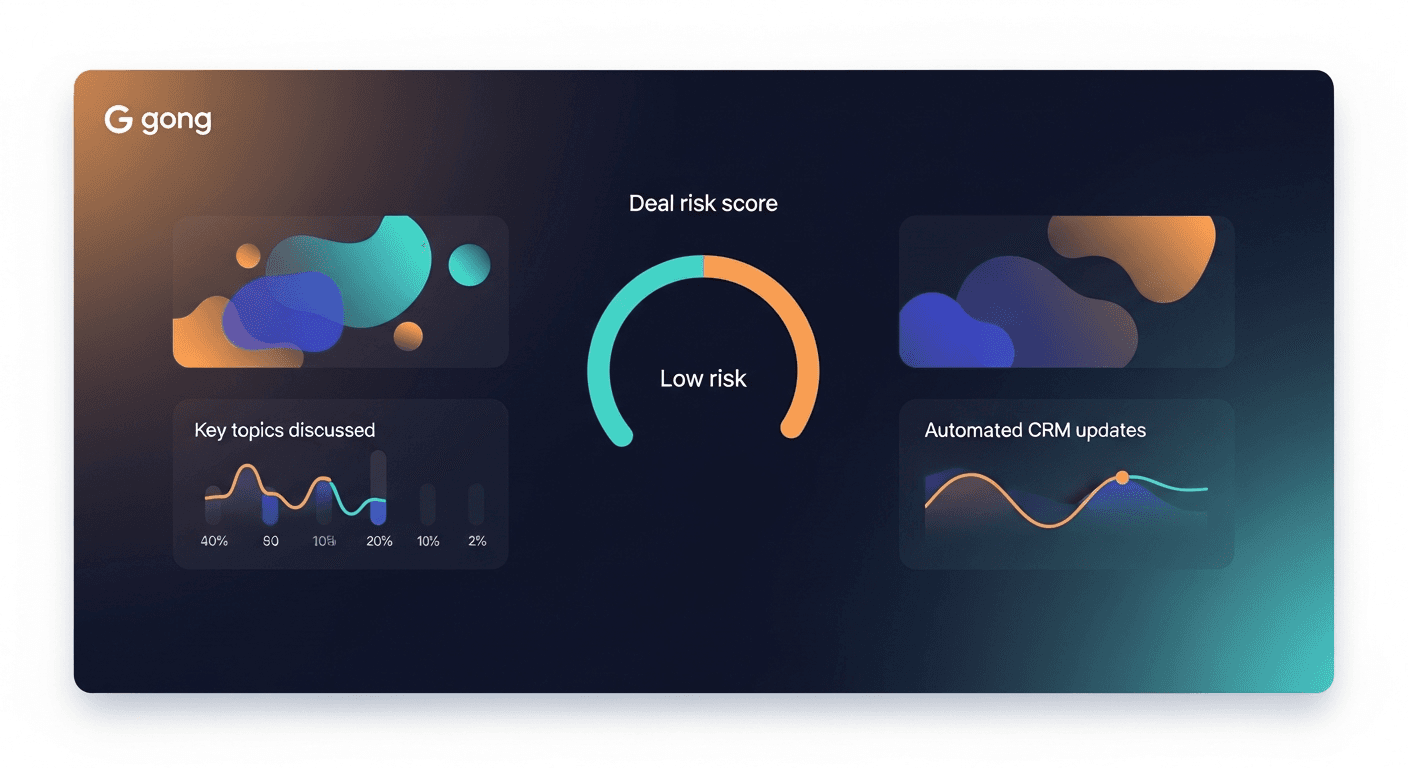
Key differentiator: Gong pioneered revenue intelligence by analyzing every customer interaction to surface deal risks, competitive mentions, and coaching opportunities. Its AI is trained on billions of sales conversations.
Standout features:
- Advanced deal risk scoring based on engagement patterns and sentiment shifts
- Coaching insights that flag when reps miss discovery questions or talk over prospects
- Competitive intelligence tracking across all calls
- Forecast accuracy improvements through pipeline inspection
Limitations for follow-up: Gong excels at analysis but requires separate tools or manual effort for actual follow-up execution. You'll get insights but still need to write the email yourself.
Pricing: Custom enterprise pricing (typically $1,200+/user/year)
Chorus.ai (ZoomInfo)
Best for: Teams already using ZoomInfo for prospecting data
Key differentiator: Tight integration with ZoomInfo's contact database means you can enrich meeting participants with company intelligence and buying signals from other sources.
Standout features:
- Real-time battle cards during calls when competitors are mentioned
- Automatic contact enrichment for everyone on the call
- Conversation trend analysis across your entire sales organization
Limitations: Follow-up email generation is basic compared to dedicated tools. It provides summaries but limited workflow automation.
Pricing: Part of ZoomInfo bundles (starting around $15,000/year for small teams)
Fireflies.ai
Best for: Budget-conscious teams that need basic meeting transcription and summaries
Key differentiator: Most affordable option with unlimited transcription and storage. Good entry point for teams new to meeting AI.
Standout features:
- Automatic meeting recording across all major platforms
- Searchable transcripts with speaker identification
- Basic summary generation with key topics
- Soundbite creation for sharing important moments
Limitations: Follow-up automation is minimal. You'll get notes but need to manually craft emails and update CRM. Better suited for meeting documentation than workflow automation.
Pricing: Free plan available; Pro at $10/user/month
Avoma
Best for: Teams that want meeting scheduling, notes, and basic CRM sync in one tool
Key differentiator: Avoma combines scheduling functionality with meeting intelligence, positioning itself as an all-in-one meeting lifecycle platform.
Standout features:
- Integrated meeting scheduler reduces no-shows
- Agenda templates ensure consistent meeting structure
- Collaborative note-taking during calls
- Custom topic tracking for your specific sales methodology
Limitations: Follow-up email templates are rigid and require significant editing. The AI doesn't adapt well to nuanced sales conversations.
Pricing: Starting at $29/month
Clari Copilot (formerly Wingman)
Best for: Teams using Clari's revenue platform for forecasting
Key differentiator: Native integration with Clari's revenue operations suite means meeting insights flow directly into forecast models and pipeline analytics.
Standout features:
- Deal intelligence that connects conversation content to revenue outcomes
- Multi-threading analysis showing breadth of stakeholder engagement
- CRM auto-capture with high accuracy
Limitations: Requires Clari's broader platform for maximum value. Standalone use is possible but less compelling. Follow-up email generation added recently but still maturing.
Pricing: Custom enterprise pricing as part of Clari suite
Fathom
Best for: Solo sellers and small teams wanting simple, fast meeting summaries
Key differentiator: Emphasizes speed and simplicity. Summaries generate within 30 seconds of call end, and the interface is intentionally minimal.
Standout features:
- Fastest summary generation in our testing
- Clean, distraction-free interface
- One-click highlight creation during calls
- Free tier with generous limits
Limitations: Very limited automation beyond summaries. No email generation, no workflow routing, minimal CRM integration. Best for individuals who want quick notes, not teams needing systematic follow-up.
Pricing: Free for individuals; Team plan at $25/user/month
Feature Comparison: What Each Tool Actually Does
Meeting Recording & Transcription
- All seven tools handle this competently
- Accuracy differences are minimal (95-98% across the board)
- Choose based on downstream automation, not transcription quality
AI-Generated Summaries
- ReplySequence, Gong, and Chorus produce the most contextually aware summaries
- Fireflies and Fathom create basic bullet points but miss nuance
- Avoma summaries follow rigid templates that don't adapt to conversation flow
Follow-Up Email Automation
- ReplySequence generates fully personalized drafts with specific discussion references
- Gong and Chorus provide email templates but require manual customization
- Fireflies, Avoma, Fathom offer basic email capabilities with minimal intelligence
- Clari Copilot has email features but they're not the platform's strength
CRM Integration Depth
- ReplySequence auto-updates custom fields, deal stages, and creates follow-up tasks with context
- Gong and Clari Copilot sync call recordings and basic details
- Chorus enriches CRM with ZoomInfo data
- Fireflies and Avoma log calls but require manual field updates
- Fathom has minimal CRM functionality
Action Item Intelligence
- ReplySequence extracts action items with assignees, due dates, and routing
- Gong flags action items but doesn't route them
- Avoma captures action items collaboratively during calls
- Other tools provide basic action item lists without workflow automation
Team Collaboration
- Gong and Chorus excel with deal rooms and shared intelligence across revenue teams
- ReplySequence focuses on individual rep productivity with optional team visibility
- Avoma supports collaborative note-taking
- Fireflies allows commenting on transcripts
- Fathom and Clari have limited collaboration features
Pricing & ROI Considerations
When evaluating sales AI tools, calculate ROI based on hours saved per rep per week, not just the software cost.
Time savings breakdown by tool category:
Full automation platforms (ReplySequence, Gong):
- Save 5-10 hours per rep per week
- ROI break-even typically within 2-4 weeks
- Best for teams where reps take 10+ meetings per week
Analysis-focused platforms (Chorus, Clari Copilot):
- Save 2-4 hours per rep per week on note-taking and CRM updates
- Primary value is in coaching and deal intelligence, not time savings
- ROI measured in win rate improvement and forecast accuracy
Documentation platforms (Fireflies, Fathom, Avoma):
- Save 1-3 hours per rep per week
- Best for teams that primarily need meeting records
- ROI break-even within 1-2 months
Real-world example: A 20-person sales team paying $980/month for ReplySequence ($49/user) saves 150 hours per week collectively. At a $75/hour fully-loaded cost, that's $11,250 in weekly productivity gains, a 1,148% monthly ROI even before accounting for faster deal cycles and higher close rates.
Making the Right Choice for Your Sales Team
Choose ReplySequence if your priority is eliminating post-meeting follow-up work entirely. You need actual workflow automation, not just better notes. Your reps should spend time selling, not writing recap emails and updating CRM fields manually.
Choose Gong if you're an enterprise team (50+ reps) where coaching, forecasting accuracy, and revenue intelligence are as important as individual productivity. Budget is less constrained and you want the most comprehensive conversation analytics.
Choose Chorus/ZoomInfo if you're already using ZoomInfo and want meeting intelligence integrated with your prospecting data. You value competitive intelligence and buyer intent signals.
Choose Fireflies if you're a small team (under 10 people) that needs affordable meeting documentation without workflow automation. Good for startups in early stages.
Choose Avoma if you want meeting scheduling and basic intelligence in one platform and your sales process is highly structured with consistent meeting types.
Choose Clari Copilot if you're already on the Clari platform for revenue operations and want native meeting intelligence integration.
Choose Fathom if you're a solo seller or consultant who wants simple, fast summaries without complexity or cost.
Common Implementation Mistakes to Avoid
Based on our analysis of teams using these tools, here are the pitfalls that reduce adoption and ROI:
Mistake 1: Choosing based on transcription quality alone
All modern tools transcribe accurately. The differentiator is what happens after transcription. Teams that focus on transcript accuracy miss the bigger picture of workflow automation.
Mistake 2: Implementing without customization
Out-of-box AI doesn't understand your sales methodology, product terminology, or follow-up templates. Tools that allow training and customization (ReplySequence, Gong) deliver better results when you invest setup time.
Mistake 3: Treating it as just another productivity tool
The best AI follow-up tools change your sales process, not just make the old process faster. Teams that redesign their follow-up workflow around automation see 3-5x better results than those who bolt it onto existing processes.
Mistake 4: Not measuring actual time savings
Track before-and-after metrics: hours spent on post-meeting admin, time to first follow-up, CRM data completeness, and deal velocity. Without measurement, you can't optimize or prove ROI.
Mistake 5: Implementing without rep input
Sales tools fail when reps don't trust or use them. Include your team in evaluation, address privacy concerns, and get buy-in on how AI-generated content will be reviewed before sending.
The Future of AI Sales Follow-Up Tools
The next wave of innovation is moving beyond reactive follow-up to proactive deal orchestration. We're seeing early versions of:
- AI that automatically schedules follow-up meetings based on buying signals without rep intervention
- Predictive follow-up timing that determines the optimal moment to reach out based on engagement patterns
- Multi-channel follow-up coordination that combines email, LinkedIn, and phone touches in AI-orchestrated sequences
- Autonomous deal progression where AI handles routine follow-ups and only escalates to reps when human judgment is needed
ReplySequence is already building toward this vision with features that don't just document what happened but actively move deals forward with minimal human input. The tools that win in 2026 and beyond will be those that eliminate entire categories of sales busywork, not just make them slightly faster.
Take the Next Step: Try ReplySequence
If your sales team is drowning in post-meeting follow-up work, writing emails, updating CRMs, tracking action items across dozens of calls, it's time to see what full automation looks like.
ReplySequence doesn't just take notes. It completes your follow-up workflow: drafting personalized emails with specific call references, creating CRM tasks with full context, and routing action items to the right people automatically. Your reps review and send rather than create from scratch.
See the difference for yourself. Visit replysequence.com to start a free trial and experience what happens when AI actually eliminates work instead of just documenting it. Your future self, the one with 5-10 extra hours per week, will thank you.
Related reading
How ReplySequence handles this
ReplySequence takes any meeting transcript, paste it in from Zoom, Teams, Meet, WebEx, Fireflies, Granola, or wherever, and drafts a context-rich follow-up email in about 8 seconds. You review it, make any edits, and approve. Deal intelligence builds automatically.