Best Way to Automate Post-Meeting Emails in 2026
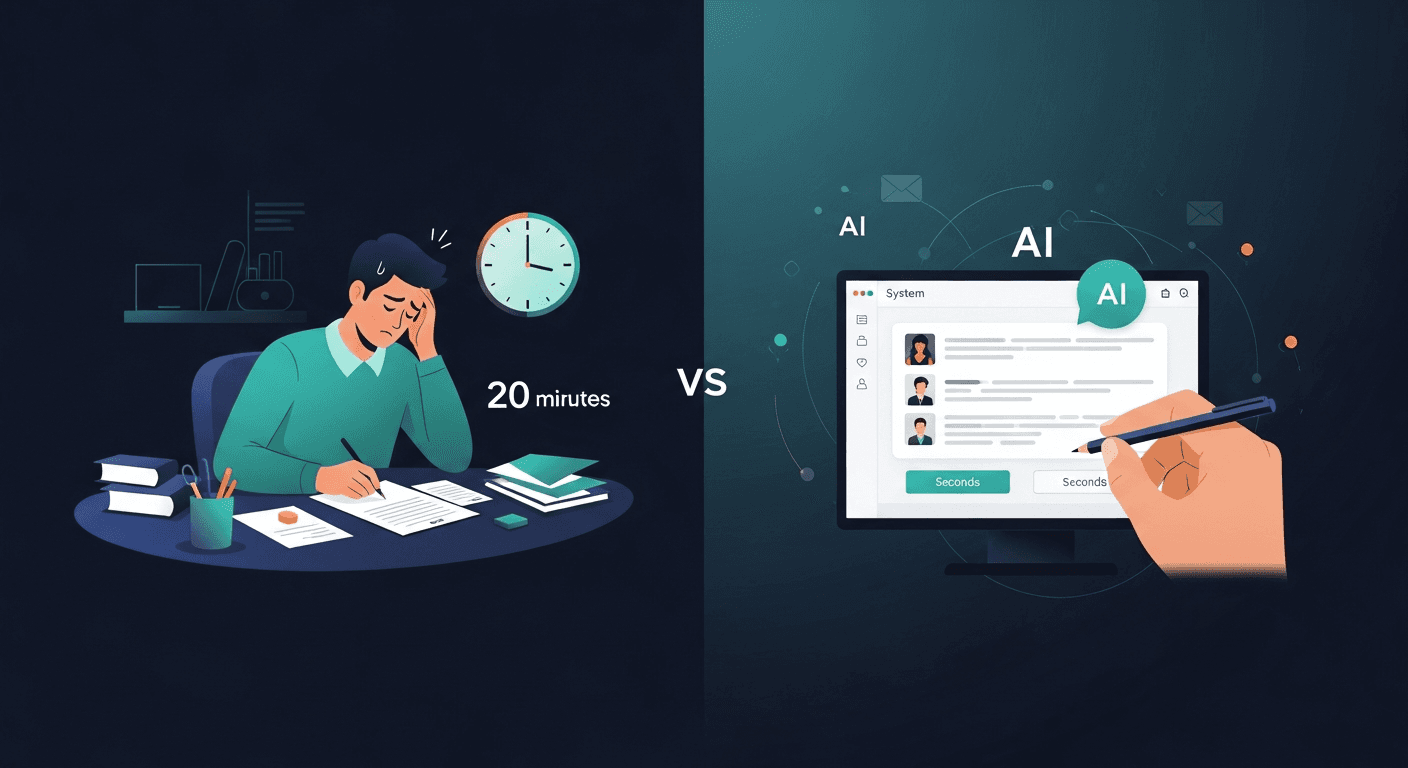
The best way to automate post-meeting emails in 2026 is not to add another bot to your meeting: it's to add a send layer after the transcript already exists. Bring your own transcript from Fireflies, Otter, Granola, Fathom, Zoom, Teams, or Meet, run it through a focused AI that generates a personalized draft, review it, send it. Total active time: under two minutes. No integration project, no new recorder, no rip-and-replace.
The trap most teams fall into is assuming "automate post-meeting emails" means buying a conversation-intelligence platform. It almost never does. The recording problem is solved. The 25-35 minutes between "transcript exists" and "follow-up sent" is what actually costs you deals, and it's a much narrower problem than the enterprise category makes it look.
The manual approach creates several critical bottlenecks:
- Inconsistent quality: Follow-ups vary based on rep energy levels, time of day, and memory accuracy
- Delayed responses: Emails sent hours or days after meetings lose impact and momentum
- Incomplete information: Reps forget to include key discussion points, action items, or stakeholder-specific details
- Scaling limitations: As deal complexity grows with multiple stakeholders, manual follow-ups become exponentially more difficult
- Context loss: Without proper documentation, team members lack visibility into conversation history
The disconnect between follow-up importance and the time required to do it well creates a fundamental productivity crisis in modern sales organizations.
Why Traditional Meeting Email Automation Falls Short
Many sales teams have attempted to solve this with basic automation tools, but legacy approaches create as many problems as they solve.
Template-Based Systems
Static email templates, even sophisticated ones with merge fields, can't capture the nuanced conversations happening in modern sales calls. They result in generic messages that prospects immediately recognize as automated. Key limitations include:
- No awareness of what was actually discussed in the meeting
- Inability to reference specific pain points, questions, or concerns raised
- Generic action items that don't reflect agreed-upon next steps
- One-size-fits-all messaging that ignores stakeholder-specific interests
The result: A 47% lower response rate compared to personalized follow-ups, according to Salesforce research.
Manual Note-Taking Systems
Some teams rely on reps taking detailed notes during calls, then using those notes to craft follow-ups. This approach has its own set of problems:
- Reps focused on note-taking can't fully engage in active listening
- Critical details get missed while typing
- Different reps capture information with varying levels of detail
- Notes still require 10-15 minutes of post-processing per meeting
Calendar-Based Auto-Responders
Simple calendar integrations that send a "thanks for meeting" message immediately after calls represent the bare minimum, but they lack substance. They acknowledge the meeting occurred but provide zero value in terms of recap, next steps, or relevant resources.
What's needed is a solution that combines the personalization of manual emails with the speed and consistency of automation.
The AI-Powered Approach to Meeting Email Automation
Modern AI systems have fundamentally changed what's possible with post-meeting follow-ups. Here's how the best-in-class approach works:
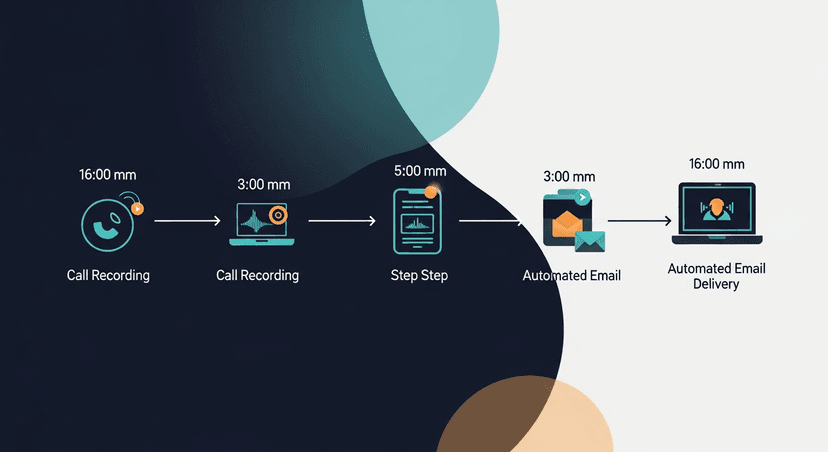
Step 1: Automated Call Recording and Transcription
The foundation of effective meeting email automation is capturing everything that happens during the conversation. Leading platforms integrate with your existing meeting tools (Zoom, Google Meet, Microsoft Teams) to automatically:
- Join scheduled calls without manual activation
- Record both audio and video
- Generate accurate transcriptions in real-time
- Identify different speakers for multi-stakeholder calls
This ensures complete conversation capture without requiring reps to take notes or remember to hit record.
Step 2: AI-Powered Conversation Analysis
Once the meeting is recorded, AI analyzes the full transcript to extract meaningful insights:
- Key discussion topics: What subjects dominated the conversation
- Pain points mentioned: Specific challenges the prospect expressed
- Questions asked: Both by your team and the prospect
- Action items: Commitments made by both parties
- Next steps: Agreed-upon timeline and activities
- Stakeholder interests: What each participant cared most about
- Objections raised: Concerns that need addressing
- Competitive mentions: References to other solutions being evaluated
This analysis happens automatically within minutes of the meeting ending, creating a structured data foundation for the follow-up email.
Step 3: Personalized Email Generation
Using the conversation analysis, AI generates a comprehensive follow-up email that reads as if a human carefully crafted it. The best systems include:
- Contextual opening: References specific moments from the conversation
- Meeting recap: Summarizes key discussion points in logical order
- Action items with accountability: Lists what each party committed to doing
- Answers to questions: Addresses anything that came up during the call
- Relevant resources: Attaches or links to materials discussed
- Clear next steps: Specifies the timeline and upcoming activities
- Stakeholder-specific versions: Creates customized emails for different participants when needed
At ReplySequence, this entire process happens automatically, with emails ready for review within 60 seconds of your meeting ending.
> ReplySequence does this automatically, paste a transcript and see a draft at replysequence.com/demo.
Step 4: Human-in-the-Loop Refinement
Even the most sophisticated AI benefits from human oversight. The ideal workflow includes:
- Quick review interface: Scan the generated email for accuracy
- Easy editing: Make any adjustments or additions needed
- Brand voice consistency: Ensure the tone matches your communication style
- Strategic additions: Include any strategic context the AI might have missed
This review typically takes 30-60 seconds, capturing the best of both worlds: AI speed with human judgment.
Step 5: Automated Distribution and Tracking
Once approved, the system should:
- Send emails to all relevant stakeholders
- Track opens, clicks, and responses
- Sync information back to your CRM
- Alert you to high-priority responses
- Create a searchable archive of all meeting communications
Real-World Implementation: How Top Teams Automate Post-Meeting Emails
Enterprise SaaS Company: 12 Hours Weekly Recovered
A 35-person sales team at a Series B SaaS company implemented AI-powered meeting email automation and tracked results over 90 days:
Before automation:
- Average follow-up time: 18 minutes per meeting
- Meetings per rep per day: 6
- Weekly follow-up time per rep: 9 hours
- Team weekly total: 315 hours
- Follow-up completion rate: 73%
After automation:
- Average follow-up time: 90 seconds per meeting
- Meetings per rep per day: 6 (unchanged)
- Weekly follow-up time per rep: 45 minutes
- Team weekly total: 26 hours
- Follow-up completion rate: 98%
Impact: The team recovered 289 hours weekly (equivalent to 7+ full-time employees) while improving follow-up quality and consistency. Response rates from prospects increased by 28%, and deal velocity improved by 19%.
Financial Services Firm: Multi-Stakeholder Management Transformed
A wealth management firm dealing with complex multi-stakeholder sales (often involving 4-6 decision makers) faced a particular challenge: ensuring each stakeholder received follow-up addressing their specific concerns.
Previously, reps would either:
- Send one generic email to all stakeholders (low relevance)
- Spend 45+ minutes crafting individual emails (unsustainable)
- Send follow-ups only to the primary contact (missed opportunities)
After implementing automated meeting email systems, the platform generated stakeholder-specific versions automatically, each highlighting topics that particular individual discussed. The result: Engagement rates across all stakeholders increased by 41%, and deals involving multiple decision-makers closed 23% faster.
Growing Startup: Maintaining Quality During Scaling
A fast-growing startup doubled its sales team from 8 to 16 reps in six months. The challenge: maintaining follow-up quality and consistency as new reps onboarded.
With meeting email automation:
- New reps immediately sent follow-ups matching the quality of veteran team members
- Sales leadership could review automated emails to coach on conversation quality
- Consistent documentation meant seamless account handoffs
- The playbook essentially wrote itself based on what was actually being discussed
The outcome: Revenue per rep remained consistent during rapid scaling, something that typically drops 30-40% during aggressive hiring phases.
Choosing the Right Post-Meeting Email Automation Solution
Not all automation platforms deliver equal results. When evaluating solutions to automate post-meeting emails, prioritize these capabilities:
Must-Have Features
Conversation intelligence integration: The system must actually understand what happened in your meetings, not just timestamp them. Look for:
- Natural language processing that identifies topics, sentiment, and intent
- Speaker identification for multi-participant calls
- Question and action item extraction
- Key moment detection
Contextual email generation: Generic templates aren't enough. The platform should:
- Reference specific conversation points
- Adapt tone based on meeting outcome
- Personalize for different stakeholders
- Include relevant details without human prompting
Native CRM integration: Seamless data flow is critical:
- Auto-sync meeting notes and transcripts
- Update opportunity fields based on conversation
- Create tasks from action items
- Link emails to proper records
Easy editing and approval: Maintain quality control with:
- Intuitive review interface
- Quick edit capabilities
- Brand voice customization
- Bulk approval for multiple meetings
Advanced Capabilities That Drive ROI
Multi-stakeholder intelligence: For complex B2B deals:
- Track individual stakeholder engagement
- Generate role-specific follow-ups
- Map stakeholder influence and concerns
- Alert to champion changes
Meeting intelligence insights: Beyond just email automation:
- Competitor mention tracking
- Objection pattern analysis
- Win/loss conversation factors
- Rep performance benchmarking
Automated content recommendations: Enhance follow-ups with:
- Relevant case studies based on discussed pain points
- Product documentation for mentioned features
- Pricing information when budget was discussed
- ROI calculators when value was questioned
Sequence integration: Connect to broader sales cadences:
- Trigger next sequence steps based on meeting outcome
- Pause sequences when meetings occur
- Resume with context-aware messaging
- Coordinate multi-channel follow-up
Implementation Best Practices for Meeting Email Automation
Successful rollout requires more than just purchasing software. Follow these practices to maximize adoption and results:
Start With a Pilot Team
Rather than company-wide deployment, begin with 3-5 reps who:
- Are open to new technology
- Have high meeting volumes
- Represent different segments or product lines
- Can provide detailed feedback
Run the pilot for 4-6 weeks, tracking both quantitative metrics (time saved, response rates) and qualitative feedback (email quality, ease of use).
Define Your Brand Voice Guidelines
Before scaling, establish clear parameters:
- Tone preferences (formal vs. conversational)
- Standard opening and closing language
- How to reference competitors
- Pricing discussion protocols
- Legal/compliance requirements
Most AI platforms allow you to encode these preferences so generated emails automatically align with your brand.
Create a Review Protocol
Even with automation, establish when human review is mandatory:
- Always review: Executive-level meetings, deal-closing conversations, first-time prospects
- Spot-check: Routine discovery calls, qualification meetings
- Fast-track: Internal stakeholder syncs, quick check-ins
This ensures quality while preventing automation from becoming a bottleneck.
Integrate With Existing Workflows
Don't force reps to add new tools to their stack. The automation should:
- Work within existing calendar/meeting tools
- Push data to your current CRM
- Integrate with email client (Gmail, Outlook)
- Connect to your content management system
Seamless integration drives adoption; friction kills it.
Measure the Right Metrics
Track these KPIs to validate ROI:
Efficiency metrics:
- Time per follow-up (before vs. after)
- Follow-up completion rate
- Time to send after meeting
- Hours recovered per rep per week
Quality metrics:
- Prospect response rates
- Meeting-to-next-stage conversion
- Deal velocity changes
- Win rate impact
Adoption metrics:
- Percentage of meetings with automated follow-ups
- Edit rate and depth
- Rep satisfaction scores
- Feature utilization
Train Your Team on AI Collaboration
The most successful implementations teach reps to:
- Trust but verify AI-generated content
- Provide feedback that improves future outputs
- Use meeting intelligence insights strategically
- Focus saved time on high-value activities
Think of AI as a junior SDR that handles follow-up drafts, it needs coaching to perform optimally.
Common Objections to Post-Meeting Email Automation (And Why They're Wrong)
"My prospects will know it's automated and feel depersonalized"
Modern AI generates emails that are often more personalized than manual efforts because they capture every detail from the conversation. The prospect doesn't know (or care) that AI helped, they care that you remembered their specific pain points, answered their questions, and provided relevant next steps.
In fact, prospects often comment on how thorough and attentive automated follow-ups feel compared to generic "great meeting you" emails.
"I need complete control over every word that goes to prospects"
You maintain full control with a review-and-edit workflow. The difference is starting with a 95% complete draft rather than a blank page. Reps who insist on writing from scratch are choosing to spend 20 minutes on an activity that could take 2 minutes, with no measurable improvement in outcomes.
"Our sales process is too complex for automation"
Complexity is exactly why you need automation. Simple transactional sales might manage with basic templates, but complex B2B deals with multiple stakeholders, long sales cycles, and technical discussions benefit most from AI that can track and personalize based on conversation nuance.
ReplySequence specifically handles enterprise complexity, including stakeholder mapping, multi-thread conversations, and technical product discussions.
"We'll lose the relationship-building aspect"
Automation handles administrative work, the recap, action items, and documentation. It frees you to focus on relationship-building activities: strategic calls, executive alignment, problem-solving, and deal strategy. Prospects don't form relationships based on recap emails; they form them based on whether you understand their business and can solve their problems.
"This is too expensive for our team size"
Calculate the true cost of manual follow-ups: If each rep spends 9 hours weekly on post-meeting emails at a $75K salary, that's $15,600 per rep annually in pure follow-up time. Add the opportunity cost of deals lost to slow or missed follow-ups, and the ROI becomes overwhelming.
Most automation platforms pay for themselves within the first month.
The Future of Meeting Email Automation: What's Coming Next
The current generation of AI-powered meeting email automation already delivers transformative results, but the technology continues advancing rapidly:
Predictive Next-Best-Action Recommendations
Beyond just sending a follow-up, AI will soon recommend:
- Optimal timing for the next touchpoint
- Which stakeholder to prioritize
- What content will most likely advance the deal
- Which objections need preemptive addressing
Real-Time Meeting Guidance
AI assistants that provide in-meeting coaching:
- Alert when key topics haven't been covered
- Suggest questions based on conversation flow
- Flag competitor mentions requiring response
- Recommend objection-handling approaches
Cross-Meeting Intelligence
Systems that learn from thousands of meetings to identify:
- Conversation patterns that predict closes
- Red flags indicating at-risk deals
- Questions that correlate with objections
- Topics that accelerate deal velocity
Autonomous Follow-Up Orchestration
AI that doesn't just draft emails but orchestrates entire follow-up campaigns:
- Schedules follow-up meetings automatically
- Coordinates with marketing for content delivery
- Triggers sequences based on prospect responses
- Adapts messaging based on engagement signals
These capabilities are already in development, with early versions available in platforms like ReplySequence.
Taking Action: Implementing Post-Meeting Email Automation Today
The productivity gains, quality improvements, and competitive advantages from automating post-meeting emails are too significant to ignore. Sales teams that continue relying on manual follow-ups are choosing to operate at a disadvantage.
Start with these concrete steps:
- Audit your current follow-up process: Track exactly how much time your team spends on post-meeting emails, your completion rate, and average time to send. These baseline metrics prove ROI.
- Define your requirements: Based on your sales process complexity, deal size, and team structure, list the must-have features and capabilities you need.
- Evaluate platforms: Test 2-3 solutions with your pilot team, focusing on actual usage rather than sales demos. Pay attention to ease of integration, email quality, and time savings.
- Calculate true ROI: Factor in time saved, improved response rates, faster deal cycles, and better data capture. Most teams see 10-20x ROI within the first quarter.
- Plan your rollout: Create a phased implementation with clear success metrics, training protocols, and feedback loops.
The question isn't whether to automate post-meeting emails, it's whether you'll implement before or after your competitors. Every day of manual follow-ups represents hundreds of hours your team could spend on revenue-generating activities.
ReplySequence helps modern sales teams automate post-meeting emails without sacrificing quality or personalization. Our AI-powered system records your calls, extracts key insights, and generates personalized follow-ups in seconds, not minutes. Sales leaders at companies like [industry leaders] rely on ReplySequence to scale their teams without scaling administrative work. See how much time your team could save at replysequence.com.
How ReplySequence handles this
ReplySequence takes any meeting transcript, paste it in from Zoom, Teams, Meet, WebEx, Fireflies, Granola, or wherever, and drafts a context-rich follow-up email in about 8 seconds. You review it, make any edits, and approve. Deal intelligence builds automatically.