How Many Follow-Ups Should You Send Before Moving On?
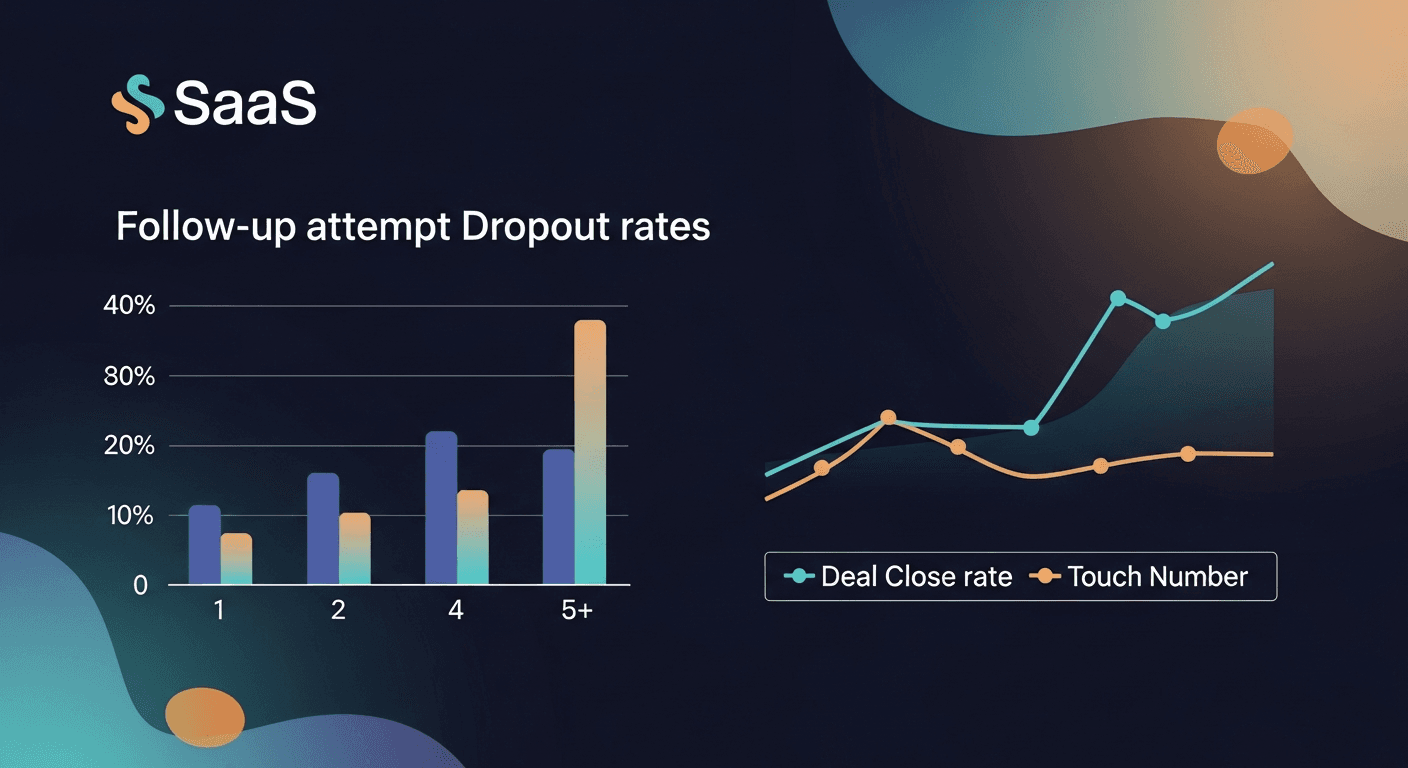
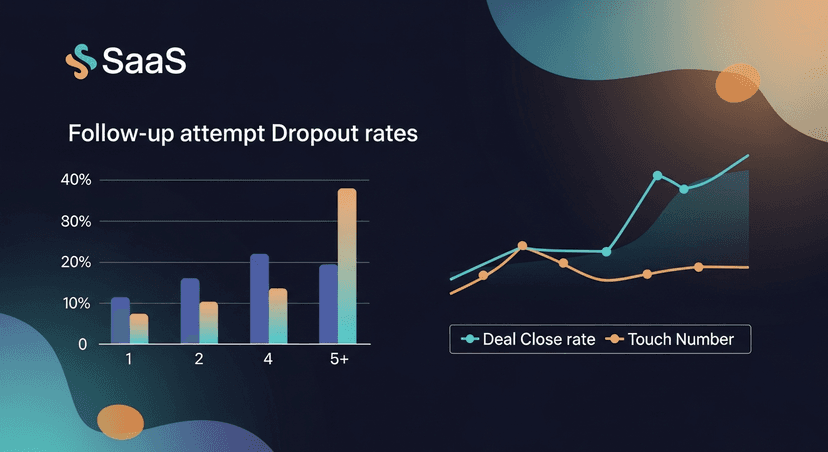
Most reps should send 5 to 8 follow-ups before giving up on a prospect. Research from RAIN Group found that 80% of sales require at least five follow-up touches after the initial meeting, yet 44% of reps quit after one. That gap is where deals go to die.
Knowing how many follow-ups before giving up isn't really a math problem. It's a sequencing problem. The number matters less than the logic behind each touch.
The Data on Follow-Up Frequency
Here's what the research actually says:
- 44% of reps give up after one follow-up (RAIN Group)
- 80% of deals close after 5+ contacts (Marketing Donut)
- The average response to a cold or post-meeting follow-up comes on touch #5 (Yesware)
- Only 8% of salespeople make it to a fifth follow-up, which means most reps are voluntarily walking away from the majority of closeable deals
The numbers are almost embarrassing when you lay them out like that. The reps who hit quota aren't necessarily better at pitching. A lot of the time they're just more stubborn about following up.
Why Reps Give Up Too Early
It's not laziness. Usually it's one of three things:
1. They ran out of things to say.
After the first follow-up recap email, what do you send? "Just checking in" is not a strategy. Most reps hit a wall at touch #2 or #3 because they don't have a content plan: they're improvising every time.
2. They misread silence as rejection.
No reply doesn't mean no. Prospects are busy. Your email got buried. The timing was off. A non-response to follow-up #2 is not the same as someone saying "I'm not interested." Silence is a scheduling problem, not a buying signal.
3. Writing follow-ups takes forever.
This one's underrated. If every follow-up requires 20-30 minutes to draft (recapping the meeting, customizing the message, updating the CRM) the math starts working against you. Reps triage. High-value deals get follow-ups, mid-tier deals don't. That's a pipeline hygiene disaster waiting to happen.
I built ReplySequence because I kept watching this happen. Meeting ends, everyone's aligned, and then... nothing. The meeting went great, then silence. Not because the rep didn't want to follow up. Because writing the damn thing was friction enough to kill the momentum.
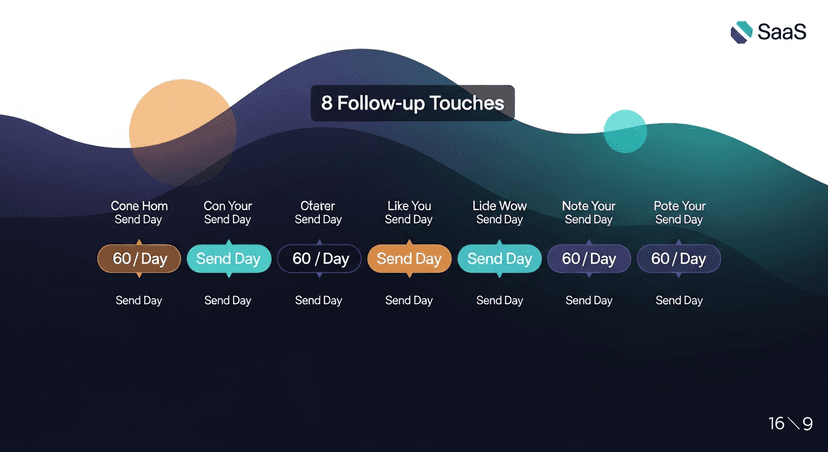
The 5-8 Framework: What Each Touch Should Do
Here's how to think about follow-up frequency when you actually map it out:
Touch 1: The Meeting Recap (send within 2 hours)
Summarize what was discussed, restate the agreed next steps, attach anything you promised. This is the highest-leverage email in the entire sequence. Most reps send it the next morning. That's already too late.
Touch 2: The Value Add (Day 3-4)
Send something useful. A relevant case study. A stat that connects to the pain they mentioned. A short Loom walking through a feature they asked about. You're not asking for anything: you're earning the next conversation.
Touch 3: The Soft Check-In (Day 7-8)
Reference the specific problem they mentioned in the meeting. Ask one direct question. Keep it under five sentences. "You mentioned Q2 pipeline was the main concern, did that change at all after last week?"
Touch 4: The Stakeholder Angle (Day 12-14)
If you haven't heard back, ask about the buying process. "Is there someone else I should loop in?" This isn't giving up: it's navigating. Sometimes the person you met with isn't the decision-maker and they're waiting for cover to move forward.
Touch 5: The Social Proof Drop (Day 18-20)
Share a result from a customer in a similar role or industry. Specific numbers. "A VP of Sales at a 40-person SaaS company cut their post-meeting admin time by 70%, happy to show you how that worked."
Touch 6: The Objection Preempt (Day 25-28)
At this point you've earned the right to be direct. Address the most likely reason they haven't responded. "If budget is the blocker right now, I'd rather know so we can figure out the right timing."
Touch 7: The Reframe (Day 35)
Change the medium or the angle. Try a phone call. Try a short video. Try connecting on LinkedIn and sending a DM. Sometimes it's not the message: it's the channel.
Touch 8: The Break-Up Email (Day 45-60)
This one actually gets replies. Tell them you're closing the file and won't reach out again unless they want to reconnect. Give them an easy out, and an easy way back in. "I'll take you off my list, but if things shift on your end, here's my calendar link."
When It's Actually Okay to Stop Before Touch 8
Look: not every prospect deserves eight follow-ups. There are legitimate reasons to pull back earlier:
- They explicitly said no or asked you to stop
- Your discovery revealed they're genuinely not a fit
- The contact left the company
- Budget was eliminated (verified, not assumed)
- It's been 90+ days with zero engagement and no event that would change anything
Silence alone doesn't make the list. Silence is not a no. But if someone's opened zero emails, clicked nothing, and you've made it to touch six, at that point you're burning time that could go to a warmer prospect.
The goal isn't to follow up forever. It's to not leave closeable deals on the table because you ran out of ideas at touch two.
The Real Problem: Speed of the First Follow-Up
Here's something most "how many follow-ups" posts miss entirely: the number of follow-ups matters way less than the speed of the first one.
MIT Lead Response Management research found that responding to a lead within 5 minutes makes you 100x more likely to connect than responding 30 minutes later. The same principle applies post-meeting. The longer you wait on that first recap email, the colder the lead gets, and the harder every subsequent touch becomes.
If your meeting ends at 2pm and your follow-up arrives at 9am the next day, you've already lost a meaningful chunk of the momentum you built in that call. The prospect has moved on to their next fifteen problems.
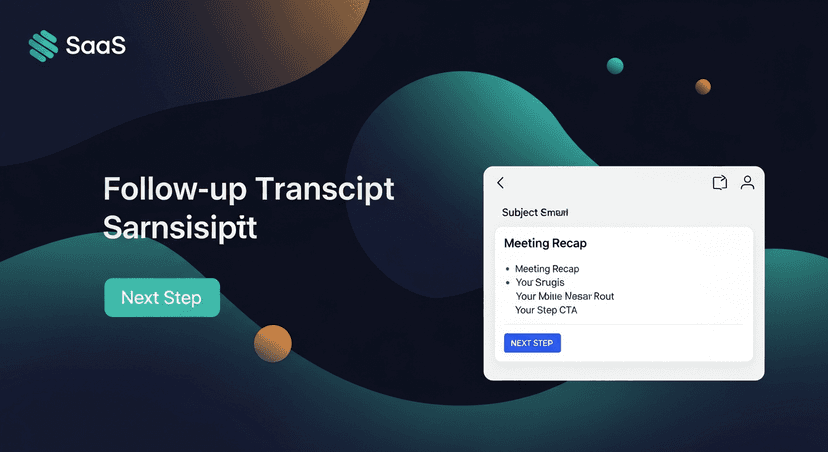
This is the workflow I built ReplySequence to fix. Paste your transcript from Fireflies, Otter, Granola (whatever you use) and a personalized follow-up email is ready in 60 seconds. Touch #1 goes out before the prospect even closes their laptop. Every touch after that starts from a stronger position.
Pipeline Hygiene Is a Follow-Up Problem
Most CRMs are full of deals stuck at "follow-up needed" that haven't moved in weeks. That's not a forecasting problem. It's a follow-up frequency problem dressed up in a Salesforce costume.
If the average rep sends 1.3 follow-ups per deal (yes, that's close to the real number) and you're trying to get to 5-8, the delta is enormous. Multiply that across a team of ten reps working fifty open opportunities each: you're looking at thousands of touches that never happen. That's revenue sitting in silence.
Getting systematic about follow-up frequency (knowing what touch you're on, having a reason to reach out, getting that first email out fast) that's the whole game.
The Short Answer
Send at least 5 follow-ups. Target 8 before you close the file. Space them out over 45-60 days. Give every touch a job. And get that first recap email out the door within two hours of the meeting ending, everything else gets easier from there.
If writing follow-ups is the bottleneck that's killing your follow-up frequency, that's a solvable problem. Check out replysequence.com, transcript in, follow-up out, CRM updated, done.
Related reading
How ReplySequence handles this
ReplySequence takes any meeting transcript, paste it in from Zoom, Teams, Meet, WebEx, Fireflies, Granola, or wherever, and drafts a context-rich follow-up email in about 8 seconds. You review it, make any edits, and approve. Deal intelligence builds automatically.