 ReplySequence
Sales Automation Benefits Beyond Time Savings
Sales automation for sales teams delivers far more than time savings — it systematically eliminates the human errors, inconsistencies, and dropped balls that silently kill deals. When you look at what actually moves revenue, the biggest gains from automation aren't about working fewer hours. They're about working smarter, following up faster, and never letting a hot prospect go cold because a rep was slammed after a big week.
Most sales leaders adopt automation tools to reclaim hours in the week. That's a real benefit. But if that's the only metric you're tracking, you're leaving serious revenue on the table. Here's what sales automation actually does when it's working the way it should.
The Real Problem: Inconsistency Costs You More Than Inefficiency
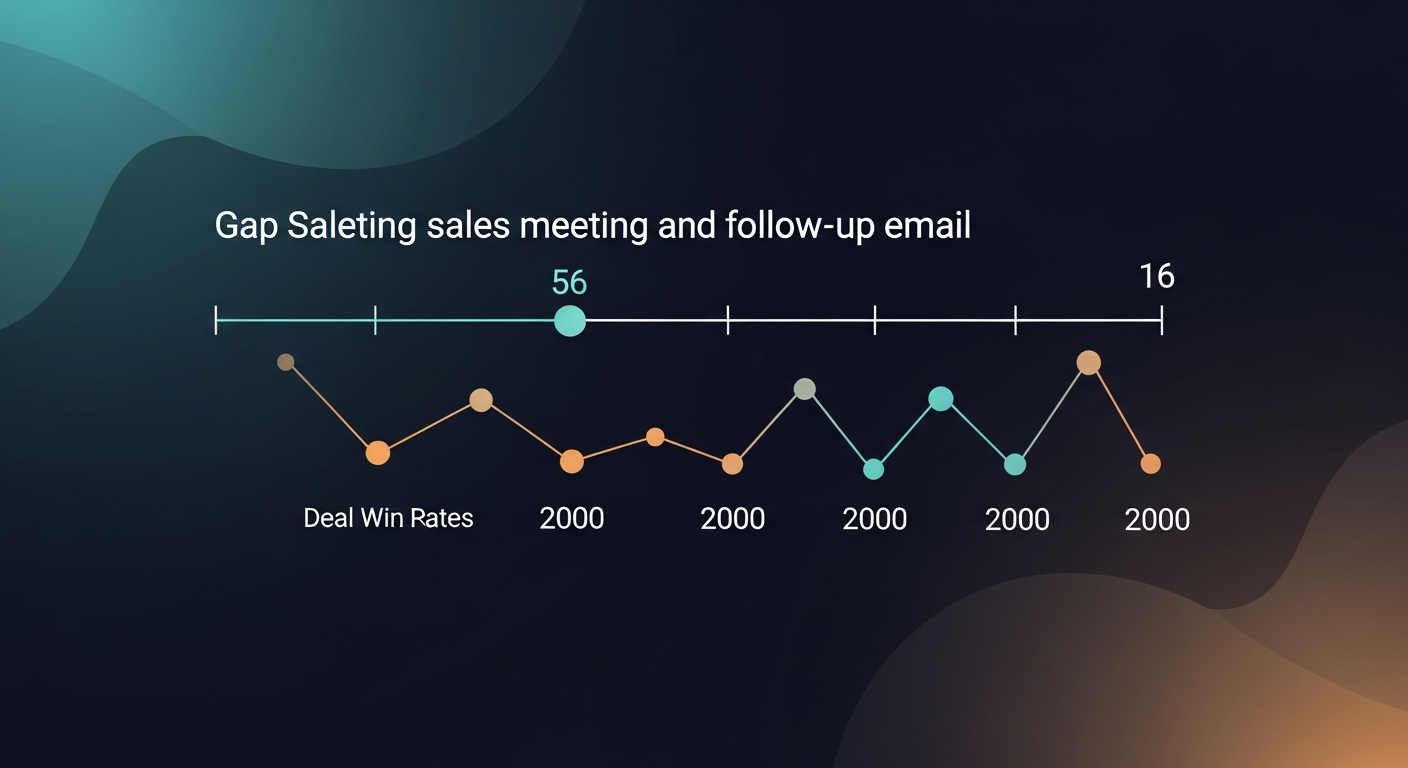
Ask any sales manager what keeps them up at night, and it's rarely "my reps are too slow." It's "I don't know what's happening after our demos." The follow-up gap is one of the most expensive problems in sales, and it's almost entirely invisible until you lose a deal you thought you had.
Research from the Harvard Business Review found that companies who follow up with prospects within one hour are nearly 7x more likely to have a meaningful conversation than those who wait even an hour longer. Yet the average sales rep sends their post-meeting follow-up 24-48 hours after a call — if they send one at all.
The reason isn't laziness. Reps are juggling pipeline reviews, re-running demos, updating CRM notes, and prepping for the next meeting. The follow-up email becomes a "I'll get to it later" task, and later becomes never.
This is where sales automation for sales teams stops being a productivity play and starts being a revenue protection play.
Benefit #1: Follow-Up Consistency That Doesn't Depend on Rep Discipline
The most underrated benefit of automated follow-up emails is that they make consistency a system property, not a personal one. You no longer need every rep to be equally diligent — the process handles it for them.
Here's what that looks like in practice:
- A rep finishes a product demo at 4:45 PM on a Thursday
- They have two more calls that evening and a flight Friday morning
- Under a manual process, that follow-up probably goes out Monday — cold, delayed, generic
- With sales meeting automation in place, a tailored follow-up hits the prospect's inbox within 30 minutes of the call ending, while the conversation is still fresh
That kind of consistency — across every rep, every territory, every deal stage — is something that's structurally impossible to achieve through willpower alone. Tools like ReplySequence are built specifically for this moment: capturing what happened in a meeting and turning it into a personalized, contextual follow-up that goes out while the prospect is still thinking about you.
Consistent follow-up alone has been shown to increase pipeline conversion rates by 20-30% in teams that track it closely. That's not a time savings number — that's a revenue number.
Benefit #2: Faster Deal Velocity
Deal velocity — the speed at which opportunities move through your pipeline — is one of the clearest indicators of sales team health. And it's one of the metrics most directly impacted by sales automation.
Here's why: every unnecessary delay in your process creates a window for a competitor to move in, for a champion to lose internal momentum, or for budget conversations to shift. The compounding effect of slow follow-up across a 90-day enterprise cycle can mean deals that could have closed in Q2 slide into Q3 — or don't close at all.
Automated follow-up emails solve two specific velocity killers:
- Post-meeting lag — the gap between a call ending and the prospect receiving next steps, recap, and resources
- Re-engagement delays — the time between a prospect going quiet and a rep noticing and acting on it
With AI sales tools in 2026, the best systems don't just automate the first follow-up — they trigger intelligent nudges based on prospect behavior. If someone opens your follow-up three times but doesn't reply, that's a signal. If they click the pricing link, that's a stronger one. Automation captures those signals and routes them back to the rep as actionable alerts, not raw data buried in a dashboard.
Benefit #3: Better Coaching Data for Sales Managers
Here's a benefit that doesn't get talked about enough: when your follow-up process is automated and structured, you suddenly have a rich, consistent dataset that didn't exist before.
With manual follow-up, every rep writes their own emails in their own style at their own cadence. There's no pattern to learn from. With automated follow-up sequences, you can actually see:
- Which follow-up templates drive the highest reply rates
- Which call outcomes correlate with deals that close
- Which reps have strong meetings but weak follow-through (and vice versa)
- What post-meeting messaging resonates with which buyer personas
This data transforms the coaching conversation. Instead of a manager saying "make sure you're following up faster," they can say "look at this — your follow-ups after technical demos have a 40% reply rate, but after executive briefings it's 12%. Let's talk about what's different."
Sales meeting automation creates a feedback loop that makes the whole team better over time — not just more efficient in the moment.
Example: A mid-market SaaS company using AI sales tools to automate post-meeting sequences discovered that follow-ups sent within 20 minutes of a call had a 3x higher response rate than those sent same-day but hours later. That insight completely reshaped how they staffed their SDR team around demos.
Benefit #4: Rep Morale and Retention
This one sounds soft, but it has real bottom-line impact. High-performing sales reps don't leave jobs because the product is hard to sell. They leave because the administrative burden is soul-crushing.
When your best rep spends two hours after a strong week of demos catching up on follow-up emails, CRM updates, and sequence enrollment, that's two hours they're not prospecting, not sharpening their pitch, and not doing the work that energizes them. Over time, that friction accumulates. It shows up in burnout, in quality of work, and eventually in turnover — which costs the average company $29,000-$200,000 per rep departure when you factor in recruiting, onboarding, and ramp time.
Sales automation for sales teams that handles the post-meeting workflow — follow-up drafting, CRM logging, next-step reminders — gives that time and mental energy back. Reps feel the difference immediately. And when reps feel like the tools are working for them instead of against them, they stay longer and perform better.
Benefit #5: Scalability Without Proportional Headcount
Growth creates a resourcing dilemma: more pipeline means more meetings, more meetings means more follow-up work, and more follow-up work means hiring more people. It's a linear relationship that eats margin.
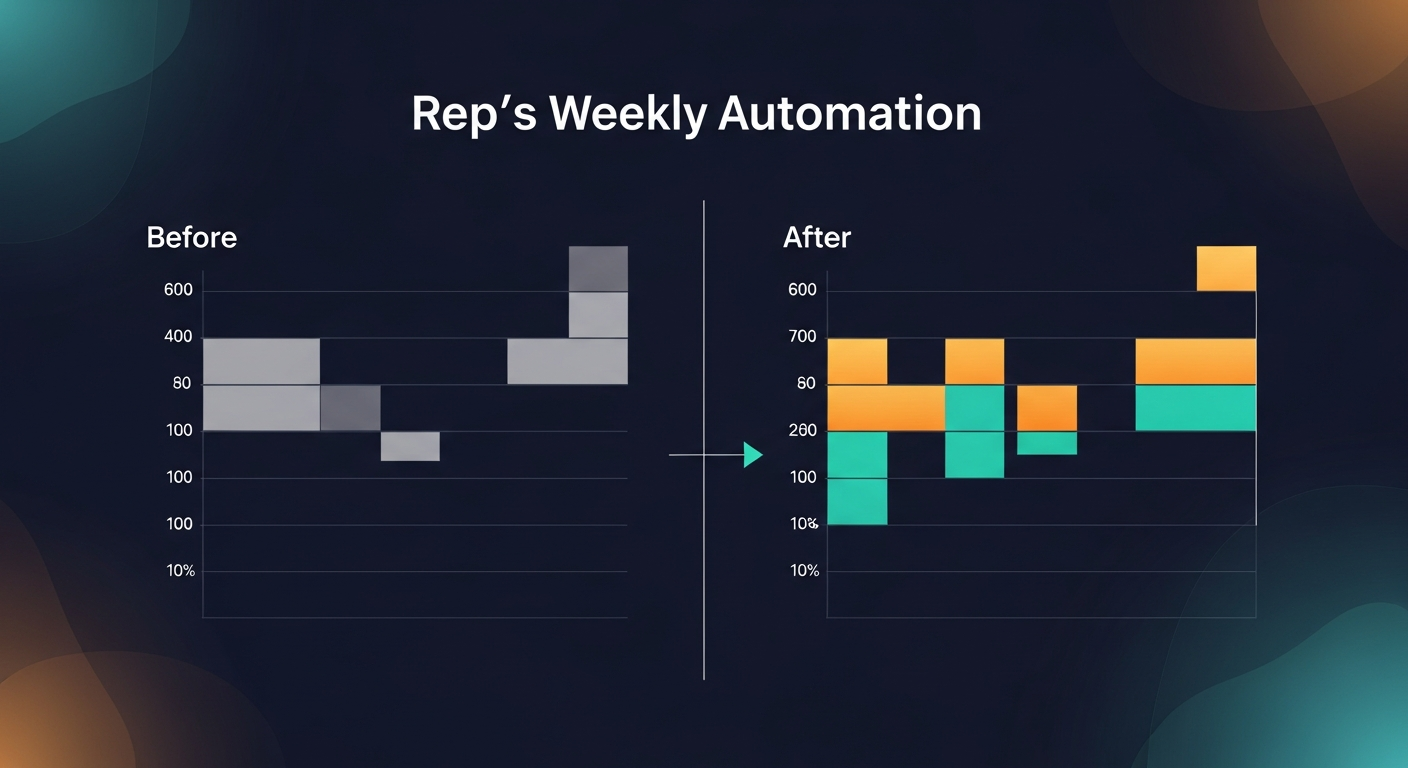
Sales automation breaks that linearity. With the right systems in place, a team of five reps can handle the follow-up volume that would previously have required eight. Not because they're working harder — because the machine is handling everything that doesn't require a human.
This is particularly powerful for:
- Early-stage companies scaling from 5 to 20 meetings a week without exploding headcount
- Enterprise teams with complex multi-stakeholder deals that require lots of post-meeting documentation and communication
- High-volume inside sales teams where a single rep might run 8-10 demos a week
ReplySequence is built around this exact use case — giving sales teams the infrastructure to follow up at scale, without sacrificing the personalization that actually gets responses.
The Problem-Solution Recap: What Automation Actually Fixes
Let's ground all of this in the original problem: follow-up is broken not because reps are bad, but because manual processes can't keep up with modern sales volume and complexity.
The solution isn't just "save time." It's:
- Consistent, fast follow-up — every time, for every rep
- Faster deal velocity — fewer gaps, fewer stalls, fewer losses to competitors
- Better coaching data — patterns you couldn't see before
- Higher rep retention — less admin burden, more meaningful work
- Scalable growth — more pipeline without proportional hiring
When you frame sales automation for sales teams through these five lenses, the ROI conversation becomes much easier. You're not pitching a productivity tool. You're making the case for a structural change in how your team operates.
Start Measuring the Right Things
If you want to know whether your automation is actually working, stop measuring hours saved and start measuring:
- Average time from meeting end to follow-up sent
- Reply rate on post-meeting follow-up emails
- Pipeline stage progression speed (week over week)
- Win rate on deals with automated vs. manual follow-up
- Rep-level follow-up consistency scores
These metrics tell you whether your process is creating revenue — not just efficiency.
If you're ready to see what a purpose-built sales meeting automation system looks like in practice, visit replysequence.com. ReplySequence is designed specifically for sales teams that know their follow-up process is a competitive advantage — and want the tools to make that advantage systematic, scalable, and measurable.
How ReplySequence handles this
ReplySequence connects to your Zoom, Teams, or Meet calls, reads the transcript, and drafts a context-rich follow-up email in about 8 seconds. You review it, make any edits, and send from your real inbox. Deal intelligence builds automatically.