 ReplySequence
How Long Should You Wait Before Following Up After a Sales Call?
```json
{
"title": "How Long Should You Wait Before Following Up After a Sales Call?",
"slug": "how-long-should-you-wait-before-following-up-after-a-sales-call",
"excerpt": "Wondering how long to wait before following up after a sales call? The answer is shorter than you think — here's the data-backed timing strategy that wins deals.",
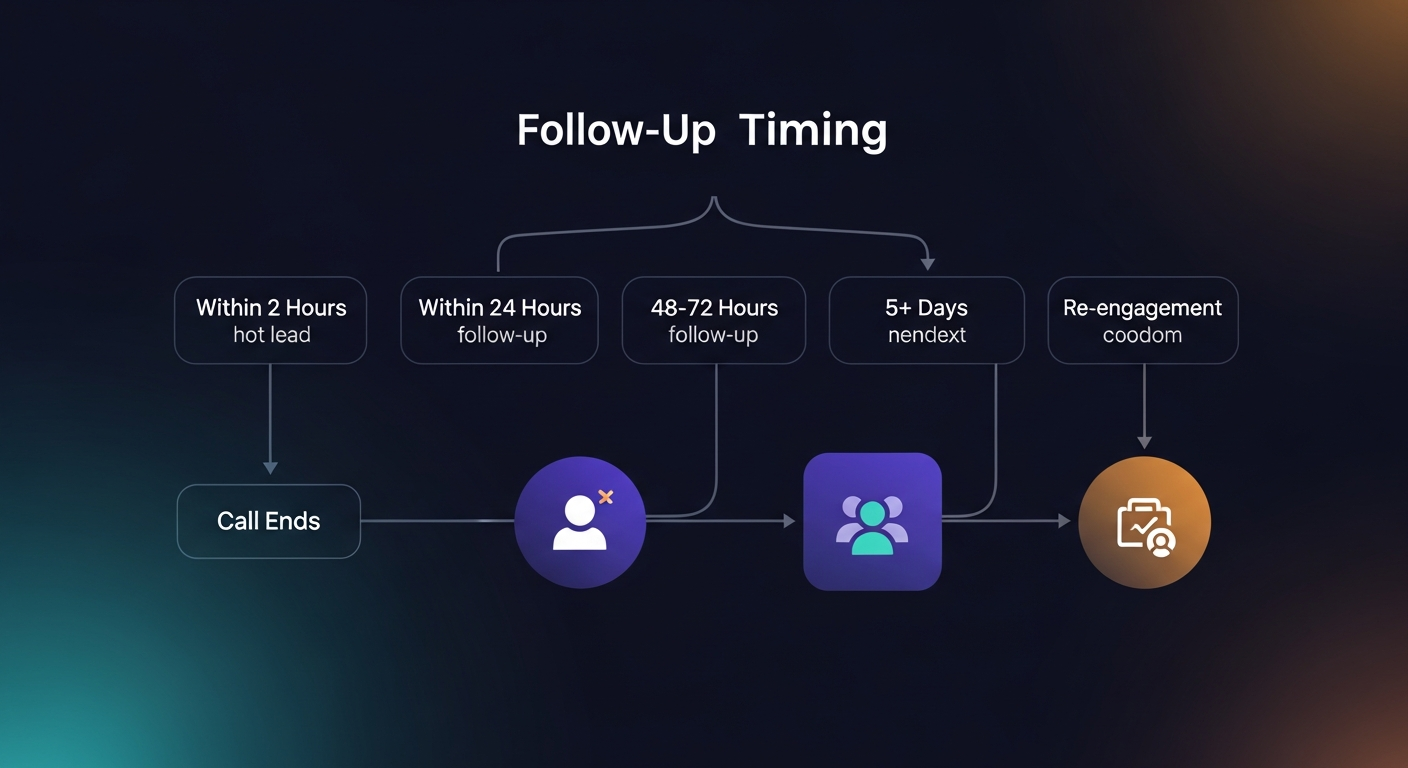
"content": "You should follow up after a sales call within 24 hours — ideally within 2 hours of the conversation ending. Research consistently shows that response rates drop sharply the longer you wait, with leads becoming up to 10x harder to re-engage after the first 24-hour window closes. If you're waiting days before sending that follow-up email, you're almost certainly losing deals that were yours to win.\n\nFollow-up timing isn't just a courtesy issue — it's a revenue issue. Let's break down exactly when to follow up, why the timing matters so much, and how to stop letting deals go cold because of avoidable delays.\n\n## Why Follow-Up Timing After a Sales Call Is So Critical\n\nSales calls create a window of peak engagement. Your prospect just spent time with you, they're thinking about their problem, and your solution is front of mind. That window doesn't stay open long.\n\nAccording to a study by InsideSales.com, the odds of qualifying a lead decrease by over 80% after the first 5 minutes of inaction — but even for post-call follow-ups, the principle holds: momentum is everything. The longer you wait, the more your prospect has moved on to other priorities, forgotten the specifics of your conversation, or started evaluating a competitor who followed up faster.\n\nHere's what happens psychologically when follow-up is delayed:\n\n- Enthusiasm fades. The emotional high of a good call dissipates within hours.\n- Details blur. Prospects forget the specific pain points you addressed and the solutions you proposed.\n- Competitors fill the gap. If you're not in their inbox, someone else will be.\n- Trust erodes. A slow follow-up signals disorganization — the opposite of what you want a prospect thinking about you.\n\nThe problem is that most reps know they should follow up quickly but still don't. Why? Because after a full day of calls, writing personalized, accurate follow-up emails is exhausting and easy to push to tomorrow.\n\n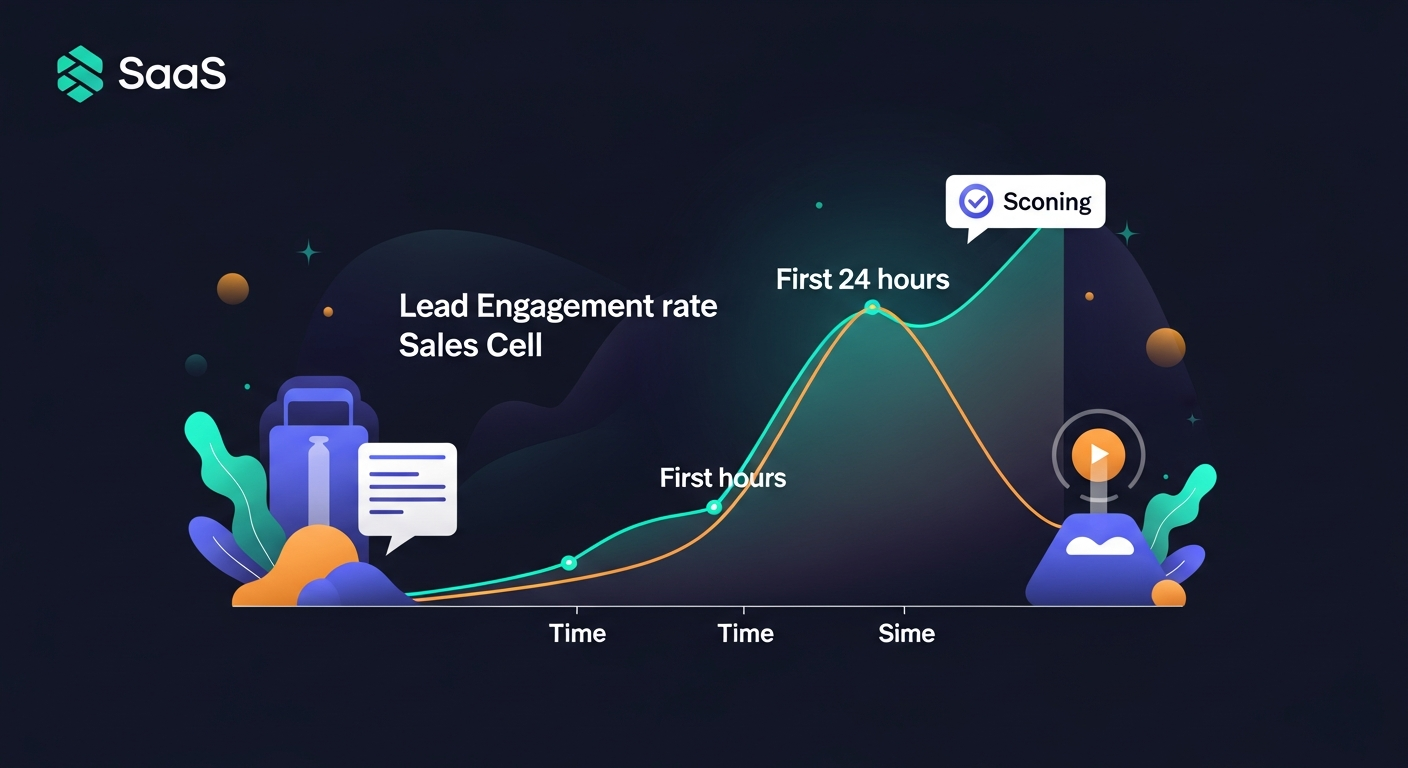 \n\n## The Ideal Follow-Up Timeline After a Sales Call\n\nThere's no one-size-fits-all answer, but here's a framework based on what consistently performs well across B2B sales cycles:\n\n### Within 2 Hours: The Hot Window\n\nThis is your best opportunity. Sending a follow-up email within 2 hours of a call has several advantages:\n\n- The conversation is still fresh for both parties\n- You can reference specific things that were said, making it feel personal and attentive\n- It signals professionalism and urgency without being pushy\n- It gives you a head start if the prospect is evaluating multiple vendors\n\nThis follow-up should be concise — a brief recap of what was discussed, the agreed-upon next steps, and any promised resources like case studies or pricing information.\n\n### 24 Hours: The Standard Window\n\nIf you can't send within 2 hours, 24 hours is the outer edge of the \"hot\" follow-up zone. This is still acceptable and expected in most B2B contexts. Beyond this point, you're no longer riding the momentum of the call — you're trying to restart a conversation that's already cooled.\n\n### 48–72 Hours: Lukewarm Territory\n\nWaiting two to three days isn't a disaster, but it's a missed opportunity. At this point, your follow-up should acknowledge the gap and re-anchor the prospect to the value discussed: "I wanted to circle back on our conversation earlier this week — specifically around [pain point they mentioned]."\n\n### 5+ Days: You're Now Playing Catch-Up\n\nWaiting a week or more to follow up after a sales call is a significant problem. Studies show that 80% of sales require 5 or more follow-ups, yet 44% of reps give up after just one attempt. If you wait five days to send that first follow-up, you've already used up goodwill and momentum you needed for the longer nurture sequence ahead.\n\n## Real-World Scenarios: Getting the Timing Right\n\nScenario 1: The Enthusiastic Prospect\nYou just wrapped a 45-minute discovery call with a VP of Sales who was actively asking about implementation timelines and pricing. This is a hot lead — follow up within 2 hours, maximum. Send a summary of what was discussed, attach the one-pager they asked for, and confirm the next meeting before they have a chance to cool off or schedule time with a competitor.\n\nScenario 2: The Non-Committal Prospect\nThe call went okay but the prospect was vague about timelines and didn't ask many questions. Don't use this as a reason to delay — if anything, a fast follow-up here is even more important. Within 24 hours, send a crisp recap that re-establishes the value of your solution relative to the pain points they mentioned. Make it easy for them to say yes to a next step.\n\nScenario 3: The End-of-Day Call\nIt's 4:45 PM on a Friday and you just finished a promising call. Should you send the follow-up now or wait until Monday? Send it now. A follow-up that arrives Friday afternoon is more likely to be read over the weekend than one that gets buried in Monday's inbox rush. At minimum, draft and schedule it for 8 AM Monday morning so it's the first thing they see.\n\n
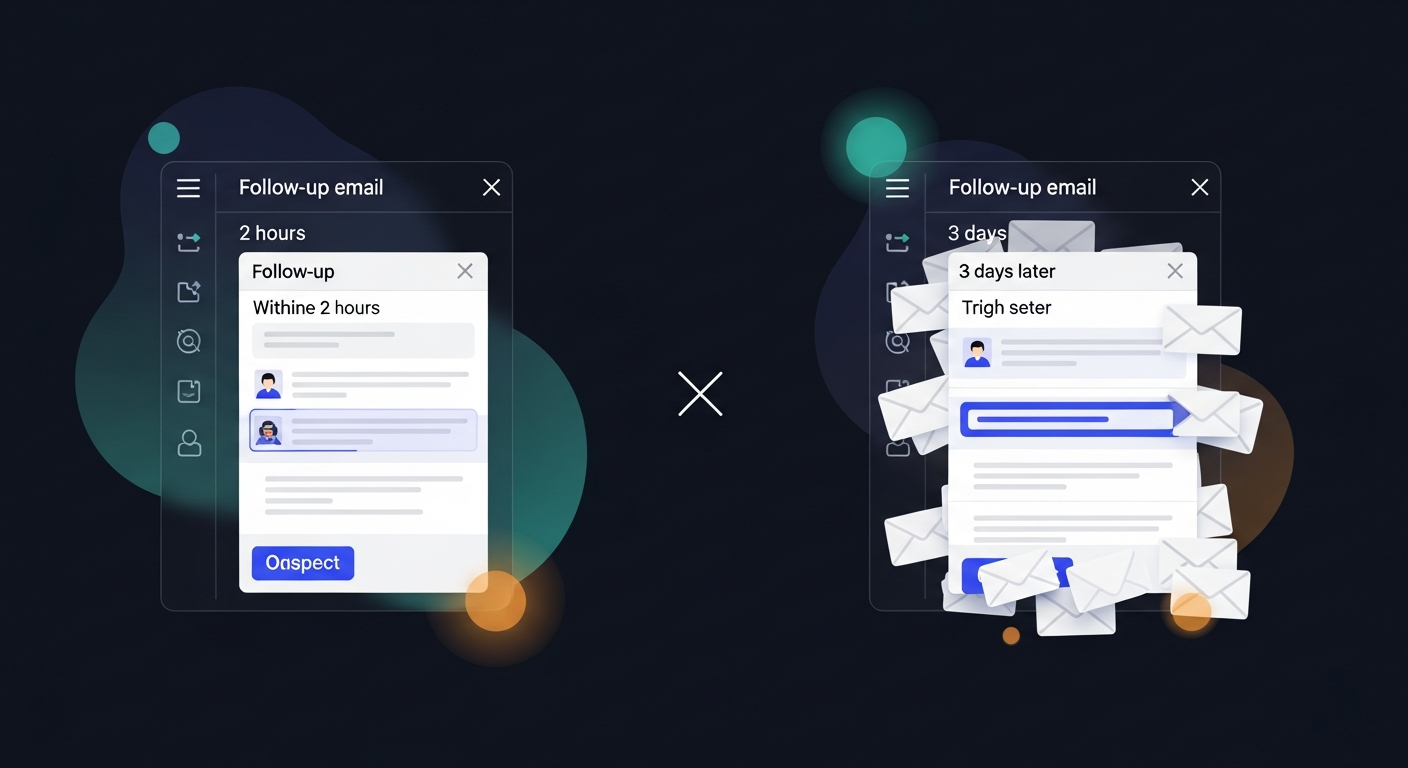 \n\n## The Real Problem: Execution, Not Intent\n\nMost sales reps understand follow-up timing in theory. The breakdown happens in execution. After 6–8 calls in a day, sitting down to write a personalized, accurate follow-up for each one feels impossible. So reps either:\n\n- Send generic, low-effort follow-ups that don't reference the actual conversation\n- Delay until they "have time to do it properly" — which often means tomorrow, then the next day\n- Skip the follow-up entirely and jump straight to the next call\n\nThis is exactly the problem that tools like ReplySequence are built to solve. ReplySequence automatically generates personalized post-meeting follow-up emails based on what was actually discussed in your call — so you can send a high-quality, specific follow-up within minutes of hanging up, not hours or days later.\n\nInstead of staring at a blank email and trying to remember which prospect mentioned their Q3 budget constraints, ReplySequence pulls the key details from your meeting and structures them into a professional follow-up that sounds like you wrote it at your best, every time.\n\n## How to Structure a Fast, Effective Follow-Up Email\n\nSpeed matters, but so does quality. A fast follow-up that's vague or generic won't move the deal forward. Here's what every post-call follow-up email should include:\n\n1. A personalized opener that references something specific from the call — a challenge they mentioned, a goal they shared, or a question they asked.\n2. A brief recap of the key points covered (2–3 bullet points max).\n3. Clear next steps with dates and owners — who's doing what by when.\n4. Any promised materials — links, attachments, or a calendar invite.\n5. A low-friction CTA — make it easy to confirm the next step with a single click or reply.\n\nKeep it under 200 words. Prospects don't need an essay — they need a clear, professional record of the conversation and a path forward.\n\n## When Waiting Longer Is Actually Okay\n\nThere are a handful of situations where a slightly longer follow-up window is acceptable:\n\n- You promised a custom proposal or analysis. If you told the prospect you'd follow up with something specific that takes time to prepare, it's better to deliver quality than speed. Set a realistic timeline on the call and stick to it.\n- The prospect explicitly asked you to wait. If they said "reach out after the 15th," respect that — but still send a brief same-day email acknowledging the timeline.\n- Complex enterprise deals with multiple stakeholders. In multi-threaded deals, internal alignment sometimes takes longer. But even here, a prompt acknowledgment email keeps you top of mind.\n\nIn all other cases, the rule holds: faster is better when it comes to follow-up timing after a sales call.\n\n
 \n\n## Stop Losing Deals to Slow Follow-Ups\n\nKnowing how long to wait before following up after a sales call is the easy part — the answer is as soon as possible, and almost always within 24 hours. The hard part is consistently executing on that timing across every call, every day, without sacrificing personalization or quality.\n\nThat's where systems make the difference. Whether you build a manual process or use an AI-powered tool like ReplySequence, the goal is the same: make fast, high-quality follow-up the default — not the exception.\n\nIf you're ready to stop leaving deals on the table because of slow follow-ups, visit replysequence.com and see how automated, personalized post-meeting follow-ups can help your team close faster.",
"date": "2026-03-31",
"author": "Jimmy Hackett",
"tags": ["follow-up timing", "sales follow-up", "post-meeting email", "sales productivity", "B2B sales"],
"readingTime": 7,
"faqs": [
{
"question": "How long should you wait before following up after a sales call?",
"answer": "You should follow up within 24 hours of a sales call, ideally within 2 hours while the conversation is still fresh. Waiting longer significantly reduces your chances of re-engaging the prospect and moving the deal forward."
},
{
"question": "What happens if you wait too long to follow up after a sales call?",
"answer": "Waiting too long to follow up causes prospect enthusiasm to fade, key details from the conversation to blur, and opens the door for competitors to move in. Studies show leads become significantly harder to re-engage after the first 24-hour window closes."
},
{
"question": "What should a post-call follow-up email include?",
"answer": "A post-call follow-up email should include a personalized opener referencing something specific from the call, a brief recap of key points, clear next steps with owners and dates, any promised materials, and a low-friction CTA. Keep it under 200 words."
},
{
"question": "Is it okay to follow up on the same day as the sales call?",
"answer": "Yes — following up on the same day, especially within 2 hours of the call, is the best practice. It demonstrates professionalism, keeps momentum alive, and ensures your solution stays top of mind before the prospect moves on to other priorities."
},
{
"question": "Why do sales reps delay follow-ups even when they know they shouldn't?",
"answer": "Most reps delay follow-ups because writing personalized, accurate emails after a full day of calls is time-consuming and mentally draining. This is why AI-powered tools that automate post-meeting follow-up emails have become increasingly valuable for high-volume sales teams."
}
]
}
```
How ReplySequence handles this
ReplySequence connects to your Zoom, Teams, or Meet calls, reads the transcript, and drafts a context-rich follow-up email in about 8 seconds. You review it, make any edits, and send from your real inbox. Your CRM updates automatically.