 ReplySequence
The Best Follow-Up Email Timing for Each Stage of the Sales Funnel
```json
{
"title": "Best Follow-Up Email Timing for Each Sales Funnel Stage",
"slug": "the-best-follow-up-email-timing-for-each-stage-of-the-sales-funnel",
"excerpt": "Discover the optimal follow-up email timing for every sales funnel stage — from first contact to closed deal — so you never lose a prospect to bad timing.",
"content": "The best follow-up email timing in the sales funnel depends entirely on where your prospect is in their buying journey. Sending too early feels pushy; too late loses momentum. The data-backed sweet spot varies by stage — top-of-funnel contacts need faster outreach (within 5 minutes to 1 hour of first touch), while late-stage prospects require more deliberate, spaced cadences that respect their decision timeline.\n\nGetting follow-up email timing wrong is one of the most expensive mistakes in sales. Research from InsideSales.com found that contacting a lead within 5 minutes of their first inquiry makes you 100x more likely to connect compared to waiting 30 minutes. But that urgency doesn't apply uniformly across every stage. Here's a breakdown of exactly when to follow up at each phase of the sales funnel — and why the timing logic changes as prospects move deeper toward a decision.\n\n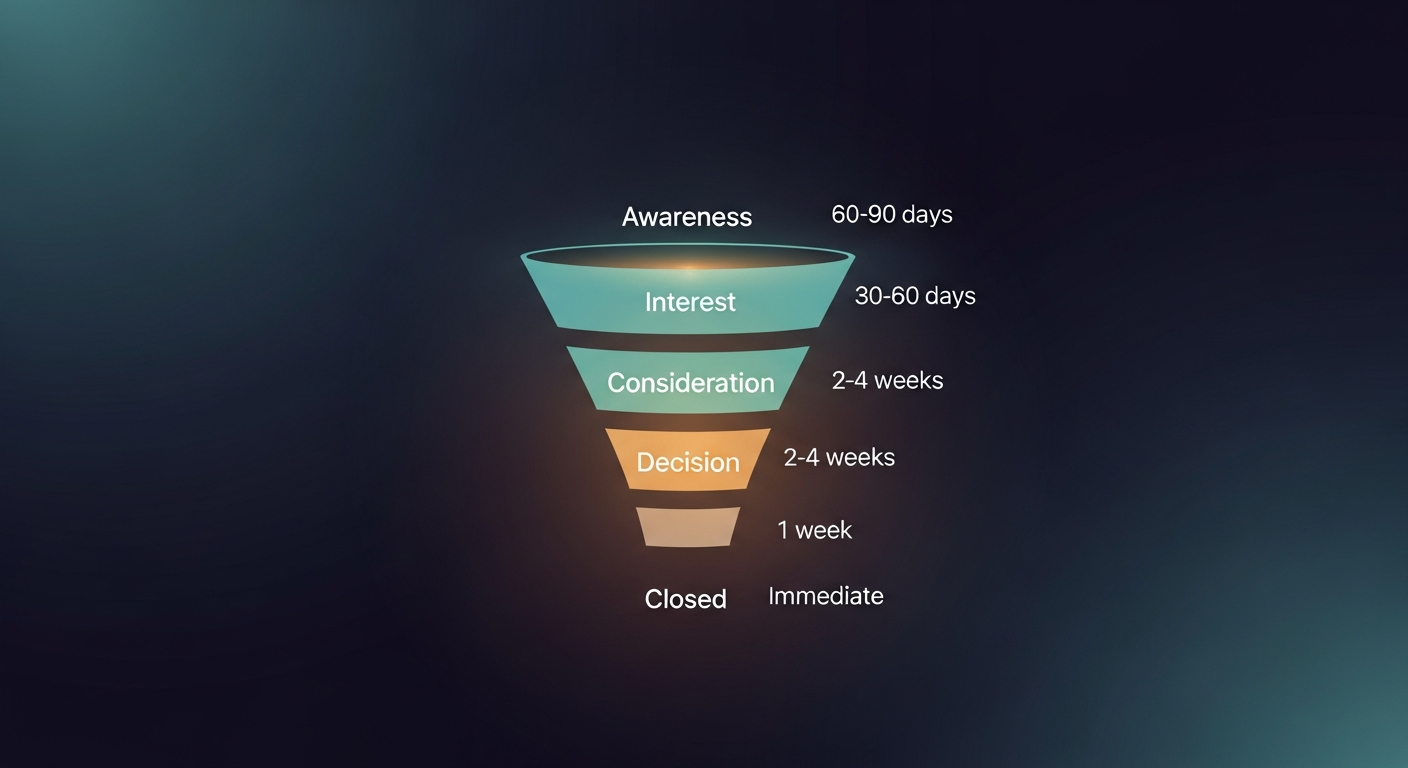 \n\n## Stage 1: Top of Funnel — New Leads and First Contact\n\nAt the top of the funnel, speed is everything. When someone fills out a form, downloads a resource, clicks an ad, or attends a webinar, they're signaling active interest right now. That intent has a half-life measured in minutes, not days.\n\nOptimal timing: Within 5–60 minutes of the triggering action.\n\nHere's what the follow-up schedule should look like for a brand-new top-of-funnel lead:\n\n- Immediately (0–5 min): Auto-send a confirmation or resource delivery email\n- Day 1 (within 1 hour): Personal or semi-personalized outreach referencing their specific action\n- Day 2: A value-add email — a relevant case study, short video, or insight\n- Day 5: A soft check-in ("Did you get a chance to review X?")\n- Day 10: A breakup-style email that creates gentle urgency\n\nThe logic here is simple: at this stage, your prospect has the highest awareness of their problem and the freshest memory of why they engaged. Every hour you wait, competing priorities crowd you out.\n\nReal-world scenario: A prospect downloads your pricing guide at 2:47 PM on a Tuesday. If your SDR reaches out by 3:30 PM with a tailored message referencing the guide, they're catching that person while the problem is front of mind. Wait until Wednesday morning, and that lead is already buried in their inbox — and their attention.\n\n## Stage 2: Middle of Funnel — Post-Demo and Discovery Calls\n\nOnce a prospect has had a discovery call or product demo, the follow-up email timing calculus shifts. You're no longer racing against cold interest — you're capitalizing on a conversation that already happened. The rule here: follow up within 24 hours, no exceptions.\n\nBut speed is only part of the equation. Post-meeting follow-ups need to be substantive. A generic "Thanks for your time!" email is noise. Your follow-up should recap key pain points discussed, confirm next steps, and deliver any promised resources.\n\nOptimal timing: Within 2–24 hours of the meeting ending.\n\nA healthy mid-funnel sales email cadence looks like this:\n\n- Same day (within 2 hours): Meeting recap email with pain points, next steps, and any committed resources\n- Day 3: Follow-up on any open questions from the call; include a relevant case study\n- Day 7: Check-in on internal progress ("Has your team had a chance to discuss?")\n- Day 14: Re-engagement with new value — a relevant article, product update, or ROI calculator\n- Day 21: Direct ask for a decision or next meeting\n\nThis is the stage where most sales reps lose deals — not because the prospect said no, but because the rep went quiet. 80% of sales require 5 or more follow-ups after the initial meeting, yet 44% of salespeople give up after just one follow-up (Marketing Donut).\n\nTools like ReplySequence are built precisely for this moment — automatically generating personalized post-meeting follow-ups based on call notes and CRM data, so no conversation falls through the cracks.\n\n
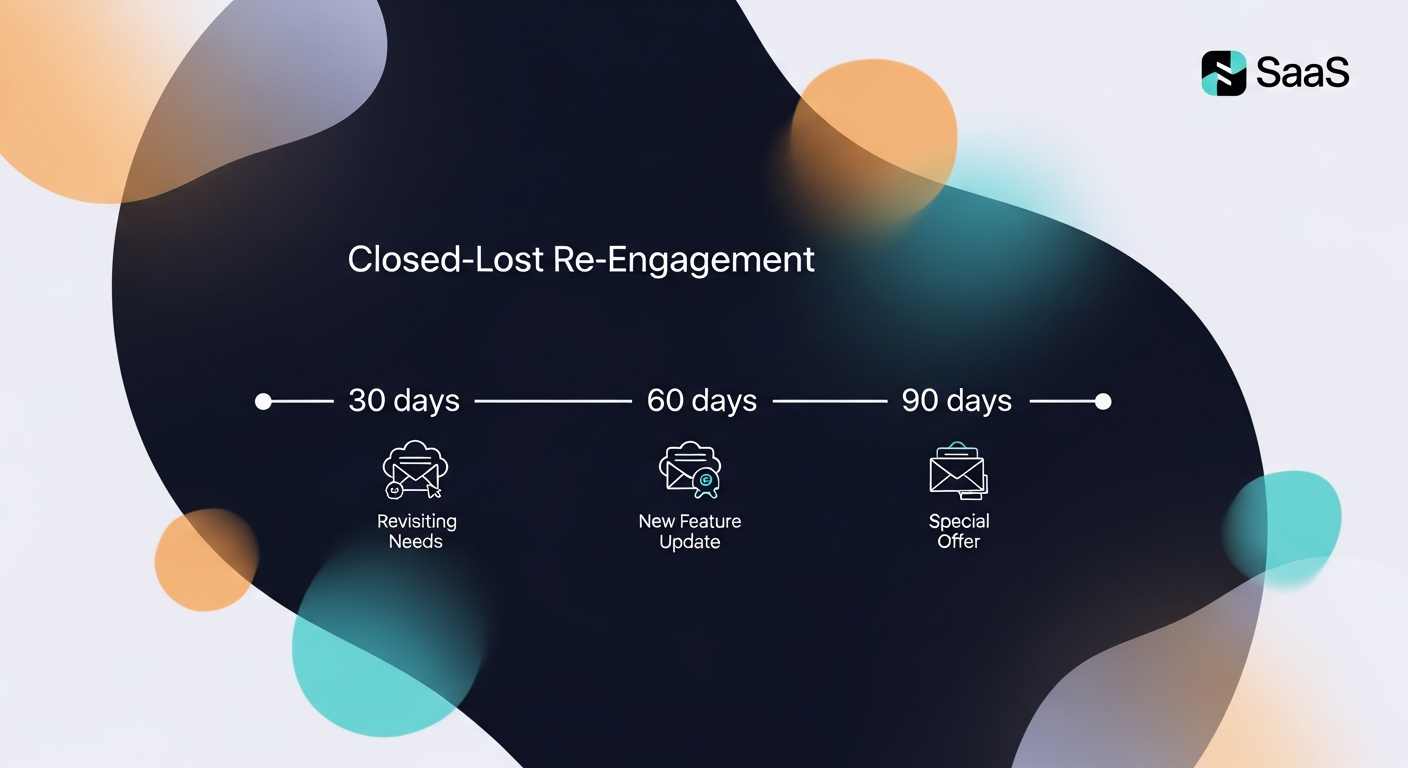
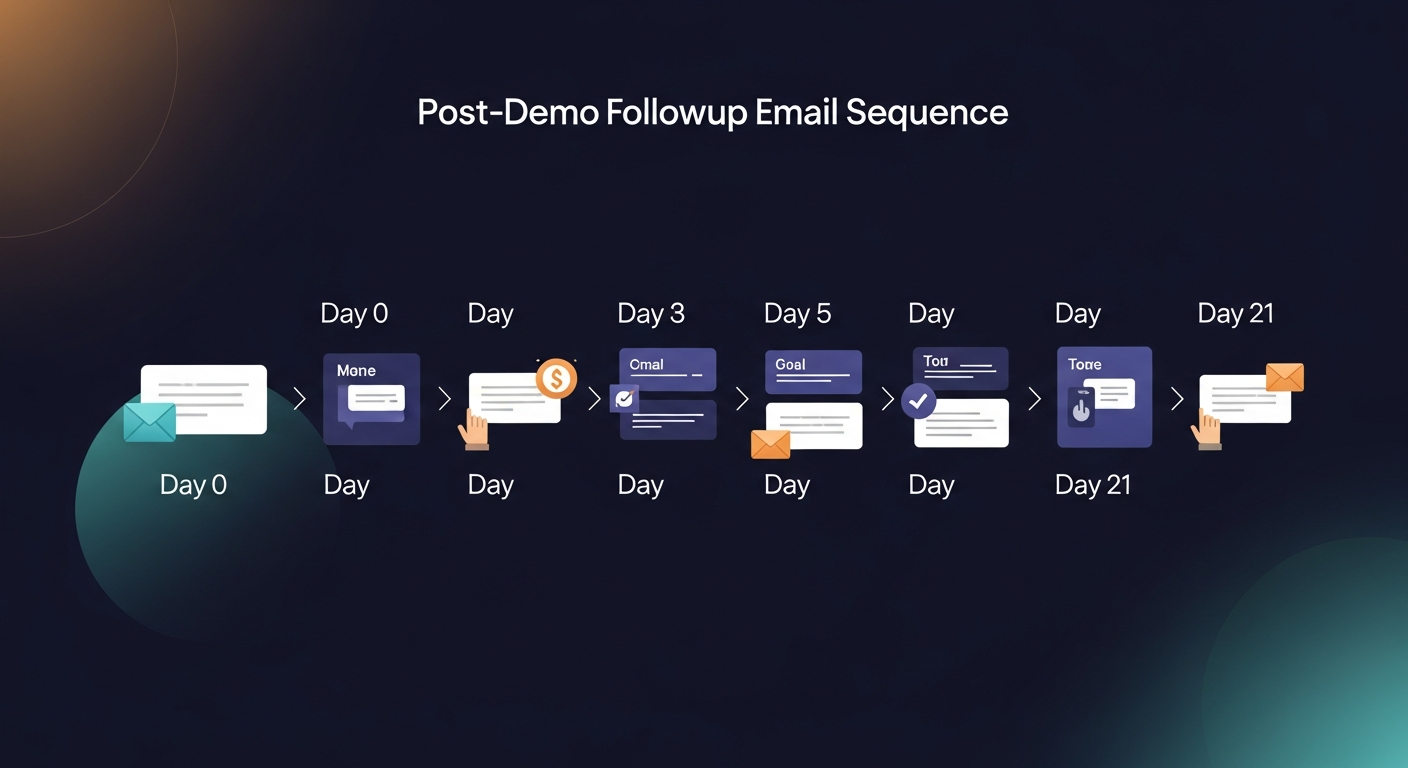 \n\nReal-world scenario: An AE finishes a 45-minute demo with a mid-market operations director. There were five specific pain points discussed and two competitors mentioned. A manually written follow-up takes 20+ minutes and often goes out the next morning — cold. An AI-assisted follow-up goes out within the hour, references each pain point by name, and links to a case study featuring a comparable company. Guess which one gets a reply.\n\n## Stage 3: Late Funnel — Active Evaluation and Proposal Stage\n\nWhen a prospect is actively evaluating your solution — reviewing proposals, looping in stakeholders, or comparing vendors — the follow-up strategy needs to respect the weight of the decision while staying visible.\n\nPushing too hard at this stage can damage trust. But going silent reads as disinterest.\n\nOptimal timing: Every 5–7 business days, with purpose-driven touchpoints.\n\nLate-funnel follow-up schedule:\n\n- Day 1 after proposal delivery: Confirm receipt and offer to answer questions\n- Day 5–7: Add value without pressure — share a relevant ROI example or customer story\n- Day 10–14: Check in on stakeholder alignment ("Is there anything I can help you bring to your leadership team?")\n- Day 21: Introduce a gentle deadline — an expiring discount, implementation timeline, or end-of-quarter incentive\n- Day 28+: Executive-level outreach if deal appears stalled\n\nThe key at this stage is that every follow-up must earn its place. No "just checking in" emails. Each message should either add new information, reduce friction, or move the decision forward.\n\nReal-world scenario: A VP of Sales has submitted a proposal to a 200-person logistics company. The champion loves the product, but the CFO hasn't engaged. Day 7 follow-up: the rep sends a one-page ROI summary tailored to logistics companies. Day 14: they offer to join a brief call with the CFO. Day 21: they reference Q2 implementation availability. Each touchpoint has a purpose — and a reason to respond.\n\n## Stage 4: Closed-Won — Onboarding and Expansion Follow-Ups\n\nMost salespeople stop thinking about follow-up email timing once a deal closes. That's a missed opportunity. Post-close follow-ups directly impact churn rates, upsell potential, and referral generation.\n\nOptimal timing: Day 1, Day 7, Day 30, Day 90.\n\n- Day 1 (post-signature): Welcome email with onboarding next steps and key contacts\n- Day 7: Check-in on implementation progress; introduce CSM if applicable\n- Day 30: Value check — are they getting what was promised in the demo?\n- Day 90: Business review or expansion conversation; referral ask\n\nReplySequence can be configured to trigger post-close sequences based on CRM status changes, making it easy to systematize a part of the funnel most teams leave to chance.\n\n## Stage 5: Closed-Lost — Re-Engagement Timing\n\nDeals that go cold or get marked closed-lost aren't necessarily dead. Between 20–40% of lost deals can eventually be re-engaged if the timing and message are right (Salesforce research).\n\nOptimal re-engagement timing: 30, 60, and 90 days post-loss.\n\n- 30 days: A brief, no-pressure check-in — "Wanted to see how things are going with [competitor/status quo]"\n- 60 days: Share a relevant piece of content or product update\n- 90 days: Direct re-qualification — "Is this still on your radar for later in the year?"\n\nThe goal isn't to relitigate a lost deal. It's to be present when circumstances change — and they often do.\n\n
 \n\n## The Universal Rules of Follow-Up Email Timing\n\nRegardless of funnel stage, a few principles apply across every follow-up:\n\n- Send on Tuesdays, Wednesdays, or Thursdays — open rates consistently peak mid-week (HubSpot, 2024)\n- 10 AM and 2 PM local time outperform early morning and end-of-day sends\n- Subject lines under 50 characters see higher open rates on mobile\n- Personalization beats volume — one relevant email outperforms three generic ones\n- Track opens and clicks to recalibrate your follow-up schedule in real time\n\nThe best sales email cadence isn't a rigid template — it's a responsive system that adjusts based on engagement signals. If someone opened your email three times but didn't reply, that's a buying signal worth acting on faster.\n\n## Why Timing Alone Isn't Enough\n\nFollow-up email timing in the sales funnel is a critical lever, but timing without relevance is just noise. The reason most follow-up cadences fail isn't that they sent emails on the wrong day — it's that the emails said nothing worth reading.\n\nThe reps and teams who consistently win are the ones who combine the right timing with hyper-relevant content that maps directly to the conversation they had. That's the gap that AI-powered tools like ReplySequence are designed to close — by turning meeting notes and CRM context into timely, personalized follow-ups that actually move deals forward.\n\nIf your current follow-up process relies on reps remembering to send emails, or on generic templates that don't reference the actual conversation — you're leaving deals on the table at every stage of the funnel.\n\nReady to stop guessing on timing and start converting more pipeline? Visit replysequence.com to see how AI-powered follow-up sequences can be tailored to each stage of your sales funnel — automatically.",
"date": "2026-03-31",
"author": "Jimmy Hackett",
"tags": ["follow-up email timing", "sales funnel", "sales email cadence", "when to follow up", "follow-up schedule"],
"readingTime": 8,
"faqs": [
{
"question": "When should you send a follow-up email after a sales demo?",
"answer": "You should send a follow-up email within 2 hours of a sales demo, and no later than 24 hours after. The email should recap pain points discussed, confirm next steps, and deliver any promised resources — not just a generic thank-you."
},
{
"question": "What is the best follow-up email timing for new top-of-funnel leads?",
"answer": "For top-of-funnel leads, follow up within 5 to 60 minutes of the triggering action — such as a form fill, content download, or webinar registration. Research shows contacting a lead within 5 minutes makes you 100x more likely to connect than waiting 30 minutes."
},
{
"question": "How often should you follow up with a prospect who received a proposal?",
"answer": "During the proposal and evaluation stage, follow up every 5 to 7 business days with purpose-driven touchpoints. Each follow-up should add new value — such as ROI data, a customer story, or help navigating internal stakeholders — rather than simply checking in."
},
{
"question": "How long should you wait before re-engaging a closed-lost deal?",
"answer": "Wait 30 days before sending a low-pressure re-engagement email to a closed-lost prospect. Follow up again at 60 and 90 days with relevant content or a direct re-qualification question, as 20–40% of lost deals can eventually be re-engaged when timing and circumstances change."
},
{
"question": "What days and times are best for sending sales follow-up emails?",
"answer": "Tuesdays, Wednesdays, and Thursdays consistently show the highest email open rates for sales outreach. Within those days, sending at 10 AM or 2 PM in the prospect's local time zone tends to outperform early morning and end-of-day sends."
}
]
}
```
How ReplySequence handles this
ReplySequence connects to your Zoom, Teams, or Meet calls, reads the transcript, and drafts a context-rich follow-up email in about 8 seconds. You review it, make any edits, and send from your real inbox. Your CRM updates automatically.