 ReplySequence
How to Build a Post-Meeting Nurture Sequence That Keeps Deals Warm
```json
{
"title": "How to Build a Post-Meeting Nurture Sequence That Keeps Deals Warm",
"slug": "how-to-build-a-post-meeting-nurture-sequence-that-keeps-deals-warm",
"excerpt": "A post-meeting nurture sequence keeps deals alive between calls. Here's how to build one that actually converts — with timing, messaging, and real examples.",
"content": "A post-meeting nurture sequence is a structured series of follow-up emails sent after a sales call to keep the prospect engaged until they're ready to move. Most deals don't die in the meeting — they die in the silence after it. Build this right and you stop losing warm leads to inertia.\n\nI've watched it happen hundreds of times. Meeting goes great. Both sides are energized. Then... nothing. The rep means to follow up, but it takes two days, then three, then the prospect has mentally moved on. 44% of salespeople give up after one follow-up, according to Salesforce research, while 80% of sales require five or more touchpoints to close. The math on that gap is brutal.\n\nHere's how to build a post-meeting nurture sequence that actually keeps deals warm.\n\n## Why Most Follow-Up Falls Apart\n\nThe problem isn't effort. Reps care. The problem is that follow-up is unstructured and reactive. There's no playbook for what comes after the meeting ends. So people default to one of two failure modes:\n\n- The ghost: They send a decent recap email, then wait. And wait. And wait for the prospect to reply.\n- The spam blast: They drop the contact into a generic drip sequence that has nothing to do with what was actually discussed.\n\nNeither works. The ghost lets deals go cold. The spray-and-pray destroys the personal rapport you just built on the call.\n\nA real post-meeting nurture sequence is personalized to the conversation, structured in timing, and short enough that people actually read it.\n\n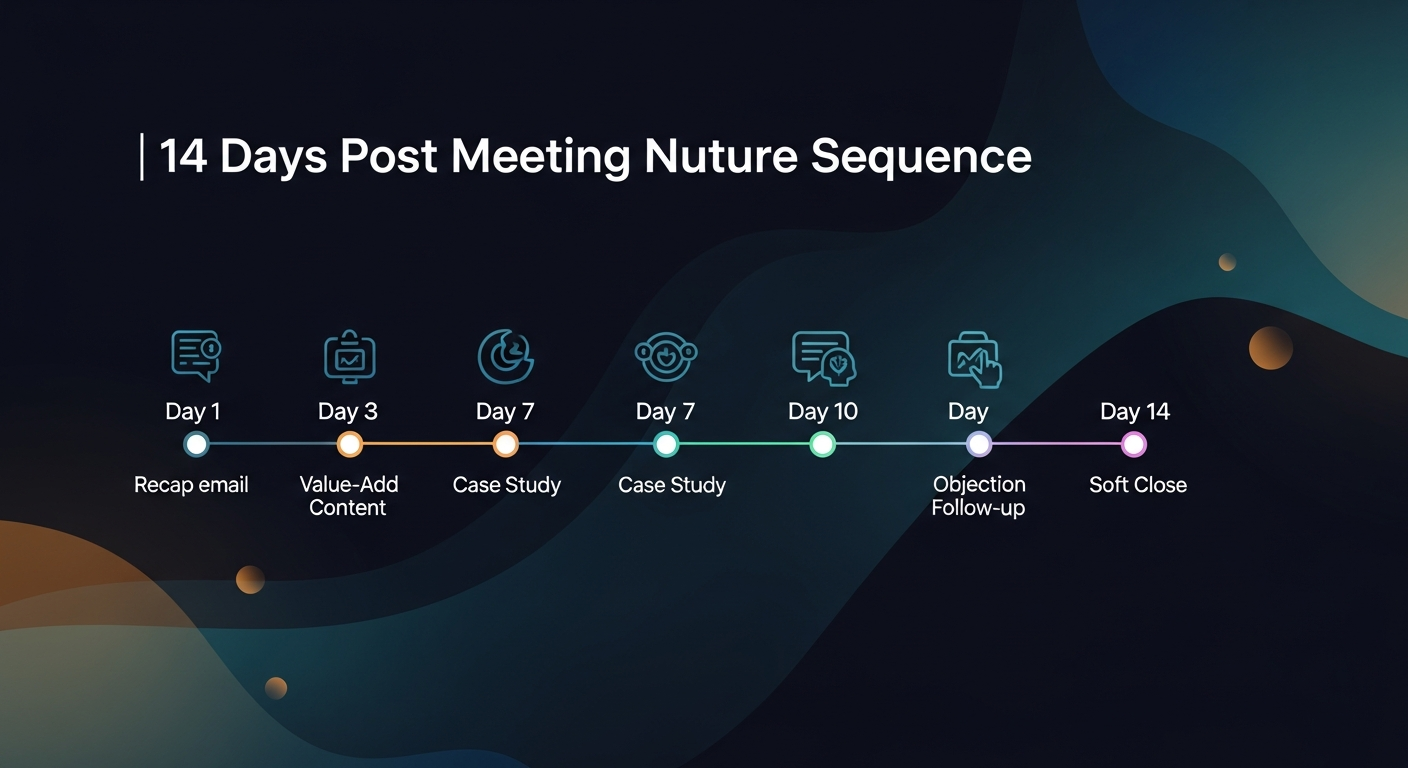 \n\n## The Anatomy of a Post-Meeting Nurture Sequence\n\nHere's the structure I'd build. Five touches over roughly two weeks. After that, if they haven't engaged, move them to a longer-cycle sequence or flag them for a breakup email.\n\n### Touch 1: The Recap Email (Same Day, Within 2 Hours)\n\nThis is not optional. Send it fast. Deals that get a follow-up within an hour of the meeting are 7x more likely to progress, per Harvard Business Review data on lead response time applied to sales contexts.\n\nWhat goes in it:\n- What you discussed (specific, not generic)\n- The problem they named in their own words\n- The next step you agreed on, with a date\n- One clear ask — confirm the next step or intro you to the right stakeholder\n\nThis email sets the tone for everything that follows. If it's vague, the whole sequence suffers. Pull the specific language from your transcript — their exact pain points, their words, not yours.\n\nI built ReplySequence because this email was the one that always got skipped or delayed. Paste your transcript in, and the follow-up email is ready in 60 seconds. It's not magic — it's just finally closing the loop the same day the meeting happens.\n\n### Touch 2: The Value Add (Day 3)\n\nYou're not checking in. You're delivering something useful. Options:\n\n- A case study from a similar company in their industry\n- A relevant blog post or data point that backs up a claim you made in the meeting\n- A short Loom walking through how your tool handles the specific use case they asked about\n- A template or resource they can use regardless of whether they buy\n\nThe key: reference the meeting explicitly. "You mentioned your team is running 40+ calls a week with no consistent follow-up process — this case study is basically that exact situation." That's a warm lead follow-up. A generic "thought this might be helpful!" is not.\n\n### Touch 3: The Proof Point (Day 7)\n\nOne week out, you want social proof that maps to their situation. This is where segmentation matters. If you're talking to an SDR manager at a 50-person SaaS company, send them a testimonial or result from an SDR manager at a 50-person SaaS company. Not a Fortune 500 logo.\n\nKeep it short. Three sentences max:\n\n1. Here's what a similar customer was dealing with\n2. Here's what changed after they implemented\n3. Here's the question — is this resonating with what you're seeing?\n\nEnd with a soft question, not a hard ask. You're testing for engagement, not forcing a decision.\n\n
 \n\n### Touch 4: The Objection Reframe (Day 10)\n\nEvery deal has an objection that came up in the meeting. Price. Timing. Internal buy-in. Integration complexity. Whatever it was — address it directly in email four.\n\nThis is where most deal nurture cadences get generic. They send a feature update or a "just wanted to stay top of mind" that says nothing. Instead, pick the main friction point from your transcript and write specifically to it.\n\nExample: If they said "we're not budgeting for new tools until Q3," your Day 10 email might be:\n\n"You mentioned Q3 is when new tool budgets open up — that's actually a great time to start the evaluation now so you're not rushing through procurement in September. Happy to set up a quick technical review in the next few weeks that doesn't require any budget sign-off yet."\n\nThat's not pushy. That's helpful. It shows you were listening.\n\n### Touch 5: The Soft Close (Day 14)\n\nTwo weeks in, you need a decision — even if that decision is "not now." Deals that drag without a defined next step just decay.\n\nYour Day 14 email should:\n- Acknowledge the time that's passed\n- Recap the core value prop in one sentence\n- Give them two easy options: "Let's set up a next call" or "Let's put this on hold until Q3 and I'll check back in"\n\nGiving them the "pause" option sounds counterintuitive. But it keeps the relationship intact and gets you a real answer instead of a ghost. A prospect who says "check back in Q3" is a warm lead. A prospect who stops replying is just noise in your pipeline.\n\n## What Makes a Nurture Sequence Actually Work\n\nA few principles I'd build this around:\n\nSpecificity beats frequency. Five highly specific emails beat fifteen generic ones. Every email should contain at least one reference to something said in the actual meeting.\n\nShort is a feature, not a flaw. Your prospect is busy. Paragraphs kill open rates. Three to five sentences per email, max. If you have more to say, put it in a linked resource.\n\nThe transcript is your source of truth. Everything in your nurture sequence should trace back to what was discussed. That's what separates a deal nurture cadence from a drip campaign.\n\nDon't auto-send. I'm obsessed with this. Even with AI-generated drafts, a human should review before anything goes out. Tone misjudgments and factual errors in automated emails can kill deals faster than silence.\n\n
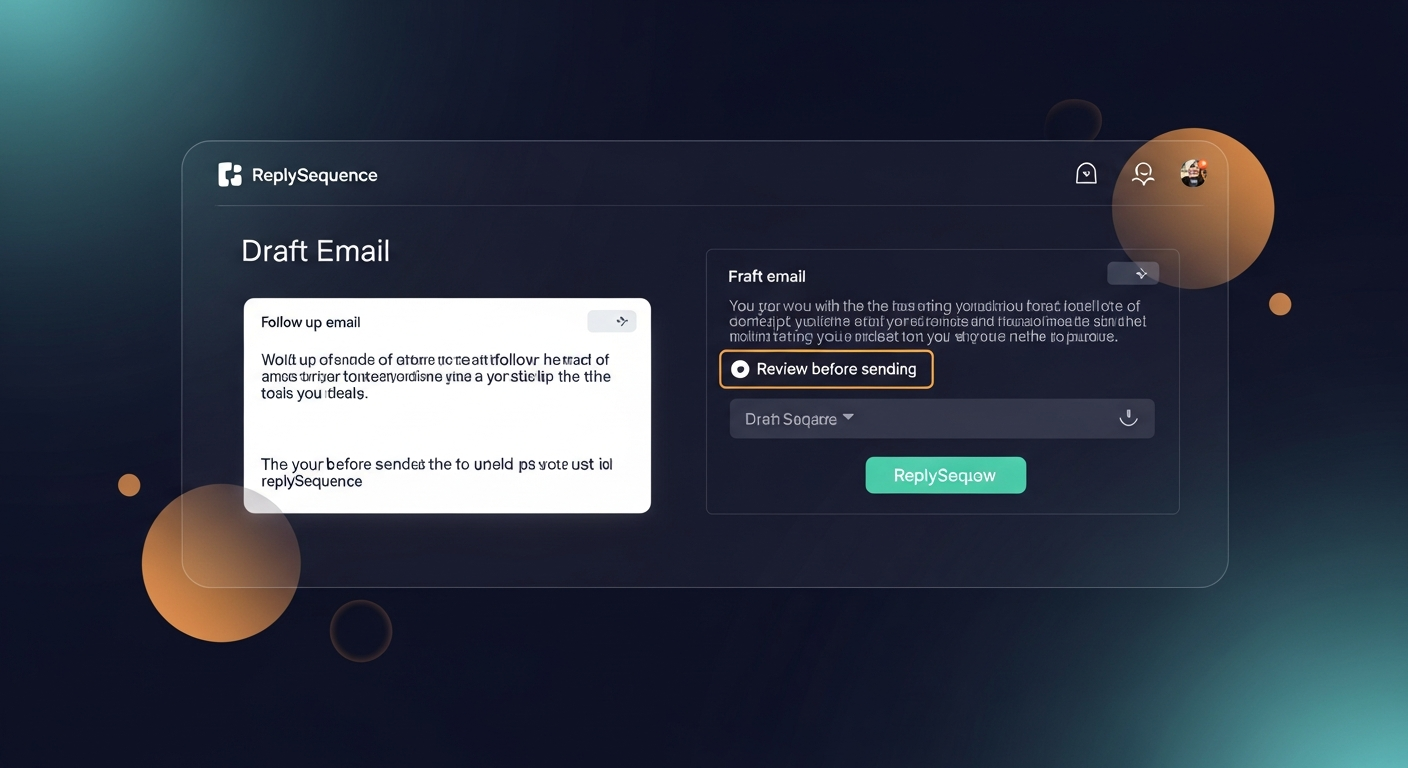 \n\n## Sequencing Tools and Where RS Fits\n\nYou've got options for managing the sequence itself — Outreach, Salesloft, HubSpot Sequences, Apollo, even a well-organized Gmail with Boomerang reminders. The tool matters less than the discipline.\n\nWhat actually breaks down is the first email. The recap. Because it requires the most personalization and happens at the worst possible time — right after the call, when you're already jumping to the next thing.\n\nThat's the gap I built ReplySequence to close. After Fireflies or Otter or Granola transcribes the call, you paste the transcript into RS and get a ready-to-review follow-up email in under a minute. Then you load touches two through five into whatever sequencing tool your team uses.\n\nTranscript in, follow-up out. The rest of the nurture sequence runs from there.\n\n## The Real Cost of Not Having a Sequence\n\nSales cycles are getting longer. The average B2B deal now takes 6-9 months (Gartner, 2024), and involves 6-10 stakeholders. In that environment, a single follow-up email isn't a sequence — it's wishful thinking.\n\nDeals don't usually blow up in a dramatic rejection. They just quietly stall. The prospect gets distracted by another priority. A competitor sends a more persistent cadence. Your contact changes jobs. The budget conversation shifts internally and nobody loops you in.\n\nA post-meeting nurture sequence doesn't prevent all of that. But it keeps you present enough that you find out about the shift before the deal is dead, not after.\n\n## Build It Once, Adjust Per Deal\n\nYou don't need to write five custom emails from scratch for every prospect. Build a template for each touch — the recap, the value add, the proof point, the objection reframe, the soft close. Then customize the specifics per deal based on your transcript.\n\nThat's scalable. That's what separates reps who close at 25% from reps who close at 12%. Not smarter strategy — just more consistent execution of the basics.\n\nIf you want to see how the recap email piece works, head to replysequence.com. Paste a transcript, get a draft. The rest of the sequence is on you — but at least you're starting it the same day the meeting ends.",
"date": "2026-04-08",
"author": "Jimmy Hackett",
"tags": ["post-meeting nurture sequence", "deal nurture cadence", "warm lead follow-up", "sales follow-up", "meeting follow-up sequence"],
"readingTime": 7,
"faqs": [
{
"question": "What is a post-meeting nurture sequence?",
"answer": "A post-meeting nurture sequence is a structured series of follow-up emails sent after a sales call to keep the prospect engaged until they're ready to move forward. It typically runs 5 touches over 10-14 days, with each email referencing specifics from the original meeting conversation."
},
{
"question": "How many follow-up emails should a post-meeting nurture sequence include?",
"answer": "A practical post-meeting nurture sequence includes 5 touches over roughly two weeks: a same-day recap, a value add on Day 3, a proof point on Day 7, an objection reframe on Day 10, and a soft close on Day 14. After that, move unresponsive leads to a longer-cycle sequence."
},
{
"question": "How quickly should you send a follow-up email after a sales meeting?",
"answer": "Send the recap email within 2 hours of the meeting ending. Deals that get a follow-up within an hour are 7x more likely to progress, and a fast follow-up signals professionalism and momentum before the prospect's attention moves elsewhere."
},
{
"question": "What's the difference between a post-meeting nurture sequence and a drip campaign?",
"answer": "A drip campaign is generic and pre-written for broad audiences. A post-meeting nurture sequence is personalized to the specific conversation that just happened — referencing the prospect's exact pain points, objections, and next steps from the call. Specificity is what makes it work."
},
{
"question": "How do you keep warm leads engaged between sales calls?",
"answer": "Keep warm leads engaged by sending short, specific emails that reference the meeting conversation and deliver real value — case studies, relevant data, or objection-handling content tied to what they said. Avoid generic 'just checking in' messages, which signal that you weren't listening."
}
]
}
```
How ReplySequence handles this
ReplySequence connects to your Zoom, Teams, or Meet calls, reads the transcript, and drafts a context-rich follow-up email in about 8 seconds. You review it, make any edits, and send from your real inbox. Deal intelligence builds automatically.