The Right Cadence for Sales Follow-Up
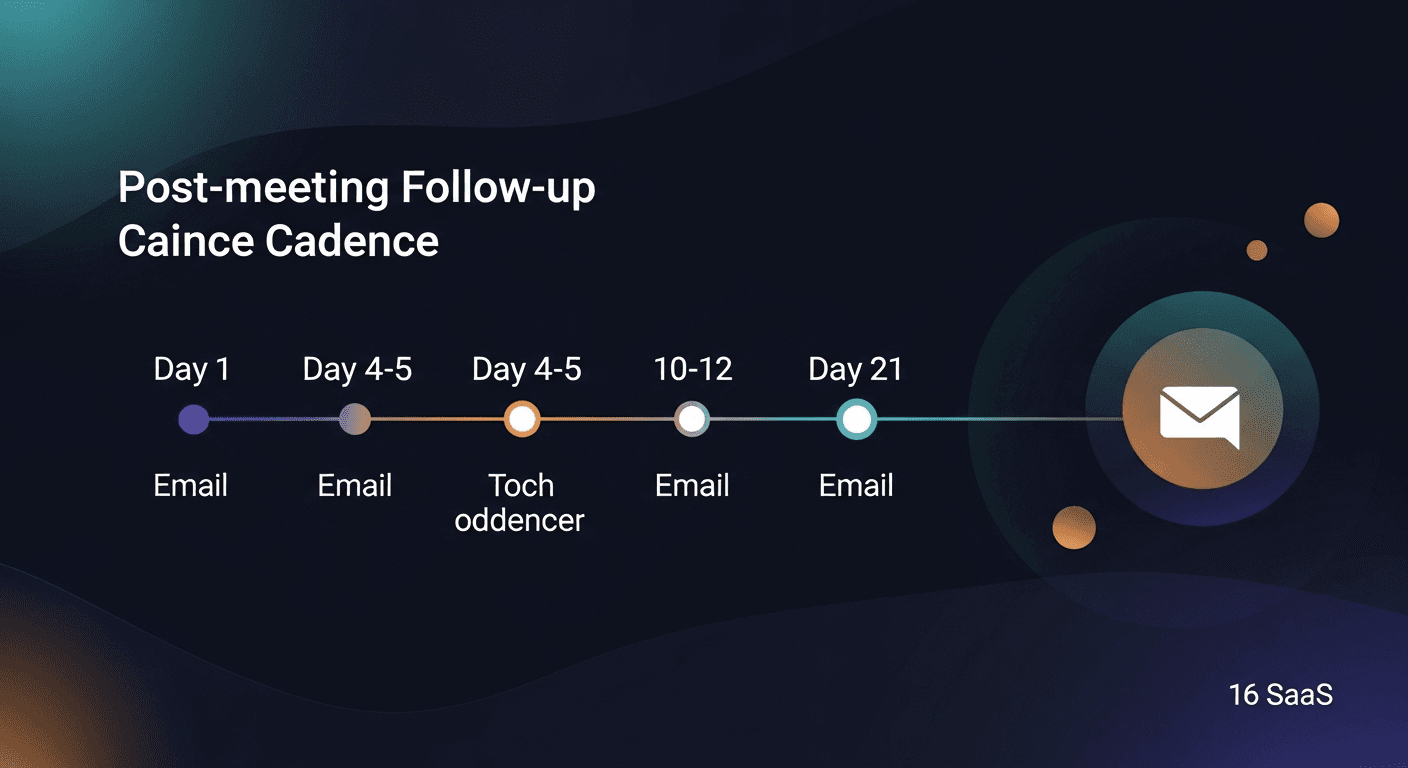
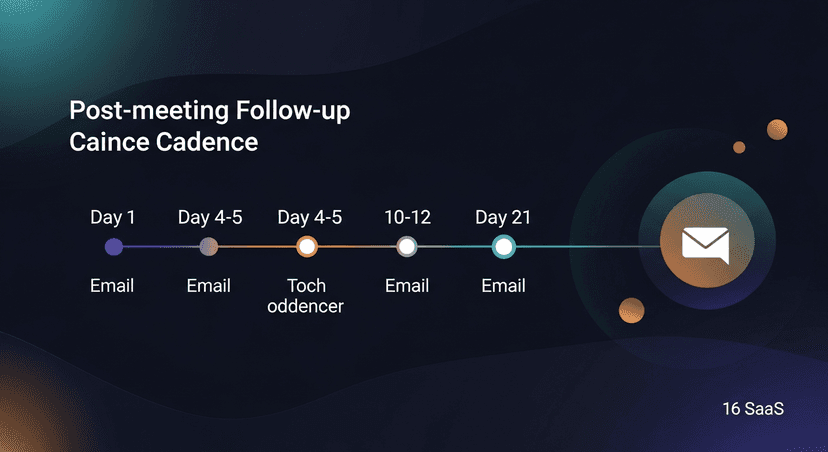
The right follow-up cadence after a sales meeting is: one email within 24 hours, a second touch at day 4-5, and a third at day 10-12 if you still haven't heard back. That's the baseline. Most reps either fire off one email and go quiet, or they spam every 48 hours until the prospect blocks them. Both approaches kill deals. The cadence that works lives in the middle.
Why Timing Is the Whole Game
Here's the thing about sales follow-up: the meeting was the easy part. You had the prospect's attention for 30-45 minutes. Then it ended, they went back to their inbox, and you became one of twelve competing priorities.
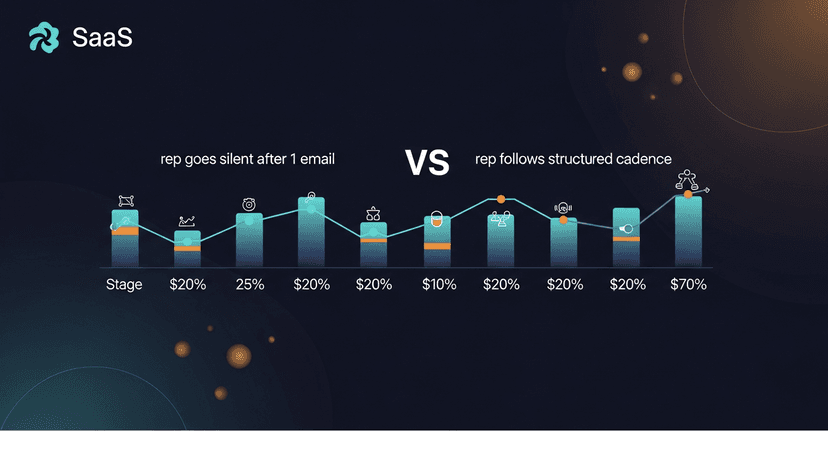
Studies consistently show that 80% of sales require at least five follow-up touches after initial contact, yet 44% of reps give up after one. That gap is where deals go to die. Not in a dramatic "they said no" way. In a slow, silent, never-heard-back way.
The post-meeting cadence isn't about being pushy. It's about being present at the right moments with the right reason to reach out.
The Cadence That Actually Works
I've studied this problem obsessively, talked to reps, read the research, built tools around it. Here's the follow-up pattern that holds up:
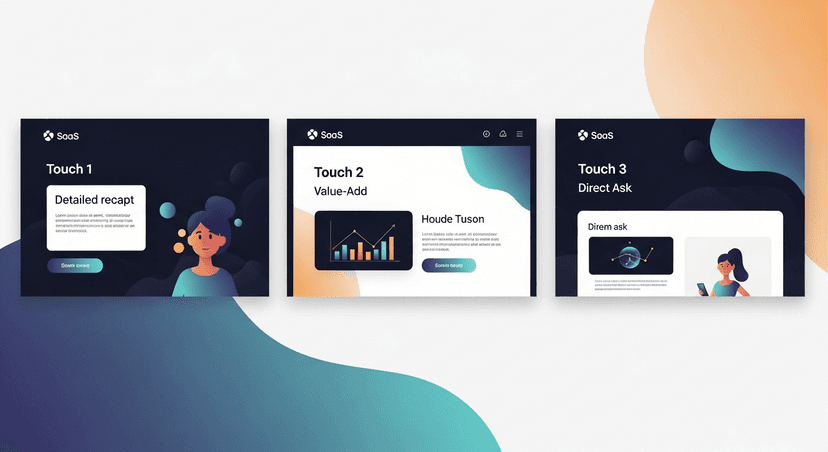
Touch 1: The Same-Day or Next-Morning Email
Send this within 2-4 hours of the meeting ending, or by 9am the next morning at the latest.
This isn't a check-in. It's a recap email, specific, useful, and short. Cover:
- What you discussed (2-3 bullets max)
- The problem they said they're trying to solve
- The next step you agreed on
- Any resources you promised to send
This email does two things: it proves you were listening, and it anchors the conversation in writing before their memory of the meeting fades. A generic "Great meeting today, let me know if you have questions" is worse than nothing. It tells the prospect you weren't paying attention.
The faster this goes out, the better. Research from Lead Connect found that responding within an hour is 7x more effective than waiting even two hours. Speed signals competence.
Touch 2: The Value-Add at Day 4-5
If you haven't heard back after your recap email, don't panic. Don't send a "just checking in" email either: that phrase has been drained of all meaning.
Instead, bring something. A relevant case study. A stat that connects to their specific pain. A short answer to a question they raised in the meeting that you've thought about more since then.
This touch says: I'm still thinking about your problem. It demonstrates that your interest in their business didn't expire when the Zoom ended.
Keep it short, 3-5 sentences. The goal is a reply, not a novel.
Touch 3: The Direct Ask at Day 10-12
Still nothing? This is where most reps either go quiet or start sending desperate follow-ups. Neither works.
At day 10-12, send a direct, honest email. Something like:
"Hey [Name]: I've followed up a couple of times since we talked. Either the timing's off, the priority has shifted, or my emails are getting buried. Which one is it? Happy to adjust accordingly."
This works because it's honest and it gives them permission to say no. A clean no is better than silence. And sometimes that directness is exactly what shakes a reply loose.
Touch 4 and Beyond: The Long Game
If you've done three touches and heard nothing, the deal isn't necessarily dead, but it needs to go into a different bucket. Move them to a monthly or quarterly nurture. One touch per month. Low pressure, high value.
Deals that go dark at day 12 sometimes come back at day 60 when budget opens up or a competitor disappoints them. That only happens if you stayed on their radar without being a pest.
How Deal Stage Should Change Your Cadence
Not every meeting is equal. The right post-meeting cadence depends on where the prospect is in their buying process.
Early-stage discovery call:
- Day 1 recap, Day 5 value-add, Day 14 check-in
- More educational content, less urgency
- You're still building the case for why they should care
Mid-stage demo or evaluation meeting:
- Day 1 recap (include next steps clearly), Day 3-4 follow-up, Day 8 direct ask
- Tighter timing: they're actively comparing you to competitors
- Every day of silence is a day a competitor is filling the gap
Late-stage negotiation or proposal review:
- Day 1 recap, Day 2-3 follow-up, Day 5-6 direct ask
- At this stage, the prospect expects responsiveness
- Slow follow-up here signals that your service might be slow too
The later the deal stage, the tighter your cadence should be. A prospect evaluating proposals is not the same as a prospect in early discovery. Don't treat them the same.
The Problem with Most Reps' Follow-Up
I built ReplySequence because I kept watching the same failure play out: great meeting, enthusiastic prospect, rep promises to send a follow-up: and then sends something so generic it might as well have been a template from 2009. Or worse, sends nothing for three days because they were slammed and then tries to pick up the thread from a cold start.
The follow-up email is where the meeting either compounds or evaporates.
The specific failure modes I see constantly:
- Vague recap that doesn't reference what the prospect actually said
- No clear next step, "let me know if you have any questions" is not a next step
- Waiting 48+ hours so the meeting context is already fading
- Sending the same "just checking in" on every subsequent touch
- Going silent after touch one and hoping the prospect reaches out
Every one of these is fixable. None of them require more time. They require a better process.
What to Actually Put in Each Email
Here's the breakdown by touch:
Touch 1, Recap email:
- Subject: "Notes from [Company] / [Your Name], [Date]"
- 3-bullet recap of key discussion points
- Their stated problem in their language (not yours)
- Agreed-upon next step with a specific date or timeframe
- Any promised resources or links
Touch 2, Value-add:
- Subject: something specific to their situation, not "Following up"
- Reference a specific moment from the meeting
- Add one piece of value: a stat, case study, thought, or resource
- Soft ask: "Is this still on your radar for Q2?"
Touch 3, Direct ask:
- Short. Honest. Give them an easy out.
- Don't rehash the whole conversation
- Ask a binary question: is this still a priority, or should we revisit in six months?
The Biggest Cadence Mistake: Ignoring the Transcript
Here's what separates a good follow-up cadence from a great one: specificity. And specificity comes from actually reviewing what happened in the meeting before you write a single word.
Most reps don't do this. They rely on memory, which is already degrading by the time the meeting ends. A prospect mentions their Q3 budget cycle in passing, the rep forgets it, and the follow-up email reads like it could have been sent to anyone.
If you're using Fireflies, Otter, Granola, or any other transcription tool, use that transcript. Build your follow-up from it. Every name they dropped, every pain point they flagged, every hesitation they expressed: that's your follow-up material.
That's exactly why I built RS. Paste your transcript, get a draft follow-up email that actually references what the prospect said. Sixty seconds instead of thirty minutes. The cadence stays tight because the first email goes out fast and it's actually good.
The Summary
The right follow-up cadence after a sales meeting isn't complicated, but it does require discipline:
- Day 1: Specific recap email, sent within hours
- Day 4-5: Value-add touch, something useful
- Day 10-12: Direct ask, honest and short
- Day 30+: Monthly nurture if still no response
Tighten the cadence as the deal stage advances. Personalize every touch using what the prospect actually said. Never send a "just checking in" email without a reason to reach out.
Deals die in silence. The meeting going well means nothing if the follow-up falls apart. The reps who close more deals aren't better at the meeting: they're better at everything that happens after it ends.
If you want to cut the time it takes to get that first email out the door, check out ReplySequence. Paste your transcript, get a ready-to-send follow-up draft in under a minute. The cadence only works if you actually execute it, and that first touch is the most important one.
Related reading
How ReplySequence handles this
ReplySequence takes any meeting transcript, paste it in from Zoom, Teams, Meet, WebEx, Fireflies, Granola, or wherever, and drafts a context-rich follow-up email in about 8 seconds. You review it, make any edits, and approve. Deal intelligence builds automatically.