Re-Engage a Prospect Who Went Silent After a Meeting
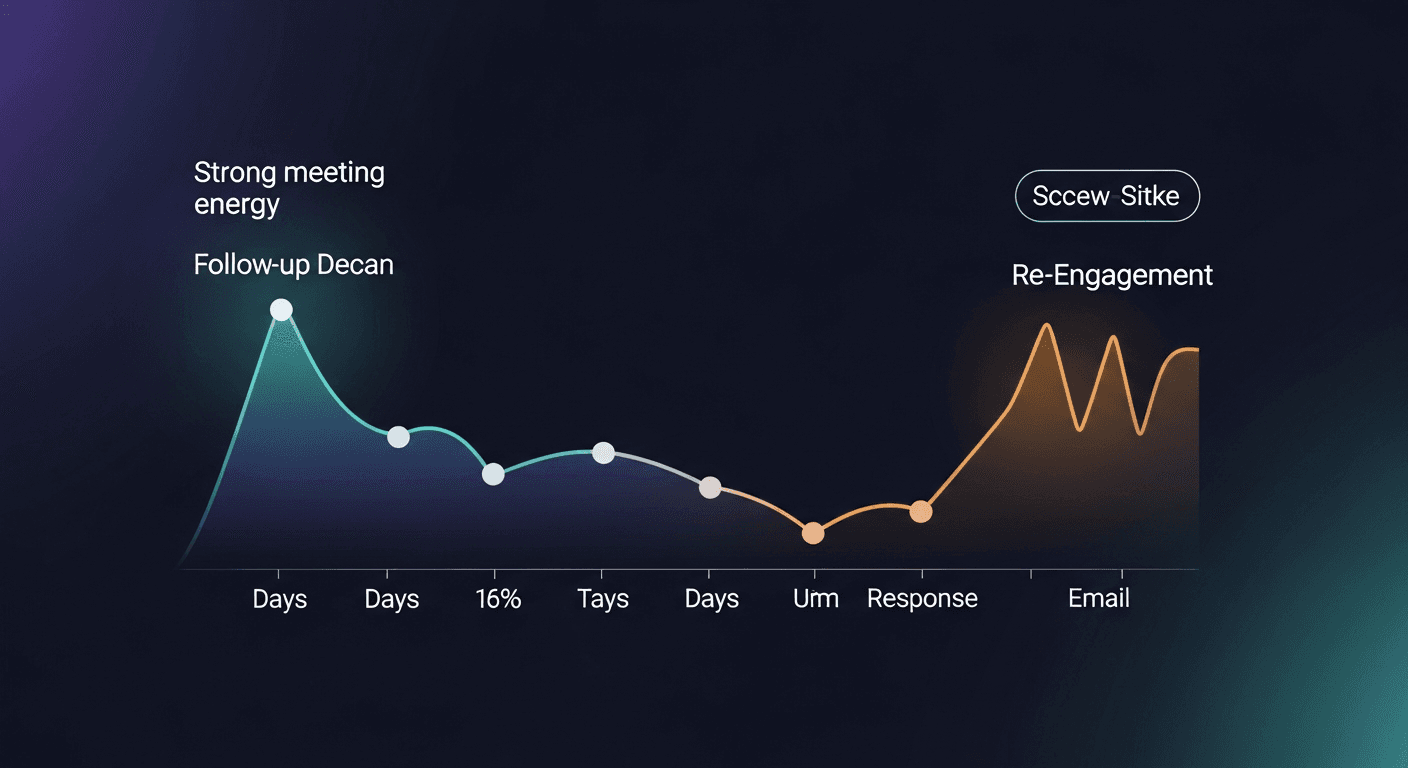
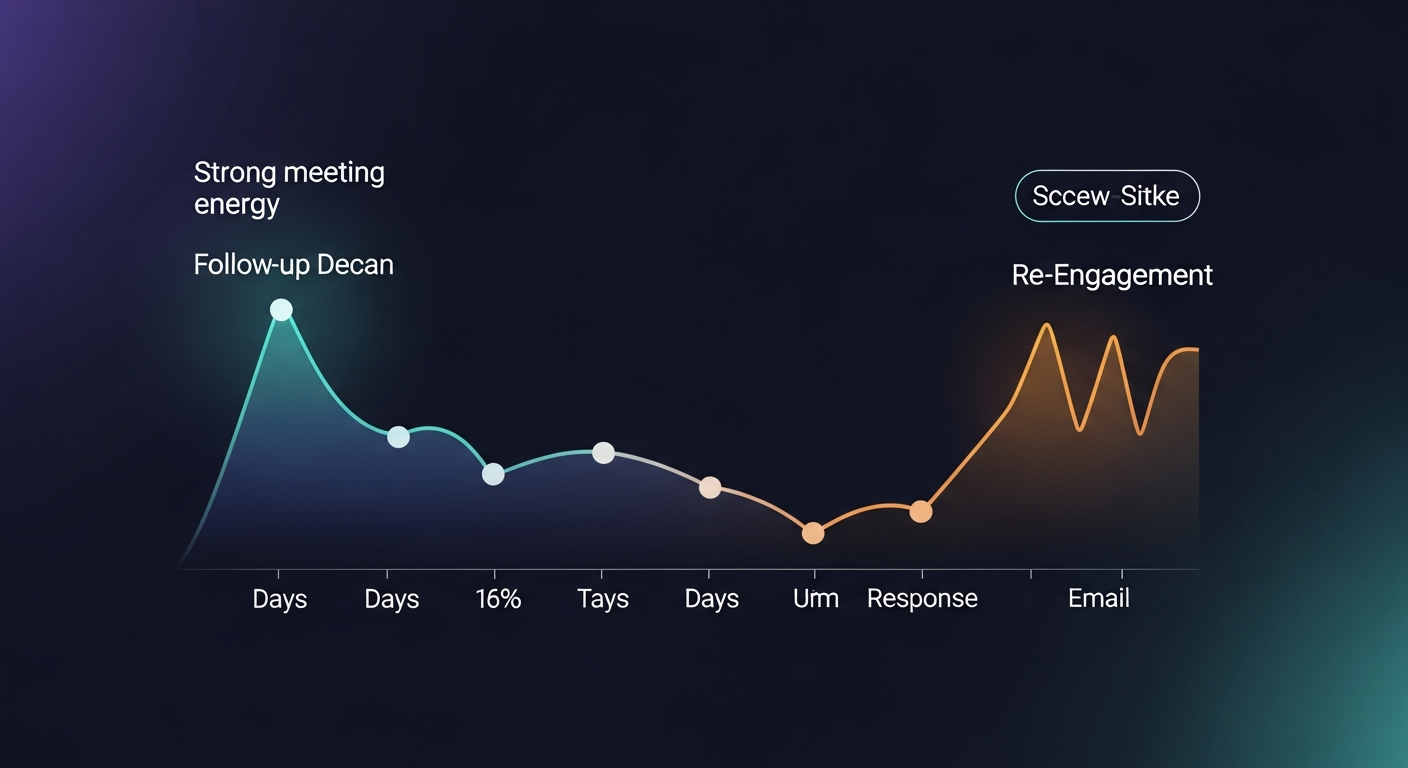
To re-engage a prospect after a meeting, send a value-first follow-up that references something specific from your conversation — not a generic "just checking in." The fastest way to break silence is to give them a reason to respond that's tied directly to their own words and priorities. Most deals don't die because of price or competition — they die in the follow-up gap.
Why Prospects Go Silent After a Strong Meeting
Before you can fix the problem, it helps to understand it. A ghosted prospect isn't always a lost prospect. In most cases, silence after a meeting signals one of three things:
- They got pulled into internal fires. Your deal is real, but Q2 planning just kicked off and their calendar exploded.
- The internal champion lost momentum. They liked your product but couldn't sell it up the chain without more ammunition.
- Your follow-up blended into the noise. A weak "per our conversation" email got buried under 200 others.
The good news: all three of these problems are solvable. The bad news: most reps default to the same ineffective approach — waiting a week and sending a one-liner that does nothing to re-open the conversation.
The Re-Engagement Email Framework That Actually Works
A re-engagement email for a ghosted prospect needs to do three things at once: acknowledge the silence without being awkward about it, add new value, and make responding feel low-effort. Here's the framework:
1. Lead With Specificity, Not Pleasantries
The single biggest mistake reps make is sending a follow-up that could have been written without ever having the meeting. "Just wanted to follow up on our conversation" tells the prospect nothing. It signals you either didn't pay attention or you're working from a template.
Instead, anchor the email to something concrete from the call:
> "You mentioned that your team is spending about three hours a week manually logging call notes into Salesforce — I wanted to share something that speaks directly to that."
That one sentence proves you listened. It personalizes the email without being creepy, and it creates a natural bridge to your value prop.
2. Add Something New — Don't Just Repeat Yourself
If you send the same pitch twice, you're not re-engaging — you're spamming. A good re-engagement email includes at least one new element:
- A relevant case study from a company in their vertical
- A stat or industry report that validates the problem they described
- A specific insight or recommendation tied to what they shared
- A short video walkthrough of the exact feature they asked about
This approach works because it repositions your follow-up from "I want your time" to "I brought you something useful."
3. Lower the Activation Energy to Reply
One reason prospects go silent is that responding feels like work. They'd have to re-read the previous email, remember context, think about their schedule, and write something coherent. Kill that friction.
End your re-engagement email with a dead-simple ask:
- "Does this still feel like a priority, or has something shifted on your end?"
- "Would a 15-minute call this week make sense, or is next month more realistic?"
- "Still the right person to talk to about this, or should I loop in someone else?"
These questions are easy to answer in two sentences. They also give the prospect a graceful exit if the deal isn't moving — which is valuable intelligence either way.
Three Real-World Re-Engagement Scenarios
Scenario 1: The Demo That Ended Enthusiastically but Led to Nothing
You had a 45-minute demo. They said "this looks great, I need to show it to my VP." That was three weeks ago. Radio silence.
What to do: Reference the VP angle directly. Send something like: "Last time we talked, you mentioned looping in your VP before moving forward. I put together a one-page summary of how [Company Name] could impact [specific metric they cared about] — something quick you could forward without scheduling another full demo."
You've removed an obstacle (the prospect not having the right assets to sell internally) and made it easy to act.
Scenario 2: The Discovery Call That Ended With "We'll Circle Back in Q2"
It's now Q2. They haven't circled back. Shocking.
What to do: Use the timing as a natural hook. "Q2 just kicked off, which means the initiative you mentioned — [specific thing they said] — is probably back on the radar. Happy to pick up where we left off if the timing is right."
This doesn't feel like a follow-up. It feels like good timing.
Scenario 3: The Ghosted Prospect You Haven't Heard From in 30+ Days
At this point, most reps either give up or send the dreaded "Is this still a priority?" email (which reads as passive-aggressive at best).
What to do: Try a pattern interrupt. Keep it short, direct, and a little self-aware:
> "Hey [Name] — I know I've been in your inbox a few times. I don't want to keep pinging you if the timing is off. Is this still something worth exploring, or should I check back later in the year?"
This email gets replies because it respects the prospect's time and takes the pressure off. It's also one of the highest-performing "breakup email" formats in modern sales sequences.
Why Your Follow-Up Quality Starts at the Meeting
Here's the part most sales training glosses over: the quality of your re-engagement email is directly tied to how well you documented the meeting. If you're working from vague memory or a messy transcript you haven't re-read, your follow-ups are going to be generic. Generic follow-ups don't re-engage ghosted prospects.
This is exactly where tools like ReplySequence come in. After your meeting recording is processed through Fireflies, Granola, Otter, or any other transcription tool, you can paste or upload that transcript into ReplySequence and get a context-aware follow-up email drafted in under 60 seconds — one that actually references the conversation instead of sounding like it was written by someone who wasn't in the room.
The specificity that makes re-engagement emails work isn't magic. It's just good notes, applied fast.
Building a Re-Engagement Sequence (Not Just One Email)
One email rarely does the job. If you're serious about winning back a ghosted prospect, build a short sequence around the framework above:
- Email 1 (Day 1 after silence begins): Specific reference to the meeting + one new value asset
- Email 2 (Day 5): A relevant case study or customer story in their vertical
- Email 3 (Day 12): A short, low-pressure check-in with an easy yes/no question
- Email 4 (Day 21): The pattern-interrupt "breakup" email
Four touchpoints over three weeks gives you enough coverage without becoming noise. And because each email adds something new, you're not repeating yourself — you're building a case.
A note on channels: Email is your anchor, but don't ignore LinkedIn. A quick comment on a post they published, or a short voice note if your tool supports it, can break through in ways email can't. The goal is to re-engage the prospect after the meeting through whatever channel feels most natural for the relationship you built.
What to Do When Nothing Works
Sometimes a prospect is genuinely gone. The budget got cut, the champion left, the company froze hiring. It happens.
When a re-engagement sequence runs its course with no reply, do two things:
- Move them to a long-term nurture sequence. A quarterly check-in email with a relevant resource keeps you top of mind without being annoying.
- Document what you learned. What happened in the meeting? What objections came up? What was the last point of contact? This data makes your next attempt — if there is one — smarter.
The win-back prospect play is a long game. Some of the best deals close 6-12 months after the first "ghosting" event, simply because the rep stayed patient and relevant.
Stop Losing Deals to Weak Follow-Ups
Re-engaging a prospect who went silent after a meeting isn't about sending more emails — it's about sending better ones. Specificity wins. New value wins. Low-friction asks win. Generic check-ins lose.
If your current follow-up process relies on memory and manual drafting, you're leaving deals on the table. Paste or upload your next meeting transcript at replysequence.com and see how fast a context-aware re-engagement email comes together — one that sounds like you actually listened, because the content to prove it is already there.
Related reading
How ReplySequence handles this
ReplySequence takes any meeting transcript — paste it in from Zoom, Teams, Meet, WebEx, Fireflies, Granola, or wherever — and drafts a context-rich follow-up email in about 8 seconds. You review it, make any edits, and approve. Deal intelligence builds automatically.