Close Deals Faster After Every Meeting
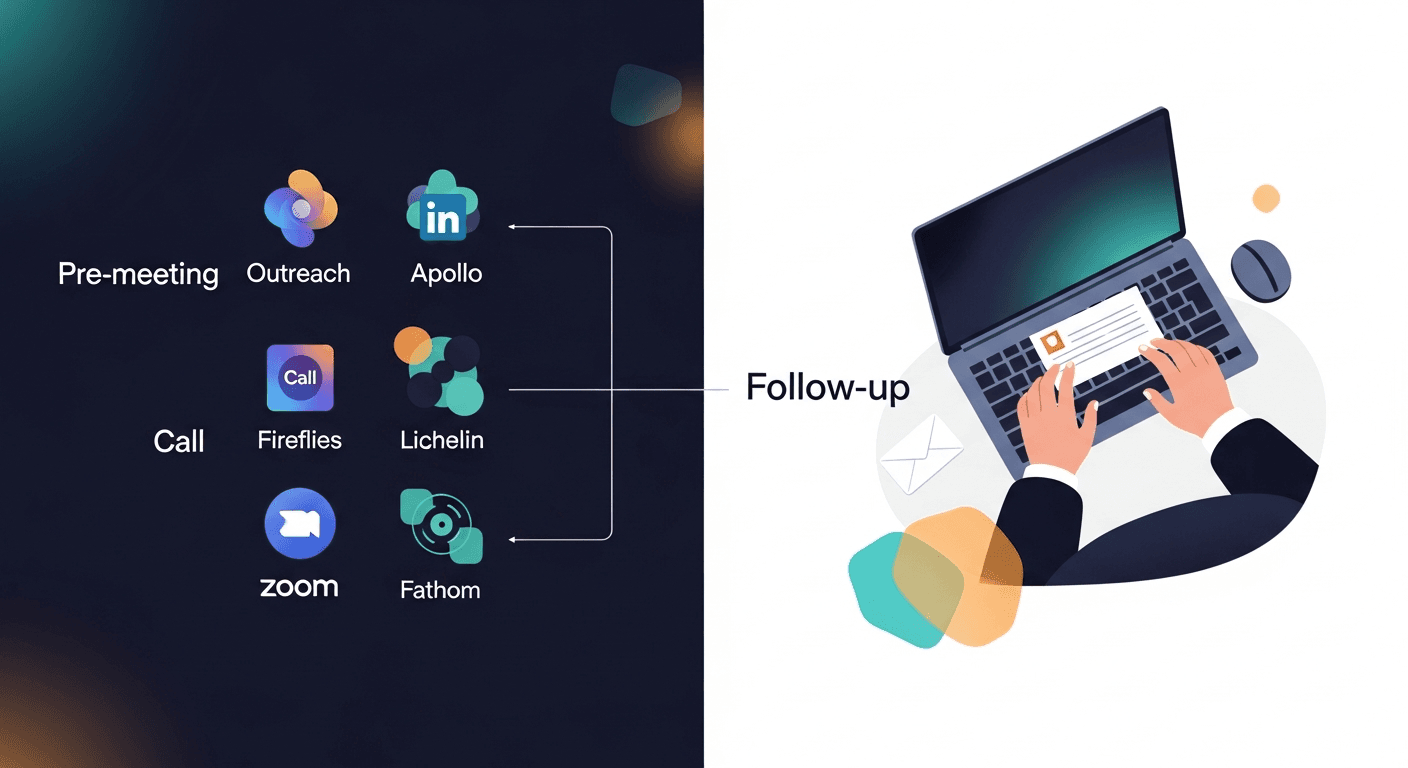
Sales automation for sales teams does a lot, but it almost always stops at the meeting. Sequences get prospects to the calendar. AI notetakers transcribe the call. Then the rep closes the laptop and spends the next 45 minutes writing a follow-up email from scratch. That's the gap. And it's costing deals.
Let's talk about where sales automation actually breaks down, and what fixing the last mile looks like in practice.
The Part Sales Automation Still Gets Wrong
Modern sales stacks are impressive. Outreach and Salesloft automate pre-meeting cadences. Gong analyzes the call. Fireflies, Fathom, and Otter transcribe every word. HubSpot logs the contact. And yet, the follow-up email after the meeting is still almost always written by hand.
That's not a small problem. Research from InsideSales.com found that 50% of deals go to the vendor that responds first. The window after a discovery call or demo is the highest-leverage moment in the entire sales cycle. The prospect just talked to you. They're warm. The pain is fresh. And most reps send a follow-up two days later, if they send one at all.
HubSpot's State of Sales report has consistently shown that reps spend less than 36% of their time actually selling. The rest goes to administrative work: logging notes, writing emails, updating CRM fields. Post-meeting follow-up is one of the biggest time sinks in that bucket.
The tools did their job getting you to the call. Nobody built the layer that closes the loop after it.
What Good Post-Meeting Follow-Up Actually Looks Like
Before talking automation, it's worth being precise about what a good follow-up email does. A generic "Great chatting today, let me know if you have questions" is nearly useless. A follow-up that moves a deal forward does four things:
- Mirrors the prospect's language, uses the specific words they used to describe their problem, not your marketing copy
- Confirms the agreed next step: a specific date, action, or decision, not "circle back soon"
- Addresses the objection that came up, proactively, before it festers
- Personalizes the value prop, based on what they told you mattered, not your standard pitch
Every single one of those four things lives in the transcript. If you have a transcript, you have everything you need to write a great follow-up. The problem is that extracting it, structuring it, and drafting the email takes time most reps don't have, especially when they have three more calls that afternoon.
This is exactly where sales follow-up automation earns its keep: not replacing judgment, but eliminating the blank-page problem.
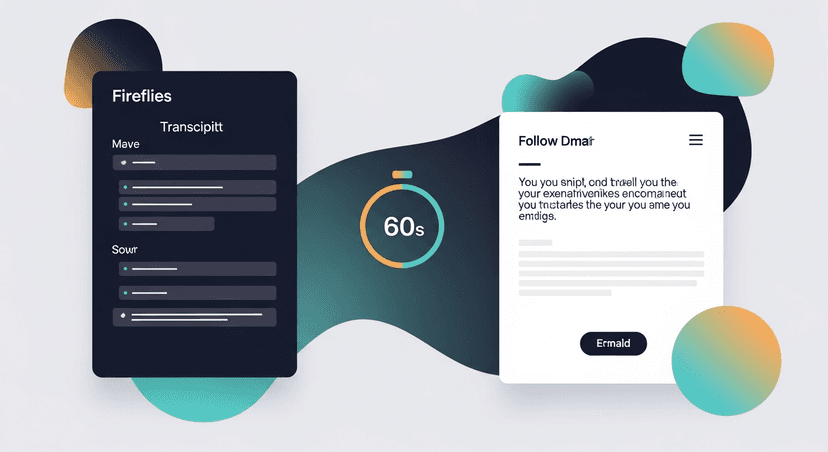
ReplySequence does this automatically, paste any transcript, get a branded follow-up sequence back in 60 seconds.
Three Scenarios Where This Matters Most
The AE With Back-to-Back Demos
A mid-market AE runs four demos on a Tuesday. Each one surfaces different objections, different priorities, different stakeholders. By 6pm, the transcripts are sitting in Fireflies. The follow-ups needed to go out by 2pm, right after each call, while the conversation was still top of mind for the prospect.
With automate post-meeting emails in the workflow (transcript in, structured follow-up out) each email goes out same-day, personalized to what that prospect actually said. The AE reviews, tweaks one line, sends. Four emails, maybe 15 minutes total.
The Solo Founder Running Their Own Sales
No SDR. No sales ops. Just a founder doing product, support, and sales simultaneously. They're good at the calls: the follow-up falls through the cracks because something always catches fire after. A week passes. The prospect goes cold. The deal dies not because the call went badly, but because nothing happened after.
AI sales email automation for post-meeting sequences turns this founder's transcript into a 2-email follow-up sequence (initial recap plus a bump three days later) without them having to think about it. Draft-first, they review before it sends. But the drafts exist.
The Recruiter After a Candidate Screen
Recruiters run 8-12 screens a week. Every one needs a same-day summary to the hiring manager plus a follow-up to the candidate. Both emails benefit from the specific things the candidate said, about their timeline, their compensation expectations, what they're really looking for. That detail lives in the transcript and evaporates from memory by EOD.
Paste the transcript. Get both emails. Done.
Why "Just Use ChatGPT" Isn't the Answer
The obvious objection: can't a rep just paste the transcript into ChatGPT and get a follow-up?
Yes. Sort of. The problem is consistency and voice.
Raw ChatGPT output sounds like ChatGPT. It's recognizable, overly formal, slightly generic, structured in ways that don't match how you actually write. Prospects notice. More importantly, you notice, which means you spend 20 minutes editing instead of 2.
The other issue is workflow. "Open ChatGPT, paste transcript, write a prompt, get output, copy to Gmail" is seven steps and no memory. Every output starts from zero. The prompt quality determines the output quality, and most reps aren't prompt engineers.
A purpose-built sales automation layer for follow-up is different because:
- It knows the structure of a sales follow-up (recap, next step, value prop, CTA): not just a generic email
- It learns from your edits over time, voice-fingerprint means drafts get closer to your actual writing style with every correction you make
- It logs to CRM automatically so you're not also doing data entry
- It's in your workflow, not a separate tab
That last point matters more than it sounds. Context-switching kills momentum. The best sales automation for sales teams lives where the work already happens.
The Stack That Actually Closes Deals
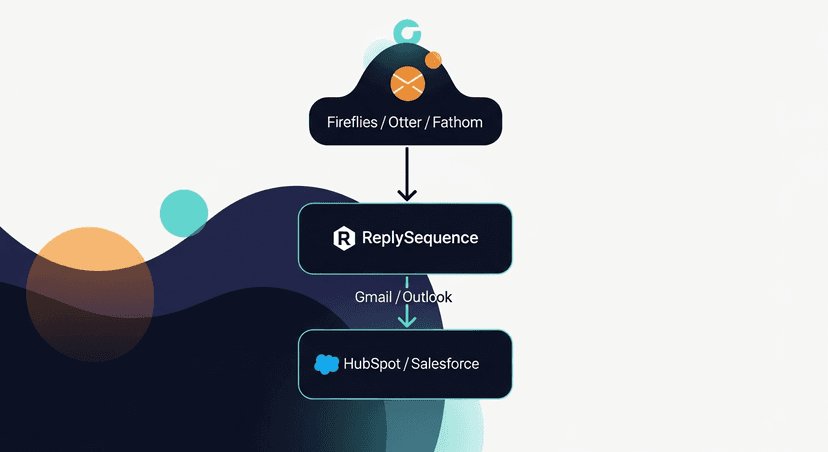
Here's what a modern post-meeting stack looks like when all the pieces work together:
- Recorder/transcriber: Fireflies, Fathom, Otter, Granola, Zoom AI, Teams, Google Meet, pick your tool, they all produce transcripts
- Follow-up automation layer: takes the transcript, drafts the email sequence, learns your voice, logs to CRM: this is the gap RS fills
- CRM: HubSpot, Salesforce, Pipedrive: the record of truth
- Inbox: Gmail or Outlook, where the email actually sends, from your address, not a tool's
Notice what this stack doesn't require: a $450/month per-seat HubSpot Sales Hub Pro subscription just to run a two-email post-meeting sequence. Sales follow-up automation shouldn't cost enterprise-CRM money for a team of five.
ReplySequence is $29/mo for unlimited drafts on Pro, or $39/user/mo for teams. No minimum seat counts designed to force a six-figure contract. Sequences without the enterprise CRM tax.
Don't Automate the Send. Automate the Draft.
One thing worth saying directly: draft-first is non-negotiable.
Full auto-send sounds appealing until a draft goes out with the wrong prospect's name or a clumsy line about an objection that landed badly. Trust in the tool evaporates instantly. One bad auto-sent email does more damage than a week of slow manual ones.
The right model is: automation handles the 80%, structure, personalization from the transcript, next-step language, CRM log. The rep handles the 20%, tone check, one or two line edits, send. That split takes 3 minutes instead of 45. The email goes out same-day. The deal stays alive.
That's what AI sales email automation should actually mean: you in control, moving faster.
The Follow-Up Is the Last Mile of Sales AI
Sales automation for sales teams has gotten really good at getting reps to the meeting. The transcript tools are genuinely excellent, Fathom and Granola in particular have raised the bar. But the workflow still has a cliff: transcript exists, follow-up doesn't.
Fix the last mile. Transcript in, follow-up out. Same day, every call, in your voice.
That's the gap I built ReplySequence to close: because I kept seeing meeting notes with no email attached to them, and deals that should have closed going quiet.
—-
Start free at replysequence.com, 10 drafts/month, no credit card required. Pro trial is 14 days, also no card. Paste a transcript from any tool you already use and see the follow-up come back in 60 seconds.
Get the weekly ReplySequence newsletter for more post-meeting follow-up tactics, subscribe at replysequence.com/newsletter.
How ReplySequence handles this
ReplySequence takes any meeting transcript, paste it in from Zoom, Teams, Meet, WebEx, Fireflies, Granola, or wherever, and drafts a context-rich follow-up email in about 8 seconds. You review it, make any edits, and approve. Deal intelligence builds automatically.