Fast Context-Rich Follow-Up Lifts Close Rates
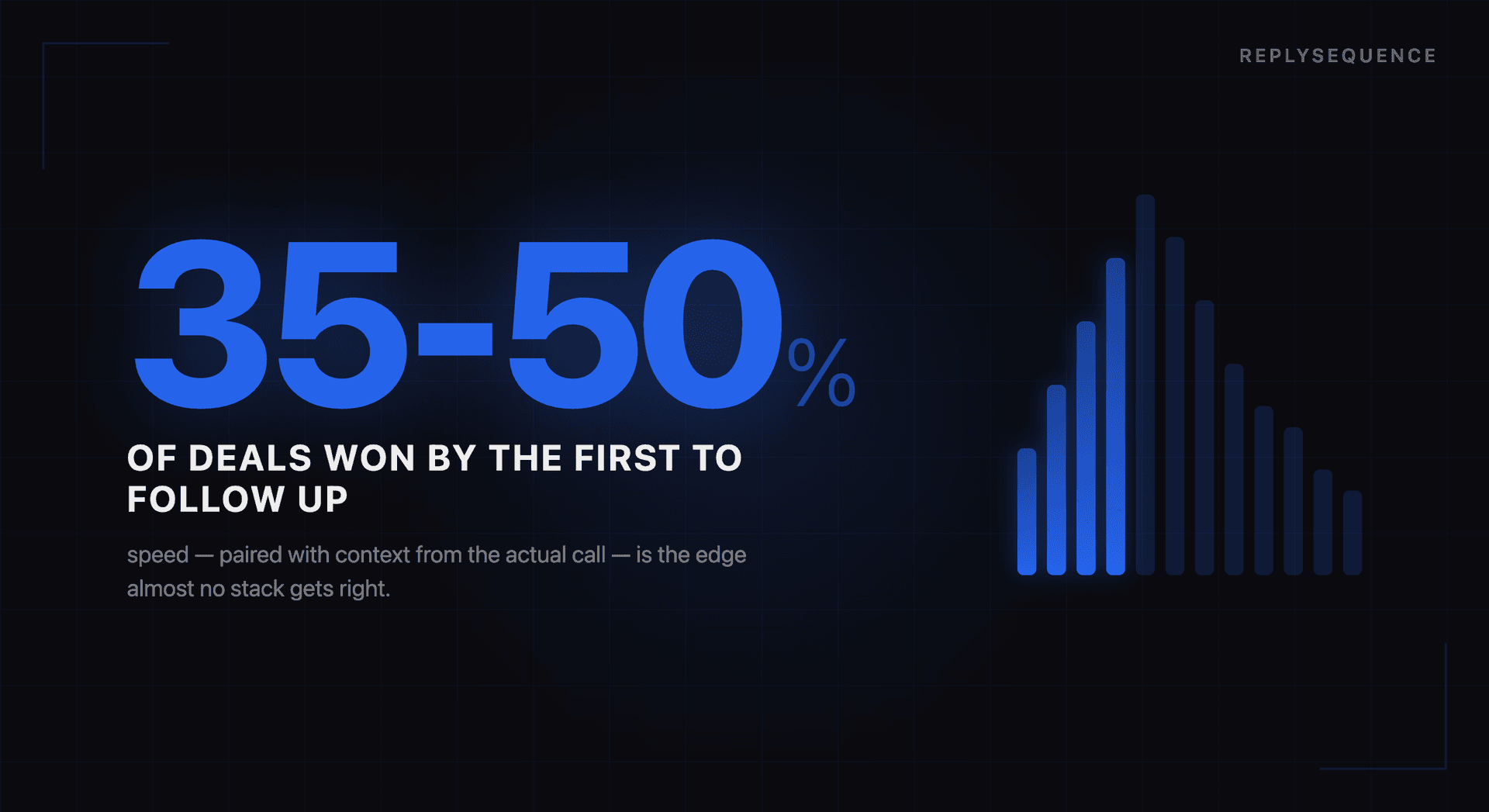
Everyone knows speed matters in sales follow-up. The data is clear: faster follow-ups get higher response rates. But somewhere along the way, "be fast" got conflated with "send anything quickly," and that is where most teams go wrong.
A fast but generic email is not a good follow-up. It is spam with better timing. The prospect just spent 30 minutes telling you about their specific challenges, their team dynamics, their timeline, and their concerns. If your follow-up could have been written without attending the meeting, you have wasted the most valuable input you had.
Speed Without Context Is Just Noise
We have all received the fast generic follow-up. It arrives within minutes of the call ending. It says something like: "Great chatting today! As discussed, I think our platform could be a great fit for your team. I have attached a one-pager and would love to schedule a follow-up next week."
It is polished. It is prompt. And it tells the prospect absolutely nothing they did not already know. Worse, it signals that you were not really listening: you were just waiting for the call to end so you could fire off your template.
Compare that to an email that arrives just as quickly but says: "Thanks for walking me through the challenges your team is hitting with the SDR-to-AE handoff. The stat you mentioned, 30% of qualified leads going cold during the transition, is exactly the problem our customers were dealing with before implementing structured handoff sequences. I have attached the case study from Meridian Corp that I mentioned, and I will send over the implementation timeline we discussed by Thursday so David can review it before your team meeting on the 15th."
Same speed. Completely different impact. The second email tells the prospect three things: you were listening, you understood their specific situation, and you are already acting on what was discussed. That is what advances deals.
What Makes a Follow-Up "Context-Rich"
A clear pattern emerges across high-performing follow-up emails. The best ones consistently do four things:
They use the prospect's own words. When a prospect says "our biggest bottleneck is the handoff between SDRs and AEs," the follow-up references "the SDR-to-AE handoff bottleneck," not "sales process optimization" or "lead management challenges." Using their exact language signals that you were genuinely listening, not just categorizing them into a segment.
They reference specific people by name. If the prospect mentioned that their VP of Engineering, David, needs to sign off on technical implementations, the follow-up names David and acknowledges his role in the decision. This shows you understand the buying committee, not just the person on the call.
They confirm concrete next steps with dates. Vague next steps kill deals. Instead of "let us connect next week," the best follow-ups say "I will send the implementation timeline by Thursday so David can review before your team meeting on the 15th." Specificity creates accountability on both sides.
They connect discussed pain points to relevant proof. When the prospect mentioned a specific challenge, the follow-up ties it to a case study, data point, or resource that directly addresses that challenge. This is not a generic attachment: it is a targeted response to something they said.
Why Most Teams Cannot Do Both
The reason most follow-ups are either fast-and-generic or slow-and-detailed is that creating context-rich content takes time. A rep who just finished a call needs to recall specific details, organize them into a coherent narrative, and draft an email that sounds natural, not robotic. That process takes 15-20 minutes when done well.
If they have another call in 10 minutes, the detailed follow-up gets pushed. If they try to bang it out quickly, they default to the template with a couple of personalized lines that barely scratch the surface. The constraint is not willingness: it is the physical impossibility of producing thoughtful writing under time pressure.
This is exactly the problem that transcript-based drafting solves. When AI reads the full meeting transcript, it has access to every specific detail the prospect shared, their exact words, the stakeholders they named, the timelines they mentioned, the concerns they raised. The AI does the recall and synthesis work that takes a human 15-20 minutes and produces a draft in seconds. The rep then spends 1-2 minutes reviewing and personalizing rather than 15-20 minutes writing from scratch.
The result is a follow-up that is both fast and context-rich. Not one or the other. Both.
The Impact on Close Rates
When you combine speed and specificity, the effect on close rates is more than additive: it is multiplicative. Speed captures the prospect while they are still engaged. Specificity demonstrates competence and builds trust. Together, they create a perception of your team as responsive, organized, and deeply attentive to the prospect's needs.
Teams that implement transcript-based follow-ups consistently report two shifts. First, response rates to follow-up emails increase, prospects reply faster and more substantively because the email gives them something specific to respond to. Second, deals advance more quickly because the follow-up itself moves the conversation forward. It is not just a recap; it is a bridge to the next step.
Practical Tips for Improving Follow-Up Quality Today
Even without automation, you can start improving your follow-ups immediately:
- Take verbatim notes on three things during every call: the prospect's biggest stated pain point (in their words), the stakeholders they mention, and the specific next step agreed upon. These three elements are the foundation of every great follow-up.
- Draft the email within 15 minutes of the call ending. Block 15 minutes after every external meeting specifically for follow-up writing. Protect this time the way you protect the meeting itself.
- Read your follow-up and ask: could I have written this without attending the meeting? If the answer is yes, it is too generic. Go back and add specific references.
- Name at least one person, one pain point, and one date in every follow-up. This simple formula forces specificity.
The best follow-up is not just fast. It is not just detailed. It is both, and it arrives while the conversation is still fresh in everyone's mind. That combination is what changes close rates, and it is the standard your team should be aiming for.
Related reading
How ReplySequence handles this
ReplySequence takes any meeting transcript, paste it in from Zoom, Teams, Meet, WebEx, Fireflies, Granola, or wherever, and drafts a context-rich follow-up email in about 8 seconds. You review it, make any edits, and approve. Deal intelligence builds automatically.