The Hidden Cost of Manual Sales Follow-Up (Time Study)
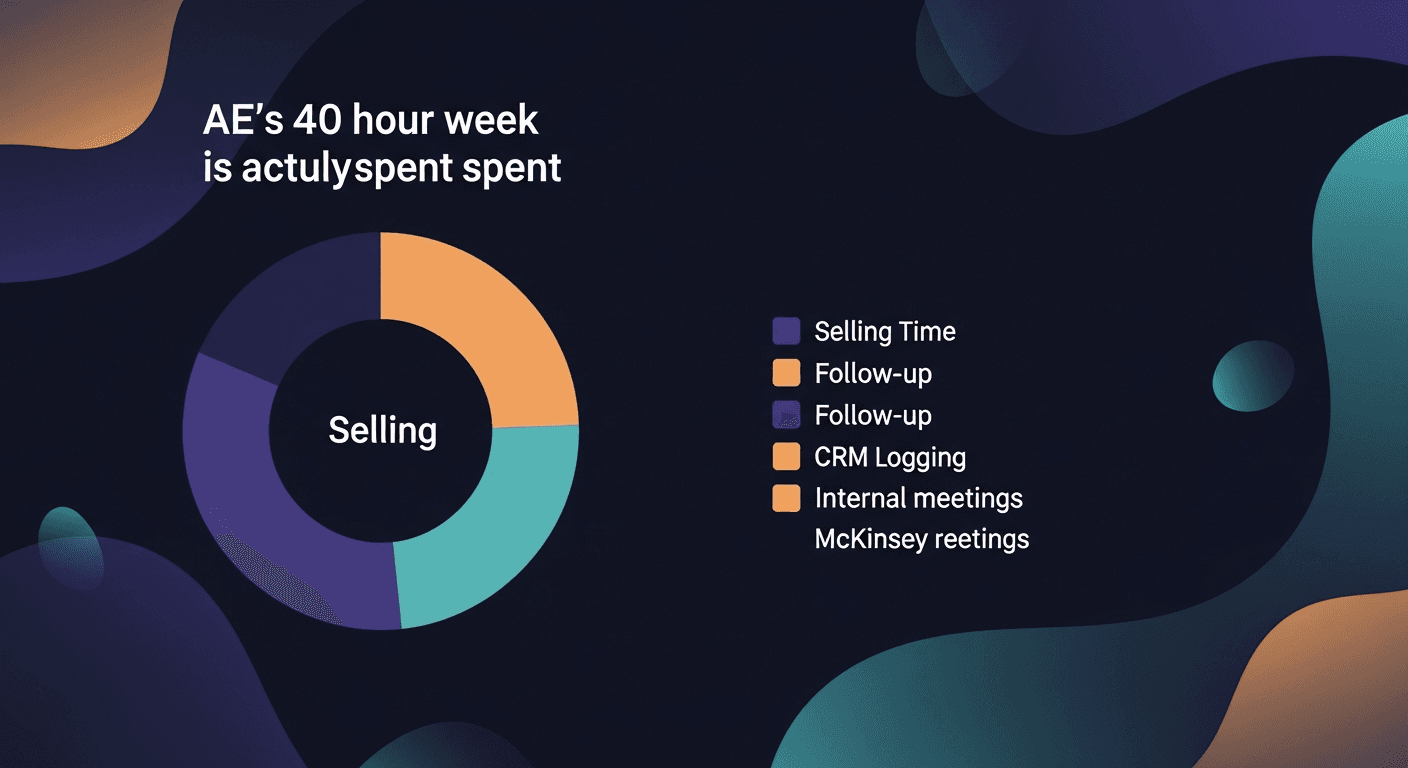
Manual sales follow-up costs the average AE 3-7 hours every week, and almost none of it shows up in any budget. It's buried in salary, rationalized as overhead, and written off as "part of the job." When you actually run the numbers, the cost of manual sales follow-up is one of the most persistent and invisible revenue leaks in a sales org.
This post breaks down exactly where those hours go, what they cost in real dollars, and what the delay is doing to your close rate.
Where the Time Actually Goes After Every Meeting
Most post-meeting estimates focus on the email itself. That's only part of it. Here's what a rep is actually doing after a 45-minute discovery call:
- Reviewing the transcript or notes, 5-10 min
- Drafting the follow-up email, 10-20 min (longer if there were multiple stakeholders or action items)
- Personalizing subject line and tone, 3-5 min
- Logging the call in CRM, 5-10 min
- Updating deal stage and next steps, 3-5 min
- Scheduling the next touchpoint, 2-5 min
Total: 28-55 minutes per meeting. Call it 30 minutes as a conservative average.
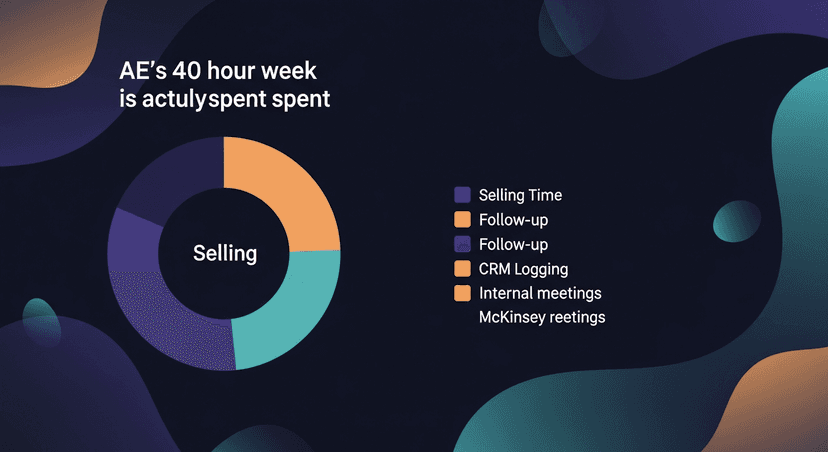
According to research from McKinsey, sales reps spend only 28% of their week actually selling. The rest is admin, internal meetings, and (you guessed it) follow-up tasks. HubSpot's State of Sales reports consistently show that reps cite "too much time on administrative tasks" as their top productivity complaint, year after year.
This isn't a discipline problem. It's a structural one. Nobody built the tooling for the last mile.
The Dollar Math Nobody Is Doing
Let's put numbers on this. I'm going to use conservative figures and publicly available salary benchmarks.
Scenario: Solo AE, $80K base salary
- Hourly rate (fully loaded, assume 1.3x for benefits/overhead): ~$50/hr
- Meetings per week: 10 (realistic for a mid-funnel AE)
- Post-meeting admin per call: 30 minutes
- Weekly admin time: 5 hours
- Annual admin time: ~250 hours
- Annual cost: ~$12,500, just for one rep, just for follow-up admin
Now scale that:
- 5-person team: ~$62,500/year in salary burned on follow-up writing
- 10-person team: ~$125,000/year
That's not counting the cost of the deals that go cold because the follow-up was late or generic. We'll get to that.
Scenario: SDR team, 15 reps at $55K base
SDRs often run higher call volume, 15-20 meetings per week isn't unusual. At 20 min of post-call admin each:
- Weekly admin: 5-7 hours per rep
- Annual: ~275 hours × $33/hr loaded = ~$9,000/rep/year
- Team total: ~$135,000/year in follow-up admin alone
None of this is exotic math. It's straight multiplication. The reason it stays invisible is that it never shows up as a line item: it's just... salary, spent on the wrong things.
ReplySequence does this automatically, paste any transcript, get a branded follow-up sequence back in 60 seconds.
The Speed Problem Is Actually Worse Than the Time Problem
Here's where it gets expensive in a different way.
HubSpot research shows that leads contacted within 5 minutes of an inquiry are 9x more likely to engage than those contacted after 10 minutes. The dynamic after a discovery call isn't identical, but the underlying psychology is the same: buyers are at peak interest immediately post-meeting. Every hour that passes, that interest decays.
Most reps aren't sending follow-ups within an hour. They're sending them the next morning, if that. Why? Because the meeting ran long, three other calls happened, and it's now 5 PM and the follow-up drafting work still feels like work.
A study from Yesware found that email open rates drop sharply after 24 hours: the sweet spot is within the same business day. Yet industry surveys routinely show the average sales follow-up goes out 24-48 hours post-meeting.
That gap isn't laziness. It's friction. The tooling forces a 30-minute writing task between the meeting and the send button. Remove the friction and the send time collapses.
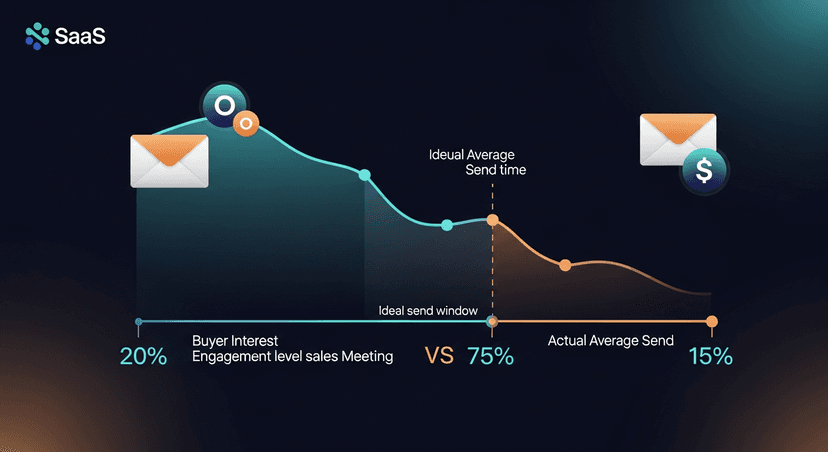
The compounding effect:
- Meeting happens at 2 PM
- Rep has two more calls, then internal standup
- Follow-up drafted at 8 PM or next morning
- Prospect has mentally moved on, fielded a competitor's email (which their AI sent in 10 minutes), and the thread is now cold
- Rep sends a great follow-up. Gets no reply. Marks the deal as stuck.
This plays out hundreds of times a year in a mid-sized sales org. The pipeline impact is real, even if it's hard to attribute directly to follow-up timing.
What This Looks Like in Practice (Three Scenarios)
The solo founder running their own discovery calls
No SDR team, no ops support. Every deal is personally owned. After a 45-minute call, there's a business to run, engineering decisions, support tickets, another prospect call in two hours. The follow-up sits in a draft folder. Sometimes it goes out same-day, sometimes the next morning, sometimes it's a rushed three-liner that doesn't reflect the conversation at all. The meeting went great. Then nothing happened.
The recruiter after a candidate screen
Ten screens a week, each one requiring a personalized follow-up to the candidate AND a summary to the hiring manager. That's 20 emails, all of which require context from the transcript. At 20 minutes each, that's nearly 7 hours of writing per week, on top of actual recruiting work. The ones who fall behind on follow-up lose candidates to faster-moving competitors.
The five-person AE team at a 50-person SaaS company
Each rep runs 8-12 meetings a week. CRM logging is inconsistent because it's painful. Follow-up quality varies wildly by rep: one person has a template system, others write from scratch every time. Management can't tell who's sending what or when. A structured post-meeting sequence would normalize quality and speed, but they're not about to pay $450+/month per seat for HubSpot Sales Hub Pro just to run sequences.
The Tools Gap (And Why It Persists)
Every major meeting platform has invested heavily in recording and transcription. Fireflies, Otter, Fathom, Granola, Zoom AI Companion, Microsoft Copilot: the transcript problem is largely solved. You can get a clean, searchable transcript of almost any meeting with minimal effort.
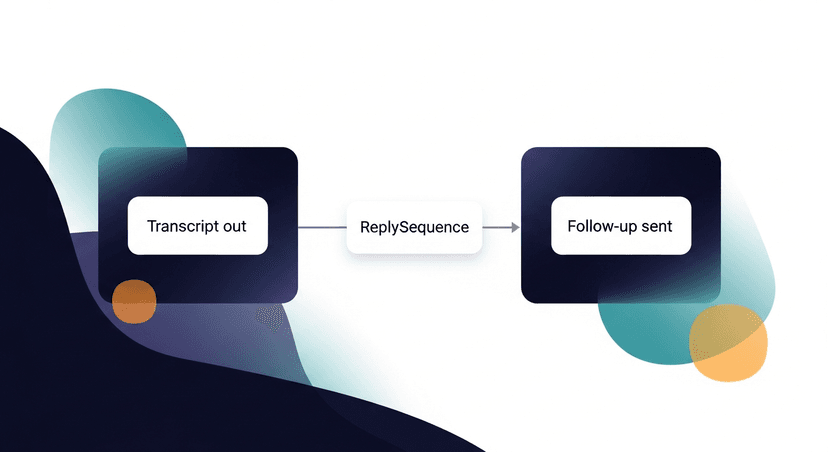
But the transcript is not the follow-up. Somebody still has to read it, synthesize the key points, write an email that sounds human, personalize it for the specific prospect, and hit send. The tools stop at the transcript. The last mile (transcript in, follow-up out) is still manual.
That's the gap I built ReplySequence to close. Paste a transcript from any source (Fireflies, Otter, Fathom, a Zoom export, even a rough Word doc of your notes) and get a branded follow-up sequence back in 60 seconds. It learns from your edits via voice-fingerprint so the drafts start sounding like you, not like a template.
Actually Measuring the Cost at Your Org
If you want to run this for your own team, here's a simple framework:
Step 1, Time audit (one week)
Ask each rep to log their post-meeting admin time for 5 business days. Even a rough estimate per call is enough. Don't overthink it.
Step 2, Calculate fully-loaded hourly rate
Base salary ÷ 2,080 hours × 1.3 (overhead multiplier). That's your cost per hour.
Step 3, Multiply
Weekly admin hours × 50 weeks × hourly rate = annual follow-up admin cost per rep.
Step 4, Add the speed premium
This one's harder to quantify, but ask: what percentage of your deals go quiet after a meeting? What's your average time-to-follow-up? If it's over 4 hours, you're likely leaving response rates on the table.
Step 5, Compare to the fix
A tool that cuts post-meeting admin from 30 minutes to 2 minutes saves ~28 minutes per call. At 10 calls/week, that's 4.5 hours/week reclaimed per rep. Do the math against the tool cost. For most teams with more than 2-3 reps running regular calls, the ROI is obvious within the first month.
The Part Nobody Talks About: Rep Burnout
There's a softer cost too. Admin work at the end of a full day of calls is grinding. It's the kind of thing that makes good reps leave. According to Salesforce's State of Sales report, 69% of sales professionals say their job is harder than it was five years ago, and admin burden consistently ranks in the top three reasons.
When the work after the meeting feels as hard as the meeting itself, reps cut corners. Shorter emails, copy-pasted templates, generic subject lines. The quality of the follow-up degrades over time. Deals that should close, don't.
Fixing the follow-up problem isn't just an efficiency play. It's a retention and quality play.
Closing the Gap
The cost of manual sales follow-up isn't dramatic. It doesn't announce itself. It's 30 minutes here, a cold thread there, a rep who sends a rushed email at 9 PM because the meeting notes are still sitting in a tab. Add it up across a year, across a team, and the number gets uncomfortable fast.
The fix isn't to work harder or build more discipline. It's to remove the friction between transcript and sent email. That's the whole job.
Start free at replysequence.com, 10 drafts/month, no credit card required. Pro trial is 14 days, also no credit card. Paste your next transcript and see what 60 seconds buys you.
Related reading
- How Much Time Do Salespeople Spend on Admin? (And How to Cut It)
- 10 Ways to Reclaim Selling Time by Automating Post-Meeting Tasks
- How to Save Time on Sales Follow-Up: 7 Proven Methods
Get the weekly ReplySequence newsletter for more post-meeting follow-up tactics, subscribe at replysequence.com/newsletter.
How ReplySequence handles this
ReplySequence takes any meeting transcript, paste it in from Zoom, Teams, Meet, WebEx, Fireflies, Granola, or wherever, and drafts a context-rich follow-up email in about 8 seconds. You review it, make any edits, and approve. Deal intelligence builds automatically.