Financial Advisor Follow-Up Automation
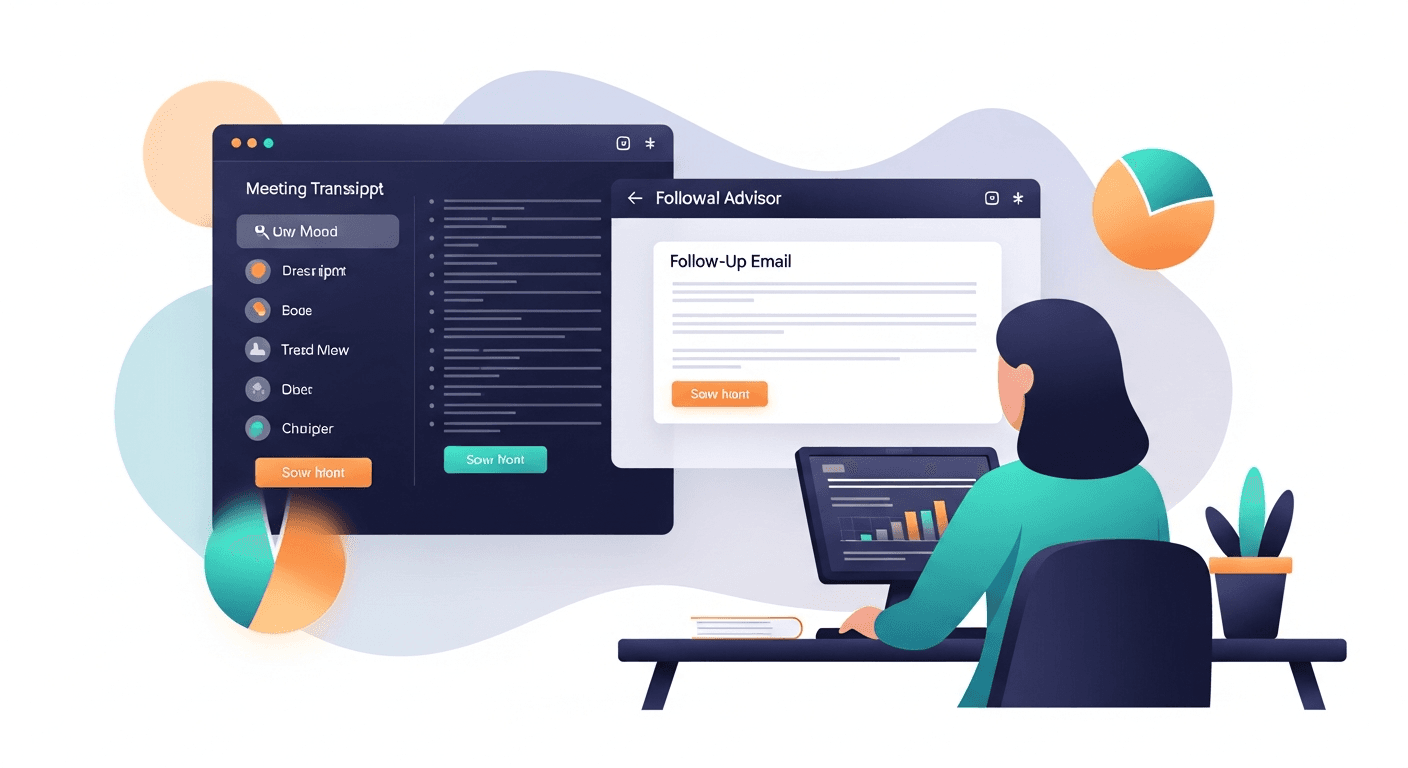
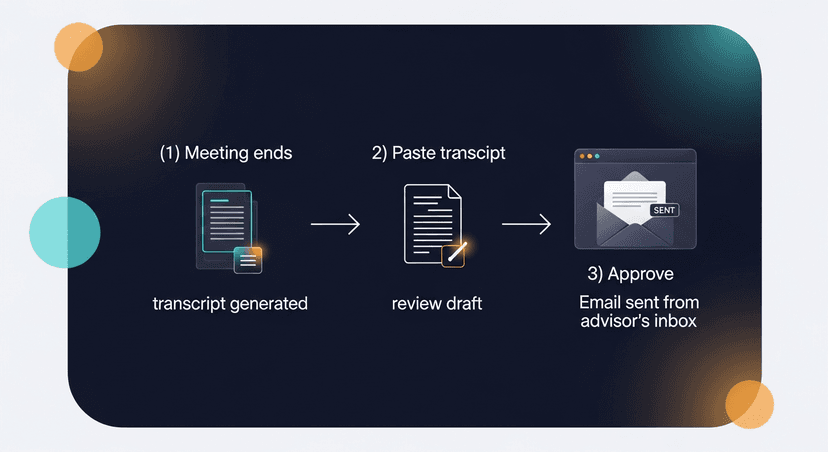
The fastest way for a financial advisor to automate client follow-up is to turn the meeting transcript into a sent email sequence before the next client call starts. No blank page. No 40-minute recap-writing session at 6pm. Paste the transcript, review the draft, hit send. That's the whole loop.
Most advisors already record or transcribe their client meetings. The problem isn't capturing what was said: it's that the transcript sits in Fireflies or Otter or a Zoom summary while the follow-up email gets pushed to "later." Later becomes tomorrow. Tomorrow becomes never. The deal stalls, the referral cools, the prospect picks someone who showed up in their inbox first.
Why Follow-Up Is the Biggest Leverage Point in Wealth Management
Research from the Sales Management Association found that 80% of sales require five or more follow-up contacts after an initial meeting, but most professionals stop after one, or send nothing at all. For financial advisors, the stakes are higher than a typical sales cycle. A prospective client deciding where to move $800K in retirement assets isn't going to chase you down. They're going to go with the advisor who seemed organized, attentive, and on top of the details they discussed.
The follow-up email is where that perception is built or lost.
A solid wealth management follow-up email does a few specific things:
- Recaps the key topics discussed (retirement timeline, risk tolerance, estate planning concerns)
- Lists the next steps with clear ownership, what you're doing, what they're doing
- Reminds the client of the emotional context: the reason they came to you in the first place
- Sets a date for the next touchpoint before the thread goes cold
That's not complicated. But writing it from scratch after every meeting, for every client, across a book of 80 or 120 relationships? That's where the wheels fall off.
The Manual Follow-Up Problem (And Why Templates Don't Fix It)
Every advisor I've talked to has a version of the same story. The meeting went great. The client was engaged, the questions were good, there was a real moment of connection around their retirement goals. Then the advisor got back to the office, opened a blank email, and spent 35 minutes trying to reconstruct what was said while the details faded.
Or they used a template. The template covered the basics but missed the specific thing the client mentioned about their daughter starting college in two years, or the concern about their current 401(k) allocation. The email landed as generic. The client felt like a number.
Templates solve the blank-page problem but create a personalization problem. The goal is an email that sounds like you talked to this person about their situation: not a mail-merge.
This is the gap that transcript-driven follow-up fills. When you start from a transcript of the actual conversation, every relevant detail is already in there. The work isn't remembering what happened: it's organizing it into a clear, professional email.
What Transcript-Driven Follow-Up Looks Like in Practice
Here's a concrete scenario. An independent RIA finishes a 45-minute discovery call with a prospect who's been referred by an existing client. The conversation covered:
- Current portfolio allocation (heavy in company stock, concentrated risk)
- Retirement target of 62, currently 54
- Concern about a pending divorce and how that affects the financial plan
- Interest in a Roth conversion strategy
- Spouse involvement in the next meeting
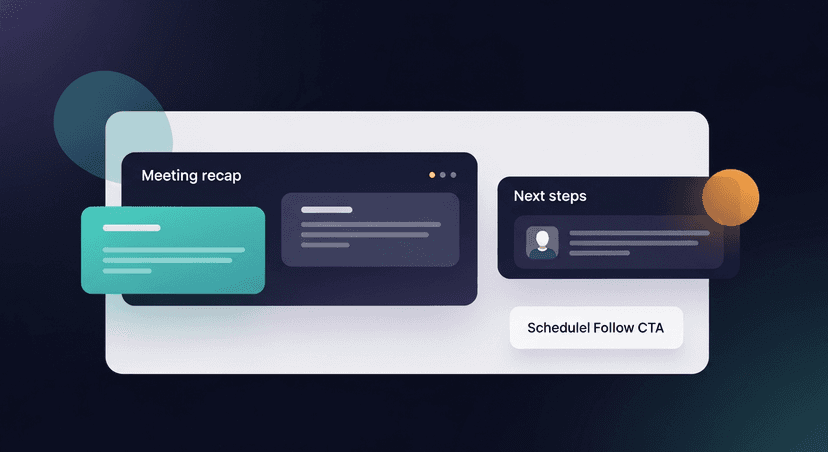
The advisor pastes the transcript into ReplySequence. Sixty seconds later, there's a draft that opens with a warm callback to the conversation, bullets out the key topics discussed, lists the next steps (advisor will run a Roth conversion analysis; prospect will forward the most recent 401(k) statement), and proposes a follow-up date. The advisor reads it, adjusts the tone on one sentence, adds a personal line about the referral, and sends it.
Total time: under five minutes. Compare that to the 30-45 minutes it takes to do this from scratch, and you start to see why automating follow-up isn't a luxury: it's a competitive edge.
ReplySequence does this automatically, paste any transcript, get a branded follow-up sequence back in 60 seconds.
How to Set Up Automated Follow-Up as a Financial Advisor
Here's the practical how-to. You don't need to overhaul your tech stack. You need three things:
1. A transcript source
You probably already have this. Fireflies, Otter, Fathom, Granola, Zoom AI Companion, Microsoft Teams transcription, Google Meet, any of these works. If you're recording client meetings (check your compliance requirements; most B/Ds require it anyway), you have a transcript. If you're not recording, you can type up your notes and paste those. BYOT: bring your own transcript from any source.
2. A follow-up email layer that works from transcripts
This is the gap in most advisors' workflow. The recorders transcribe. Nothing turns that transcript into a sent email. You need a tool that takes the raw transcript, understands the context, and drafts a professional follow-up that sounds like you: not like a generic AI summary.
Voice-fingerprint matters here. Over time, the tool should learn from your edits: the way you open emails, the tone you use with long-term clients vs. new prospects, the specific phrases that are yours. Generic GPT output is easy to spot. Your clients will notice the difference.
3. A review step before sending
Draft-first. Always. Especially in financial services, where the details matter and a miscommunicated next step can create real problems. The automation handles the drafting. You handle the judgment. That's the right division of labor.
The Compliance Angle
A lot of advisors hesitate here because of compliance. Fair concern. A few things worth knowing:
- Most FINRA/SEC-regulated advisors are already required to document client communications: an automated draft you review and send actually helps create that paper trail, it doesn't complicate it
- Draft-first workflows mean nothing goes out without your eyes on it: that's not a loophole, that's the design
- The transcript itself is a better record than handwritten notes, if you're using a recorder already, the compliance case for transcript-driven follow-up is the same or better
That said, always run your specific workflow by your compliance officer. I'm a builder, not a compliance attorney.
Sequencing Beyond the First Email
The first follow-up is table stakes. Where advisors really pull ahead is in the sequence that follows.
A basic post-meeting sequence for a wealth management prospect might look like:
- Day 0 (same day as meeting): Meeting recap + next steps + proposed follow-up date
- Day 3: Deliver on whatever you committed to in the recap (the analysis, the article you mentioned, the intro you offered)
- Day 7: Check-in if they haven't responded, light, not pushy
- Day 14: Value-add touch, something relevant to what they told you in the meeting (market update related to their sector, a resource on Roth conversions if that came up)
That's a four-touch sequence built entirely from a single 45-minute conversation. The details live in the transcript. The drafts write themselves. You just review and send.
For advisors managing large books of business, this is the difference between staying top-of-mind with 80 clients and falling off the radar for 60 of them.
The Speed Advantage
Research from Lead Response Management shows that responding within five minutes of a meeting or inquiry makes you 100x more likely to connect than responding within 30 minutes. In financial services, the clock starts the moment the call ends. The prospect is still thinking about the conversation. They're still in decision mode. A same-day email (ideally within an hour) lands in that window.
Most advisors miss it. Not because they don't want to follow up. Because they have three more calls that afternoon and the recap gets pushed.
Automating the drafting step is how you close that gap without adding hours to your day.
What This Isn't
To be clear: this is not about auto-sending emails without reading them. It's not about replacing the relationship with a bot. The goal is the opposite, to free up enough time and cognitive load that you can actually be present in the relationship, not buried in admin.
The email still comes from your inbox. It still sounds like you. You still reviewed it before it went out. The only thing that changed is you didn't spend 40 minutes staring at a blank screen trying to remember what the client said about their daughter's college fund.
—-
If you're a financial advisor looking to automate client follow-up without sacrificing the personal touch, start at replysequence.com. Free tier is 10 drafts a month, no credit card required. Pro is $29/mo if you want unlimited drafts, voice-fingerprint, and sequences.
Get the weekly ReplySequence newsletter for more post-meeting follow-up tactics, subscribe at replysequence.com/newsletter.
Related reading
- How Consultants Should Follow Up After Client Discovery Calls
- Insurance Agent Follow-Up Emails: What to Send After Every Meeting
- How Agencies Can Streamline Client Meeting Recaps and Follow-Ups
—-
What you should do next…
Depending on where you're at, here are three ways to keep going:
- Grab the free playbook, "The 8-Second Follow-Up Playbook" lands in your inbox. You'll also get Close The Loop, weekly notes on post-meeting follow-up (unsubscribe anytime, no pitch).
- Try it with your own transcript, paste any meeting transcript, get a drafted follow-up in 30 seconds. No signup, no OAuth.
- Talk directly with Jimmy, 15-min intro or 30-min walkthrough. Founder-led, no sales team.
How ReplySequence handles this
ReplySequence takes any meeting transcript, paste it in from Zoom, Teams, Meet, WebEx, Fireflies, Granola, or wherever, and drafts a context-rich follow-up email in about 8 seconds. You review it, make any edits, and approve. Deal intelligence builds automatically.