Consultant Follow-Up After Discovery Calls
The best discovery call in the world means nothing if your follow-up is generic, late, or missing. Research from Yesware found that 80% of sales require five or more follow-up touchpoints, yet most consultants send one bland recap email and wait. That gap is where engagements are won or lost.
Here's exactly how to follow up after a client discovery call, what to send, when to send it, and how to make each touchpoint feel like you were paying attention.
Why Most Consulting Follow-Ups Fall Flat
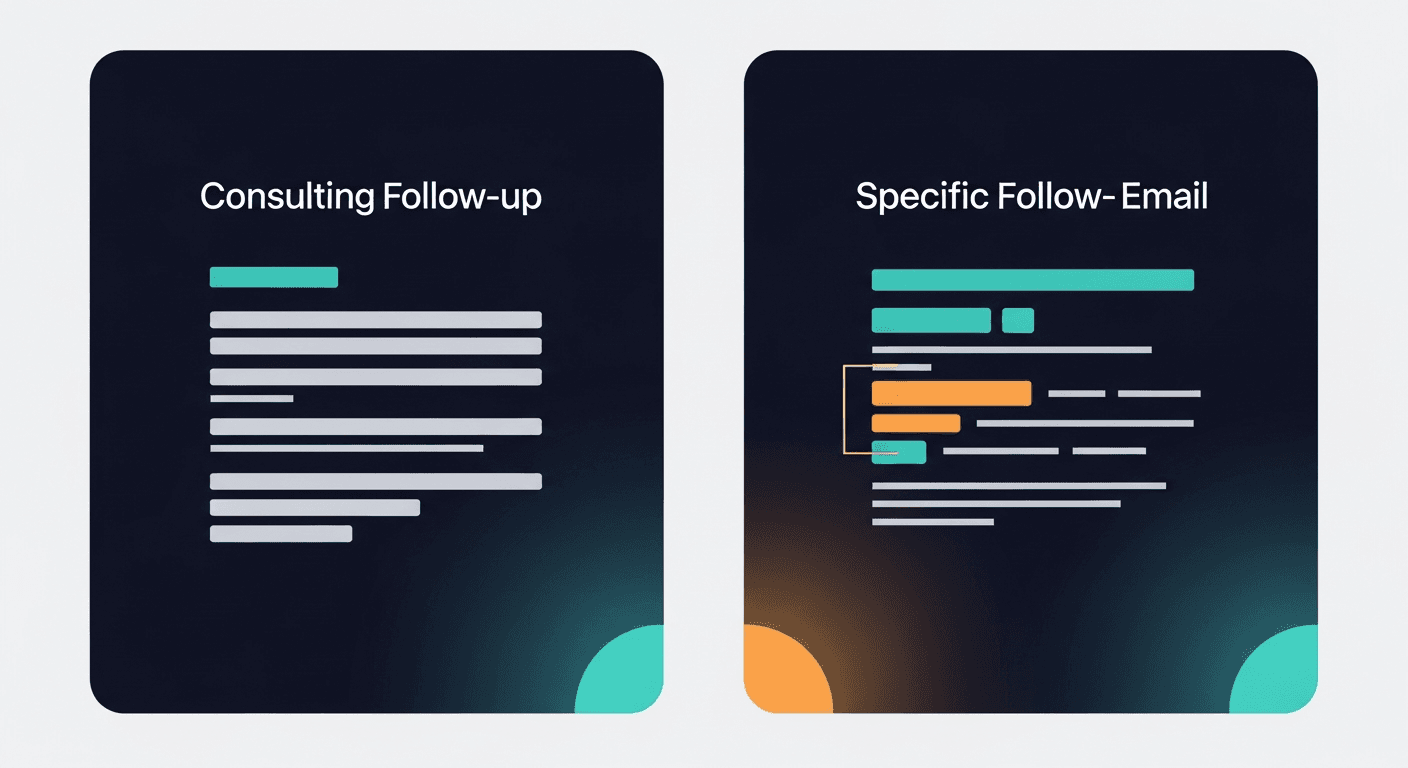
The typical post-discovery email looks like this: "Great speaking with you today. Per our conversation, I've attached a summary of what we discussed. Looking forward to next steps."
That email does three things wrong.
- It's passive. "Looking forward to next steps" puts the burden on the prospect.
- It's generic. Nothing in it signals you absorbed what they actually said.
- It's forgettable. The client has three other vendors sending the same email.
The discovery call gave you gold, specific pain points, timelines, internal politics, budget signals, the name of the person who actually owns the decision. None of that should disappear into a vague recap. It should show up in your follow-up and make the prospect think: this consultant was listening.
A 2023 study from Drift found that 35-50% of deals go to the vendor who responds first. For consultants, speed matters. But speed without substance is just noise.
The 3-Part Follow-Up Sequence That Actually Works
This isn't a rigid script. It's a framework. Adjust the tone and depth based on deal size and relationship warmth.
Email 1: The Same-Day Recap (Send within 60 minutes)
This is the most important email you'll send. Send it while the conversation is still fresh for both of you.
What to include:
- A one-sentence acknowledgment that respects their time (not a paragraph of flattery)
- The 3-5 specific problems they named, in their words, not yours
- Any commitments YOU made (sending a case study, looping in a partner, answering a question you punted on)
- A single, clear next step with a proposed date
What to skip:
- Your credentials (they already took the call: they know who you are)
- Generic language like "as discussed" or "per our conversation"
- Attachment-heavy emails: one link or one doc maximum
Example framing: "You mentioned the integration with Salesforce was the real blocker, not the strategy work itself. I want to address that directly before the proposal, here's how I've handled that in similar situations."
That's a follow-up that reads like you showed up.
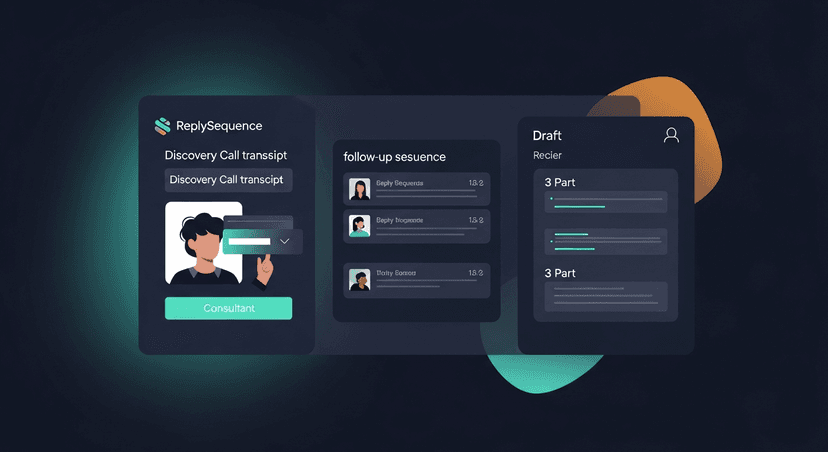
ReplySequence does this automatically, paste any transcript, get a branded follow-up sequence back in 60 seconds.
Email 2: The Value-Add (Send 2-3 days later)
This email does one job: give them something useful before they've committed to anything.
Not a proposal teaser. Not a pitch. Something genuinely helpful.
- A short article or framework relevant to the specific problem they named
- A one-page diagnostic or checklist tied to their situation
- An answer to a question they raised that you promised to research
- A brief case example (anonymized is fine) from a similar engagement
Why this works: It demonstrates how you think: which is exactly what consulting clients are buying. They're not buying your deliverable. They're buying your judgment. Show it early.
Keep this email short. Three paragraphs maximum. No ask at the end, just leave the value and let it sit.
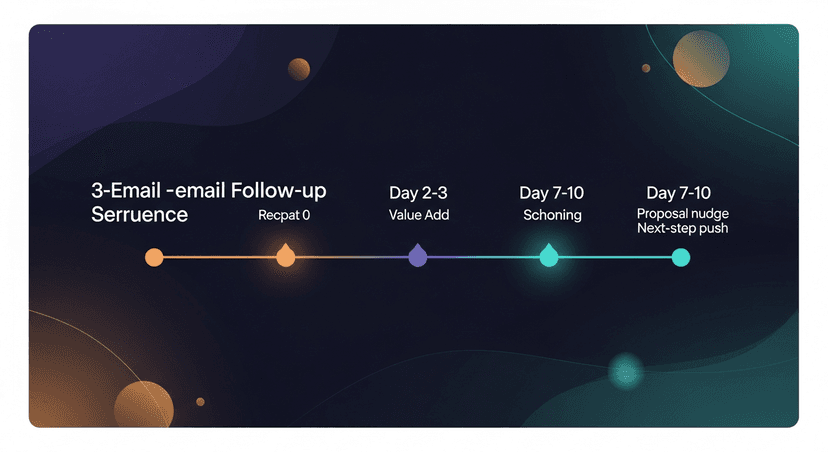
Email 3: The Proposal Nudge or Next-Step Push (Send 7-10 days out)
By now, one of two things has happened. Either you've sent the proposal and it's gone quiet, or you're still waiting on internal alignment on their side.
Either way, this email has one job: move something forward without being annoying about it.
If the proposal is out:
"Wanted to check in on the proposal, happy to walk through any section that raised questions, especially the timeline piece we flagged. I have Thursday open if a quick call would help."
If you're waiting on their internal process:
"No rush on timing, just wanted to stay on your radar. I've been thinking more about the [specific challenge they named], and I have one more thought I'd like to share when the timing is right."
Notice what both versions do: they reference something specific, they offer something (a call, a thought), and they don't demand a reply.
A Note on Timing Across the Sequence
- Email 1: Within 60 minutes of the call ending
- Email 2: 2-3 business days later
- Email 3: 7-10 days after the call, or 5-7 days after sending the proposal
Don't stretch it out longer than this. Research from HubSpot shows the probability of qualifying a lead drops by 80% after the first 5 minutes, and while that's a sales stat, the underlying principle holds for consulting: delay signals low priority.
Personalizing at Scale: The Transcript Problem
Here's the real constraint for solo consultants and small practices: you're doing 10-15 discovery calls a month. Each one is different. Each client expects a follow-up that reflects their conversation, not a mail-merged template with their first name swapped in.
The bottleneck is the transcript. If you're using Fireflies, Otter, Fathom, or Granola (or even just your own notes) you have the raw material. The problem is turning that raw material into a follow-up that sounds like you wrote it, not like you copy-pasted from a CRM template.
This is the gap I built ReplySequence to close. Paste your transcript (from any source, any recorder, even a rough personal notes doc) and get a full follow-up sequence back in under 60 seconds. Voice-fingerprint learns from your edits so it sounds like you, not like generic AI output.
For consultants specifically, that means your tone, your framing, your specific way of referencing a prospect's problem, preserved across every touchpoint.
The Common Mistakes That Kill the Follow-Up
Even well-intentioned consultants sabotage their own follow-ups. Watch for these:
Sending the proposal too fast. If Email 1 includes an attached proposal, you've skipped the trust-building window. The same-day recap should not contain a price tag.
Using "just checking in." That phrase has been so overused it's become invisible. Replace it with a specific reference: "Checking in on the Salesforce question you raised": not "just checking in."
Following up without a clear ask. Every email in your sequence should have one job. If the job is "stay top of mind," that's fine, but know that's what you're doing. Don't accidentally disguise a soft touch as a hard ask.
Waiting for the perfect proposal before sending Email 1. The recap email and the proposal are separate documents. Send the recap fast. Take your time on the proposal.
Copying and pasting the same sequence for every client. Prospects can feel a template. The more senior the decision-maker, the faster they spot it. Personalization isn't optional for high-ticket consulting: it's the product preview.
What a Good Consulting Follow-Up Actually Signals
When a consultant sends a sharp, specific, fast follow-up after a discovery call, they're communicating something bigger than the content of the email.
They're saying: this is how I work.
That signal matters more than almost anything in your proposal. Clients are hiring you for how you operate under uncertainty, how you handle communication, how you treat the relationship before the contract is signed. The follow-up is a free sample of all of that.
A 2022 Edelman Trust Barometer report found that 88% of buyers say trust is a key factor in their purchasing decision. In consulting, trust isn't built in the discovery call: it's built in the 10 days that follow it.
Get the follow-up right and the proposal almost writes itself. Get it wrong and no proposal is good enough to recover.
—-
If you're doing discovery calls and spending 30+ minutes per call writing follow-up emails, that's the problem I built ReplySequence to solve. Start free at replysequence.com, 10 drafts/month, no credit card required. Pro trial is 14 days, also no credit card.
Get the weekly ReplySequence newsletter for more post-meeting follow-up tactics, subscribe at replysequence.com/newsletter.
Related reading
- How Financial Advisors Can Automate Follow-Up After Client Meetings
- How Agencies Can Streamline Client Meeting Recaps and Follow-Ups
- How to Recap a Discovery Call to Move Prospects Forward
—-
What you should do next…
Depending on where you're at, here are three ways to keep going:
- Subscribe to the newsletter, weekly notes on sales follow-up workflows and the AI tooling that actually helps. No pitch.
- Try it with your own transcript, paste any meeting transcript, get a drafted follow-up in 30 seconds. No signup, no OAuth.
- Talk directly with Jimmy, 15-min intro or 30-min walkthrough. Founder-led, no sales team.
How ReplySequence handles this
ReplySequence takes any meeting transcript, paste it in from Zoom, Teams, Meet, WebEx, Fireflies, Granola, or wherever, and drafts a context-rich follow-up email in about 8 seconds. You review it, make any edits, and approve. Deal intelligence builds automatically.