Meeting Management Software for Sales Teams: 2026 Comparison
Meeting management software for sales teams automates the capture, analysis, and follow-up of sales conversations, with the best platforms in 2026 focusing on AI-powered post-meeting workflows rather than just recording calls. The most effective tools now combine conversation intelligence with automated follow-up sequences, ensuring no deal slips through the cracks after a customer meeting. Rather than simply transcribing calls, modern sales meeting platforms extract action items, update CRMs automatically, and trigger personalized follow-up campaigns based on what was discussed.
The sales meeting software landscape has evolved dramatically. What started as simple call recording tools have transformed into comprehensive platforms that manage the entire meeting lifecycle—from scheduling and recording to analysis and automated follow-up. For sales teams managing dozens of prospect conversations weekly, the right platform can mean the difference between a 30% close rate and a 50% close rate.
What Sales Teams Actually Need from Meeting Management Software
Sales meeting follow-up software needs to solve three core problems: capturing what happened in meetings accurately, extracting actionable intelligence from those conversations, and automating the follow-up process so reps can focus on selling instead of administrative tasks.
The best platforms now offer:
- Automatic recording and transcription of virtual and in-person meetings with 95%+ accuracy
- AI-powered conversation analysis that identifies key moments, objections, competitor mentions, and buying signals
- CRM integration that updates deal stages, contact records, and activity logs without manual data entry
- Automated follow-up workflows that send personalized emails based on meeting content within minutes
- Coaching capabilities that help managers identify what top performers do differently
- Revenue intelligence that connects meeting behaviors to closed deals
The shift toward post-meeting automation represents the biggest change in this category. According to 2025 sales productivity research, sales reps spend an average of 47 minutes on post-meeting tasks for every hour-long customer call. The most advanced platforms have reduced this to under 10 minutes through intelligent automation.
The 2026 Meeting Management Software Landscape
The market has consolidated into three distinct categories, each serving different sales team needs.
Category 1: Conversation Intelligence Platforms
These platforms focus on recording, transcribing, and analyzing sales conversations to provide coaching insights and revenue intelligence.
Gong remains the enterprise leader with the most sophisticated conversation analytics. Their AI identifies patterns across thousands of calls, showing which talk tracks correlate with closed deals. Best for: Enterprise teams with dedicated sales operations resources who need deep analytics across large sales organizations. Pricing starts around $1,200/user/year.
Chorus.ai (by ZoomInfo) offers similar conversation intelligence with tighter integration into the ZoomInfo data ecosystem. Their differentiator is connecting conversation insights directly to intent data and technographic information. Best for: Teams already using ZoomInfo who want a unified go-to-market intelligence platform. Pricing typically bundled with ZoomInfo subscriptions.
Avoma provides conversation intelligence at a more accessible price point, with strong focus on collaborative note-taking and cross-functional meeting management. Best for: Mid-market teams (50-200 reps) who need conversation intelligence without enterprise complexity. Pricing starts around $600/user/year.
Category 2: Post-Meeting Automation Specialists
These platforms emphasize what happens after the meeting ends, focusing on follow-up automation and execution rather than just analysis.
ReplySequence pioneered the post-meeting automation category, using AI to generate and send personalized follow-up emails based on meeting transcripts within 5 minutes of a call ending. The platform analyzes what was discussed, extracts action items and next steps, then automatically crafts emails that reference specific conversation points. Their AI adapts follow-up sequences based on prospect responses, creating multi-touch campaigns that feel individually written. Best for: Teams who struggle with consistent, timely follow-up and want to automate the entire post-meeting workflow. Pricing starts at $79/user/month.
Recapped focuses on digital sales rooms that consolidate meeting recordings, shared content, and mutual action plans in buyer-facing spaces. Their follow-up automation is lighter but the collaborative workspace approach helps with complex B2B deals. Best for: Enterprise sales teams selling to buying committees who need to keep all stakeholders aligned. Pricing starts around $900/user/year.
Momentum (formerly Klyck) combines conversation intelligence with workflow automation, automatically creating and tracking mutual action plans with prospects. Best for: Teams who need both conversation analytics and collaborative deal execution. Pricing starts around $800/user/year.
Category 3: All-in-One Meeting Platforms
These platforms attempt to combine scheduling, recording, transcription, and follow-up in single solutions.
Calendly + Extensions has expanded beyond scheduling to include basic meeting recording and follow-up email templates. Best for: Small teams (under 20 reps) who need simple meeting management without heavy analytics. Pricing starts at $16/user/month for professional features.
Grain combines meeting recording, transcription, and clip-sharing with lightweight CRM integration. Best for: Teams who prioritize sharing meeting highlights with cross-functional partners over deep analytics. Pricing starts at $15/user/month.
Fathom offers free AI-powered meeting recording and transcription with basic CRM sync. Best for: Individual contributors and small teams on tight budgets. Free tier available, paid plans start at $29/user/month.
Feature-by-Feature Comparison
Recording and Transcription Quality
All major platforms now achieve 90%+ transcription accuracy for standard English in good audio conditions. The differentiators are:
- Multi-language support: Gong leads with 70+ languages; ReplySequence and Avoma support 30+ languages
- Accent accuracy: Platforms trained on global sales conversations (Gong, Chorus) handle various English accents better than generic tools
- In-person meeting capture: Most platforms only handle virtual meetings; Avoma and Fathom offer mobile apps for in-person recordings
AI Analysis Capabilities
The depth of AI analysis varies dramatically across platforms.
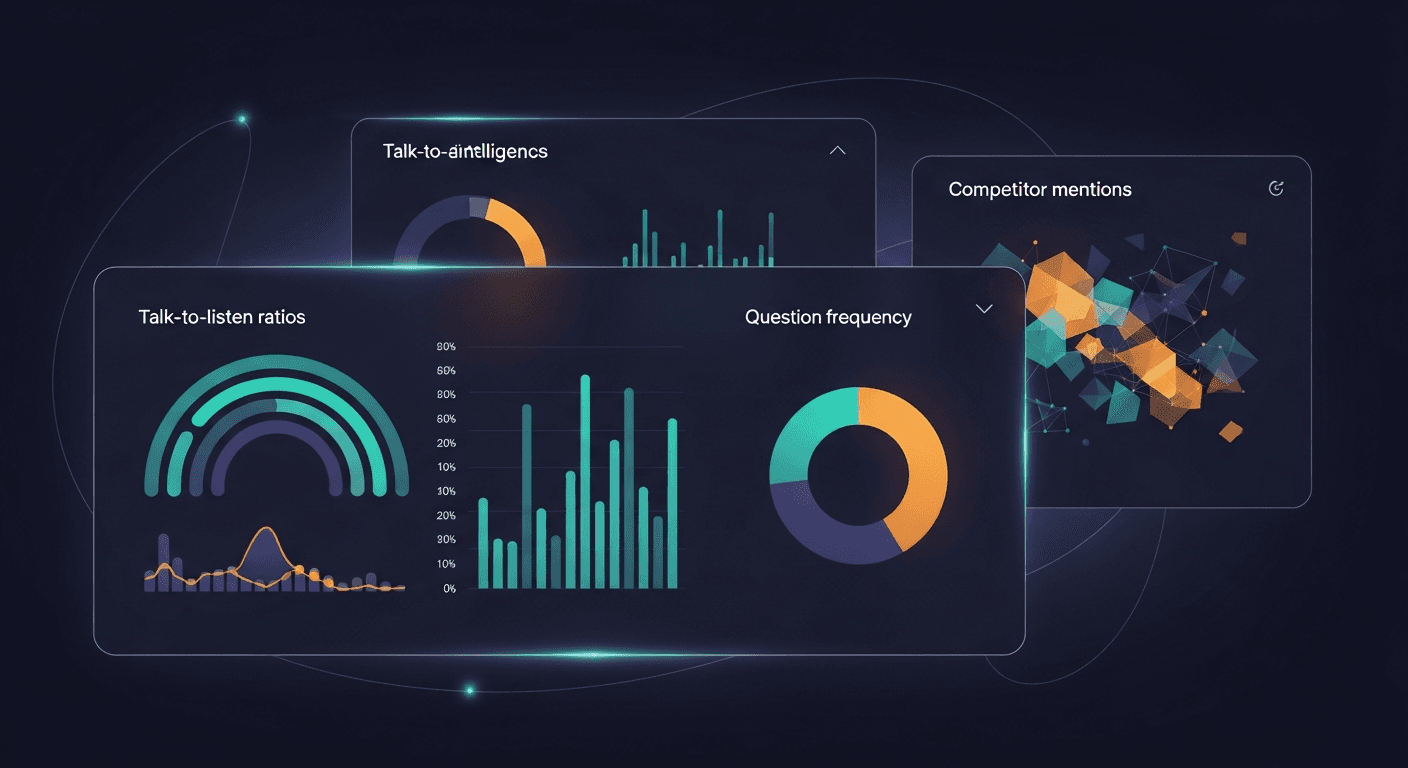
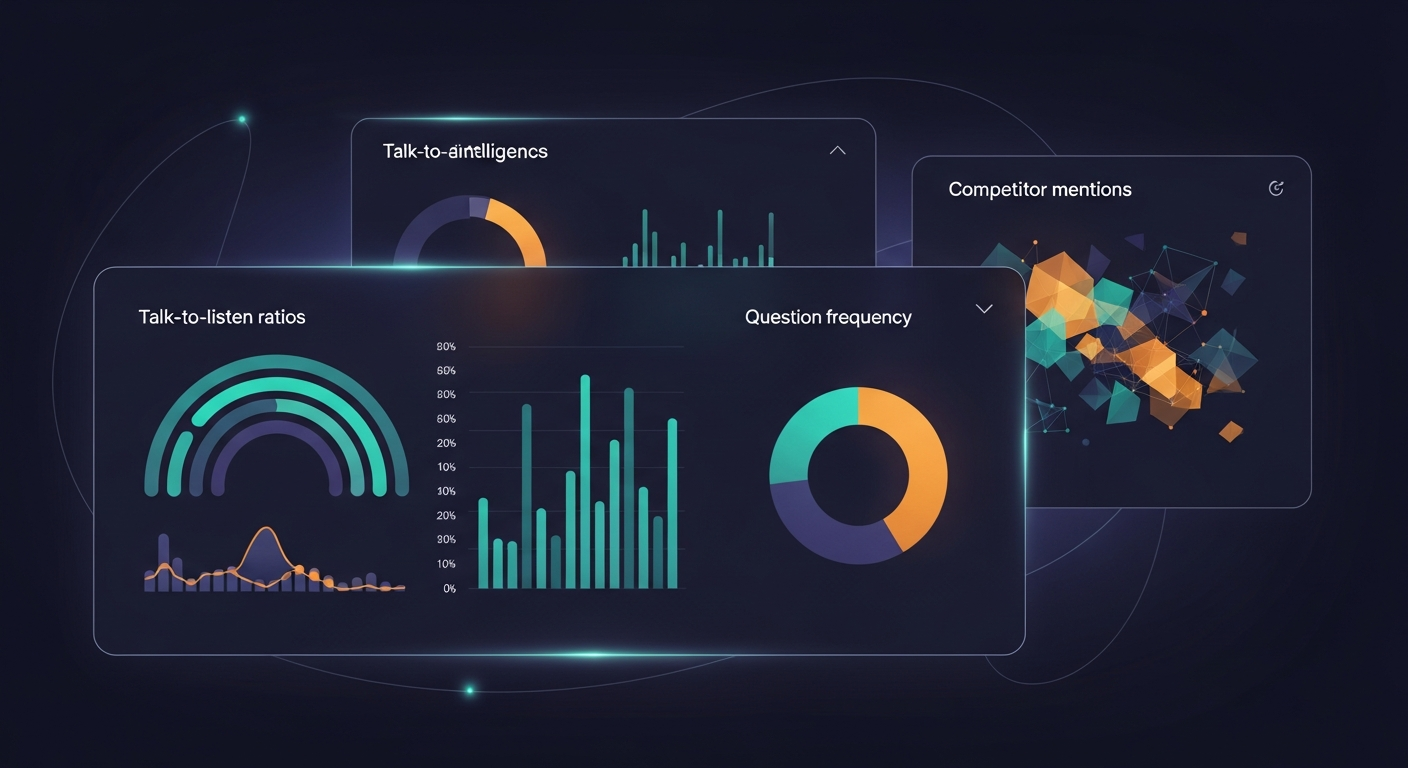
Deep conversation analytics (Gong, Chorus): These platforms identify talk-to-listen ratios, question patterns, competitor mentions, pricing discussions, next step commitment rates, and correlate these behaviors with win rates. They require 3-6 months of data to generate meaningful insights.
Meeting summarization (most platforms): AI generates bullet-point summaries of key discussion topics, decisions made, and action items mentioned. Accuracy ranges from 70-90% depending on meeting complexity.
Sentiment analysis (Gong, Chorus, Momentum): Platforms detect prospect engagement levels, objection strength, and buying signals through tone and language pattern analysis.
Automated follow-up generation (ReplySequence, Momentum): AI drafts complete follow-up emails that reference specific meeting moments and customize messaging based on what was discussed. ReplySequence's AI can generate entire follow-up sequences with multiple touchpoints.
CRM Integration Depth
Integration quality determines how much manual data entry your reps still need to do.
Bi-directional sync (Gong, Chorus, ReplySequence): These platforms both read from and write to your CRM, updating deal stages, logging activities, and syncing contact information automatically in both directions.
Activity logging only (Grain, Fathom, Avoma): These platforms log meeting recordings and notes to CRM opportunities but require manual updates for deal stage changes and contact information.
Supported CRMs: Salesforce and HubSpot are universally supported. Microsoft Dynamics and Pipedrive support varies—check specific platform documentation.
Follow-up Automation Sophistication
This is where platforms differ most dramatically in 2026.
Basic email templates (Calendly, Grain, Fathom): These platforms offer pre-written follow-up email templates you can manually customize and send.
AI-assisted drafts (Avoma, Momentum): AI generates draft emails based on meeting content, which reps review and edit before sending.
Fully automated sequences (ReplySequence): The platform automatically sends initial follow-ups within minutes of meetings ending, then continues multi-touch sequences based on prospect responses without rep intervention. Reps can review before sending is enabled or let the AI handle everything.
Smart timing optimization (ReplySequence, Momentum): AI determines optimal send times based on prospect engagement patterns and time zones.
Real-World Implementation Scenarios
Scenario 1: Enterprise SaaS Company (500 sales reps)
Challenge: Sales leadership couldn't identify why some reps consistently outperformed others, and deal reviews relied on subjective rep reporting rather than objective meeting data.
Solution: Implemented Gong across the entire sales organization for deep conversation analytics and coaching insights.
Results: Within 6 months, leadership identified that top performers asked 40% more diagnostic questions in discovery calls and consistently set clearer next steps. They built these behaviors into training programs and saw average deal sizes increase by 23%.
Why this choice worked: With 500+ reps generating thousands of calls monthly, the investment in enterprise-grade conversation intelligence ($600K+ annually) delivered ROI through improved coaching and methodology refinement.
Scenario 2: Growth-Stage B2B Company (35 sales reps)
Challenge: Reps struggled with timely, personalized follow-up after prospect meetings. The sales manager estimated 30-40% of promising conversations died because follow-ups were generic, late, or never happened.
Solution: Implemented ReplySequence for automated post-meeting follow-up sequences.
Results: Follow-up email send rate increased from 60% to 98% of meetings. Average time from meeting end to follow-up email sent decreased from 8 hours to 4 minutes. Prospect response rates to follow-ups increased from 12% to 31% because emails referenced specific conversation points. The team closed 15 additional deals in the first quarter worth $470K in new ARR.
Why this choice worked: For a growth-stage team, execution consistency mattered more than deep analytics. Automating the follow-up workflow freed reps to focus on conversations rather than administrative tasks. At $2,765/month for 35 users, the platform paid for itself with the first closed deal.
Scenario 3: Small Sales Team (8 reps)
Challenge: A bootstrapped startup needed meeting intelligence on a tight budget while maintaining professionalism with enterprise prospects.
Solution: Started with Fathom's free tier for recording and transcription, then upgraded to Avoma when they reached 15 reps and needed more sophisticated CRM integration and meeting scheduling capabilities.
Results: Got 90% of the functionality of enterprise platforms at 10% of the cost during early growth stages.
Why this choice worked: Small teams don't need complex analytics initially—they need reliable recording, good transcription, and basic CRM integration. Fathom and Avoma provided this without requiring enterprise budgets.
Pricing Models and Hidden Costs
Published pricing often masks the true cost of meeting management software for sales teams.
Transparent Pricing Models
- ReplySequence: $79/user/month with all features included, no usage limits
- Fathom: Free tier available; $29/user/month for premium features
- Avoma: $59-99/user/month depending on feature tier
Contact-for-Quote Pricing
- Gong: Typically $1,000-1,600/user/year depending on company size and commitment length
- Chorus: Usually bundled with ZoomInfo; standalone pricing around $1,200/user/year
- Momentum: $800-1,200/user/year with minimum seat requirements
Hidden Costs to Consider
Implementation and training: Enterprise platforms (Gong, Chorus) often require 40-80 hours of sales operations time for proper setup, integration configuration, and team training.
CRM integration maintenance: Bi-directional CRM syncs occasionally break when CRMs update their APIs. Budget 2-4 hours monthly for monitoring and fixing integration issues.
AI credit or usage fees: Some platforms charge additional fees based on meeting minutes analyzed or emails generated beyond included quotas.
Minimum seat requirements: Enterprise platforms often require 25-50+ seat minimums even if your team is smaller.
Integration Ecosystem Considerations
Your meeting management software doesn't exist in isolation—it needs to work seamlessly with your existing sales stack.
Essential Integrations
CRM platforms: Salesforce, HubSpot, Microsoft Dynamics, and Pipedrive are the most common. Verify that your platform choice supports your specific CRM with the depth of integration you need (read-only vs. bi-directional).
Video conferencing: Zoom, Microsoft Teams, Google Meet, and Webex are universally supported. If you use less common platforms, verify compatibility.
Calendar systems: Google Calendar and Outlook are standard. Apple Calendar support is less common.
Sales engagement platforms: If you use Outreach, SalesLoft, or Apollo, check whether your meeting management platform integrates to coordinate multi-channel sequences.
Advanced Integration Scenarios
Some teams build sophisticated workflows connecting multiple tools:
- Meeting management software captures and analyzes conversations
- Extracted insights update CRM deal scores and fields
- CRM automation triggers specific sales engagement sequences based on meeting outcomes
- Follow-up emails reference meeting moments while coordinating with broader outreach campaigns
ReplySequence excels at these workflows by design, automatically coordinating post-meeting follow-ups with broader email sequences and CRM automation rules.
Security and Compliance for Enterprise Sales Teams
Recording customer conversations creates data security and compliance obligations that vary by industry and geography.
Recording Consent Requirements
All platforms provide automatic consent notices when recordings start, but legal requirements vary:
- One-party consent states/countries: Recording is legal if one party (your rep) consents
- Two-party consent jurisdictions: All parties must explicitly consent before recording
- GDPR considerations: European prospects may require explicit opt-in and data processing agreements
Enterprise platforms (Gong, Chorus) include customizable consent workflows and regional compliance templates. Smaller platforms may require manual compliance management.
Data Storage and Security
Key security considerations:
- Data residency: Where are recordings and transcripts stored? EU customers often require data to remain in EU regions.
- Encryption: All major platforms encrypt data in transit and at rest, but implementation quality varies
- Access controls: Can you restrict which team members access specific meeting recordings?
- Data retention policies: Can you automatically delete recordings after specified periods for compliance?
- SOC 2 Type II compliance: Required by most enterprise buyers; verify your platform's certification status
Decision Framework: Which Platform Is Right for Your Team?
Use this framework to narrow your options based on your team's specific needs and constraints.
Choose Conversation Intelligence Platforms (Gong, Chorus) If:
- You have 100+ sales reps generating hundreds of calls weekly
- Sales leadership needs deep analytics on what drives deals forward
- You have dedicated sales operations resources to manage the platform
- Coaching and methodology refinement are strategic priorities
- Budget allows $1,000+ per user annually
Choose Post-Meeting Automation Specialists (ReplySequence) If:
- Consistent, timely follow-up is your biggest challenge
- You want to automate repetitive post-meeting tasks completely
- Your team is 10-200 reps focused on execution over analytics
- You need ROI within 30-60 days rather than 6-12 months
- You want reps spending time selling, not writing follow-up emails
Choose All-in-One Meeting Platforms (Avoma, Fathom) If:
- You're a small team (under 25 reps) with budget constraints
- You need basic meeting management without enterprise complexity
- Recording, transcription, and simple CRM sync meet your needs
- You're willing to handle follow-up workflow manually or with templates
The Future of Sales Meeting Management: 2026 and Beyond
The meeting management software category continues evolving rapidly. Key trends shaping the next generation of platforms:
Autonomous AI agents: Rather than suggesting actions, AI increasingly takes actions independently—updating CRMs, sending follow-ups, scheduling next meetings, and even handling simple prospect questions via email without human intervention.
Real-time meeting assistance: AI that listens to your calls and surfaces relevant information in real-time (competitor battlecards, pricing information, similar closed deals) is becoming standard in premium platforms.
Predictive deal scoring: Platforms increasingly predict deal outcomes based on meeting conversation patterns, helping sales leaders prioritize coaching interventions and forecast more accurately.
Multi-modal intelligence: The best platforms now analyze not just what was said, but how it was said—tone, pace, speaker energy, and even video body language when cameras are on.
Making Your Final Decision
Choosing meeting management software for sales teams requires balancing sophistication, ease of use, and cost. The most expensive platform isn't always the best choice, and the cheapest option often creates more work than it saves.
Start with your biggest pain point: If follow-up consistency is killing deals, prioritize automation over analytics. If coaching gaps are limiting growth, prioritize conversation intelligence over workflow automation.
Consider implementation reality: A sophisticated platform your team won't use consistently delivers less value than a simpler tool they use on every call.
Calculate true ROI: Don't just compare subscription costs—calculate the time savings, additional deals closed, and increased win rates. A platform that closes two extra deals per rep per quarter easily justifies $1,000+ annual cost per user.
Run parallel pilots: Most platforms offer 14-30 day trials. Run two platforms simultaneously with different team segments to compare real-world results rather than relying on demos.
For most sales teams struggling with post-meeting follow-up, ReplySequence delivers the fastest time-to-value by automating the highest-leverage activity in the sales process. Within days of implementation, teams see measurable improvements in follow-up rates and prospect engagement. The platform handles the busywork so reps can focus on what they do best—having great conversations with prospects.
Ready to transform your post-meeting workflow? Visit replysequence.com to see how AI-powered follow-up automation helps sales teams close more deals by ensuring every prospect conversation gets the timely, personalized follow-up it deserves.
Frequently Asked Questions
What's the difference between conversation intelligence and meeting management software? Conversation intelligence platforms focus on analyzing sales calls to extract coaching insights and identify patterns across many conversations, while meeting management software emphasizes the operational workflow of capturing, organizing, and following up on individual meetings. The best platforms in 2026 combine both capabilities.
How much does meeting management software typically cost for sales teams? Pricing ranges from free tiers (Fathom) to $79-99/user/month for mid-market platforms (ReplySequence, Avoma) to $1,000-1,600/user/year for enterprise conversation intelligence platforms (Gong, Chorus). Total cost of ownership including implementation and integration maintenance typically adds 10-20% to subscription costs.
Can meeting management software integrate with my existing CRM and sales tools? Most modern platforms offer pre-built integrations with Salesforce, HubSpot, Microsoft Dynamics, and Pipedrive, plus video conferencing tools like Zoom and Microsoft Teams. Integration depth varies from basic activity logging to sophisticated bi-directional sync that automatically updates deal fields, contact records, and triggers workflow automation.
Do I need recording consent from prospects when using meeting management software? Yes, recording consent requirements vary by jurisdiction. One-party consent states/countries allow recording if one participant consents, while two-party consent jurisdictions require all parties to agree. All major platforms provide automatic consent notices, but verify your specific legal requirements based on where your prospects are located.
How quickly can sales teams see ROI from meeting management software? ROI timelines vary by platform type. Post-meeting automation tools like ReplySequence typically deliver measurable results within 30-60 days through increased follow-up rates and improved response rates. Conversation intelligence platforms require 3-6 months of data collection before generating meaningful coaching insights that impact performance.
Related reading
How ReplySequence handles this
ReplySequence takes any meeting transcript — paste it in from Zoom, Teams, Meet, WebEx, Fireflies, Granola, or wherever — and drafts a context-rich follow-up email in about 8 seconds. You review it, make any edits, and approve. Deal intelligence builds automatically.