How AI Is Changing Sales Follow-Up in 2026
AI is changing sales follow-up faster than most sales tools have caught up to. The recording problem is solved. The transcription problem is solved. The part that still breaks every deal cycle (the follow-up email that never gets written) that's where 2026 is getting interesting.
Here's what's actually shifting, what's still broken, and how the best reps are closing the gap.
The Problem AI Hasn't Fixed Yet (Until Now)
Every major recorder (Zoom, Teams, Fireflies, Fathom, Otter, Granola) got smarter in the last 18 months. Transcripts are cleaner. Summaries are faster. AI-generated action items show up before you've closed your laptop.
And yet. Industry research consistently shows that 44% of salespeople give up after just one follow-up attempt (source: Salesforce State of Sales). The meeting gets recorded. The summary gets skimmed. The follow-up email sits in drafts, or never gets started.
The recorder solved the memory problem. It didn't solve the momentum problem.
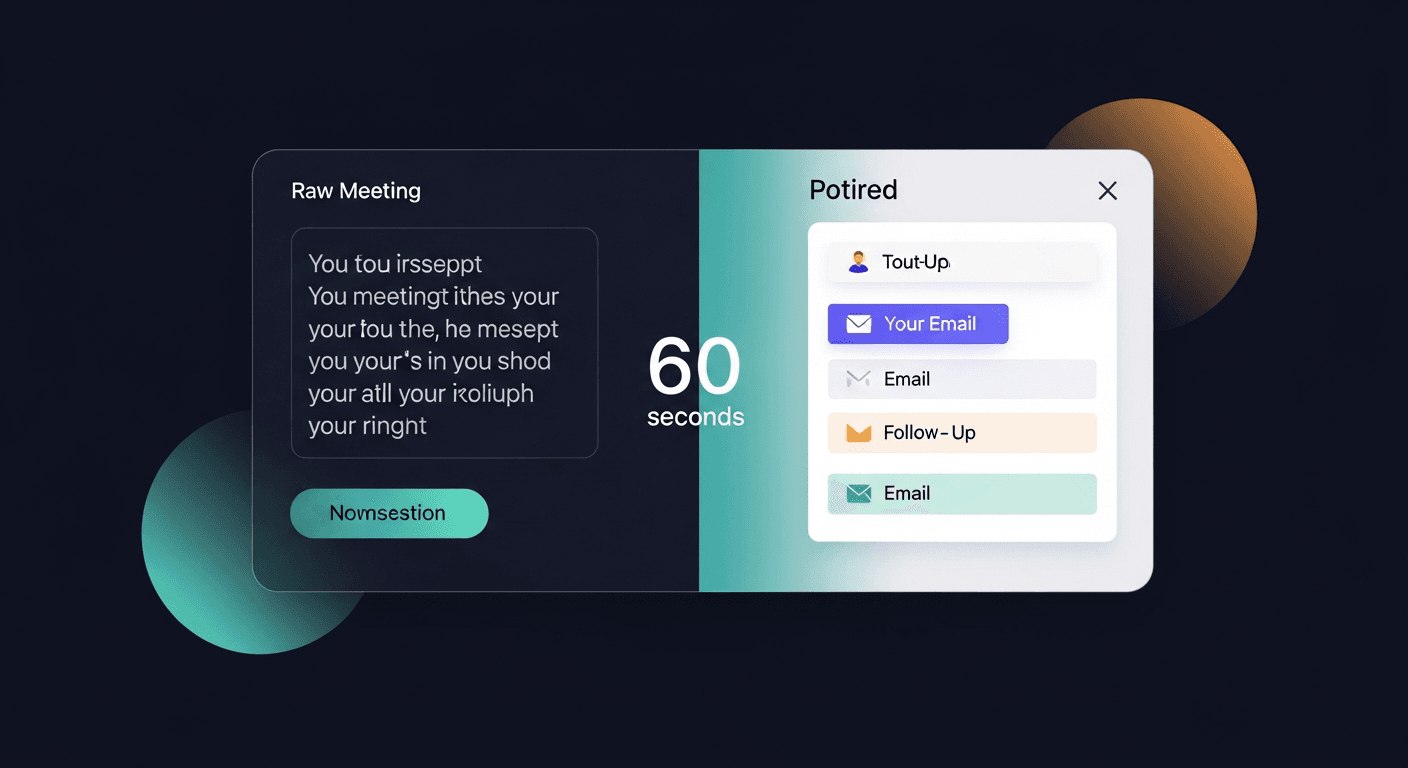
That's the real gap AI is changing sales follow-up to address in 2026: the last mile. Transcript in, follow-up out. Not a summary you have to rewrite. Not action items you have to translate. A sent email (drafted, personalized, and on its way) in 60 seconds.
The problem wasn't that reps didn't know what to say. It was the 30-minute tax between knowing and sending.
What's Actually Shifting in AI Sales Automation in 2026
Three things changed the trajectory this year. Not hype, actual structural shifts.
1. Transcript quality crossed a threshold
For AI to generate a useful follow-up, it needs signal. Messy transcripts produce generic emails. The reason 2026 is different: the major transcription tools finally produce clean enough output that a follow-up layer can extract specific next steps, objections, pricing mentioned, and prospect names without hallucinating them.
Granola's local model, Fathom's speaker diarization, Fireflies' topic detection: they crossed the accuracy threshold where downstream AI can trust the input. That's what makes transcript-to-email viable now in a way it wasn't in 2024.
2. Voice-fingerprinting went from gimmick to table stakes
The first wave of AI-generated emails sounded like GPT defaults. Overly formal. Generic sign-offs. The kind of email that makes a prospect think "a bot wrote this."
The shift in 2026: tools that learn from your edits. Every time you tweak a draft (change "I hope this email finds you well" to "Quick note from our call") the model updates. Draft 10 sounds like you. Draft 50 sounds exactly like you. Voice-fingerprint is the feature that turns AI drafts into AI-assisted drafts you'd actually send.
I built this into ReplySequence because I kept seeing teams adopt AI writing tools and then rewrite every output from scratch. The tool wasn't learning. That's a trust problem, and voice-fingerprint is the fix.
3. BYOT (Bring Your Own Transcript) killed the bot-in-meeting requirement
A lot of AI sales tools in 2024-2025 required a bot in the meeting. The prospect sees a "Notetaker joined" message. The vibe shifts. Some enterprise calls ban bots outright.
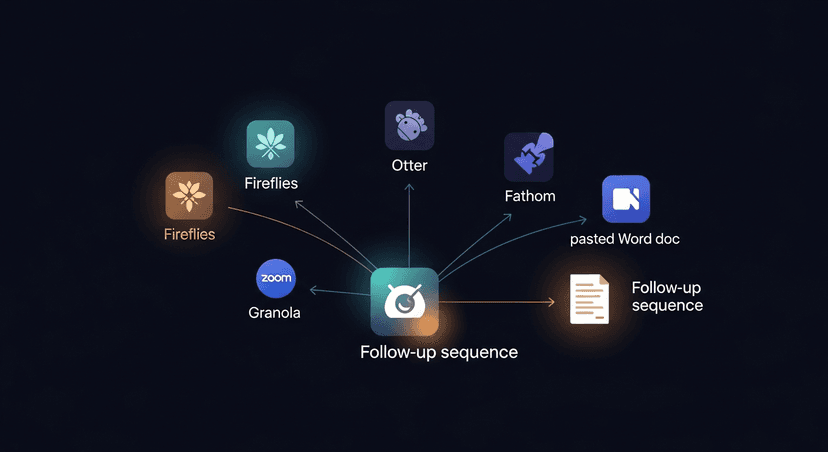
The smarter pattern in 2026: transcript-agnostic. Paste your transcript from anywhere (Otter, Fireflies, Fathom, a Word doc, even a voice memo you had transcribed) and get a follow-up sequence back. No integration required. No bot required. BYOT is the wedge that works after any recorder, not just one.
ReplySequence does this automatically, paste any transcript, get a branded follow-up sequence back in 60 seconds.
The Future of Sales Follow-Up: What Changes, What Doesn't
Let me be direct about where this is going, and where it isn't.
What changes:
- Speed becomes the baseline. In 2026, sending a follow-up 3 hours after a call is late. The bar is 15 minutes. AI makes that possible for every rep, not just the fast ones. Research from Velocify (now Velocify/Ellie Mae) showed that responding within 5 minutes increases conversion likelihood by 9x compared to 10-minute delays. The same logic applies to post-meeting follow-up, speed signals you're paying attention.
- Personalization at scale stops being a contradiction. A solo founder running 8 discovery calls a week used to choose between speed and quality. Now the transcript does the heavy lifting (specific pain points, exact language the prospect used, next steps from the call) all extracted and dropped into the draft. You review, tweak, send.
- Sequences become accessible without enterprise pricing. This one matters. HubSpot Sequences, Outreach, Salesloft, powerful tools, but the price of entry is steep. HubSpot Sales Hub Pro runs $450+/month minimum once you factor in seat counts. Most 10-person sales teams don't need the whole suite. They need sequences. AI is making post-meeting sequences available at a fraction of the cost, sequences without the enterprise CRM tax.
- CRM hygiene improves as a side effect. When the follow-up gets drafted and sent automatically, the log follows. Call notes, next steps, email sent, all captured. Not because reps became more disciplined. Because the tool did it.
What doesn't change:
- Draft-first is non-negotiable. Auto-send is a trust problem. An AI-drafted email going out before a human reads it is a liability, wrong pricing quoted, wrong next step confirmed, wrong tone for a sensitive deal. The reps and managers I talk to are unanimous: they want AI to draft, they want a human to send. That's not changing.
- Relationships still close deals. AI changes sales follow-up mechanics. It doesn't change the fact that people buy from people they trust. The follow-up email is the proof point: it shows you listened, you understood, you followed through. AI helps you write it faster. You still have to mean it.
- Garbage in, garbage out. If the transcript is a mess (crosstalk, no speaker labels, 40% accuracy) the follow-up draft will be too. The tools are only as good as the signal they receive.
Real Scenarios Where This Plays Out
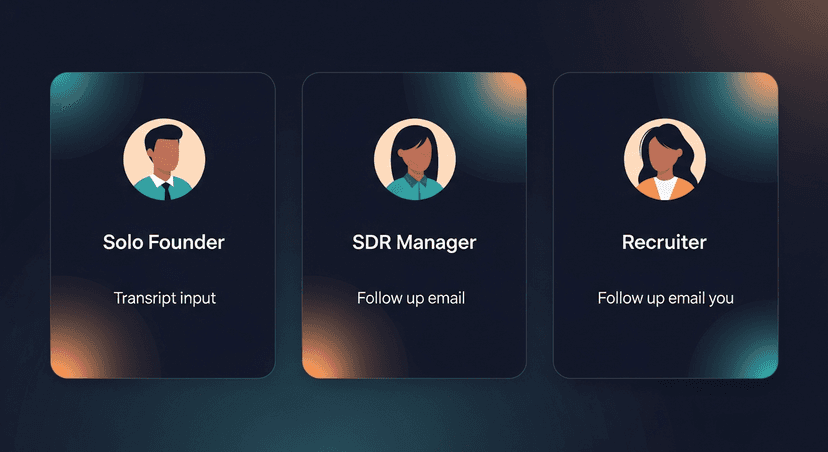
The solo founder running discovery calls: She does 6-8 calls a week, handles her own CRM, writes her own follow-ups. Used to spend 25-30 minutes per call on admin. Now she pastes the Fathom transcript, reviews the draft, tweaks two sentences, sends. Down to under 5 minutes. The follow-up goes out while the prospect still remembers the call.
The SDR team at a 40-person SaaS company: Three SDRs, shared templates, a manager who wants consistency. They don't need Outreach. They need sequences that sound like each rep: not a copy-paste template. Voice-fingerprint gives each rep their own voice inside a shared structure.
The recruiter after a candidate screen: Not traditional sales, but the follow-up problem is identical. Recruiter finishes a 30-minute screen, needs to send a personalized note within the hour. Paste the Otter transcript, get a candidate-specific follow-up back. Relationship preserved, pipeline moving.
The 12-18 Month Window
I'll be straight about the competitive landscape: Zoom AI Companion is getting better. Microsoft Copilot is in Teams. Google's AI is in Meet. The recorders are going to add follow-up features. Some already have.
The differentiation window for purpose-built post-meeting follow-up tools is real but not infinite. 12-18 months is the honest estimate before the recorder giants catch up enough to be "good enough" for most users.
What survives after that window? BYOT: the transcript-agnostic approach that works regardless of which recorder a team uses. Voice-fingerprint: the memory layer the giant platforms won't bother building for individual reps. And tight integrations with the CRMs and email tools teams already live in.
AI changing sales follow-up isn't a future trend. It's happening right now, in the gap between the meeting ending and the email never getting sent. The tools that close that gap (fast, trustworthy, and built around how reps actually work) are the ones that matter in 2026.
—-
If you're spending more than 10 minutes per call on follow-up emails, that's the gap I built ReplySequence to close. Start free at replysequence.com, 10 drafts/month, no credit card required. If you need unlimited drafts and voice-fingerprint, Pro is $29/month with a 14-day free trial.
Related reading
- AI vs Manual Follow-Up: Which Closes More Deals?
- Sales Follow-Up Automation: Balancing AI Efficiency with Human Touch
- What's the ROI of AI Sales Automation Tools?
Get the weekly ReplySequence newsletter for more post-meeting follow-up tactics, subscribe at replysequence.com/newsletter.
How ReplySequence handles this
ReplySequence takes any meeting transcript, paste it in from Zoom, Teams, Meet, WebEx, Fireflies, Granola, or wherever, and drafts a context-rich follow-up email in about 8 seconds. You review it, make any edits, and approve. Deal intelligence builds automatically.