What's the ROI of AI Sales Automation Tools?
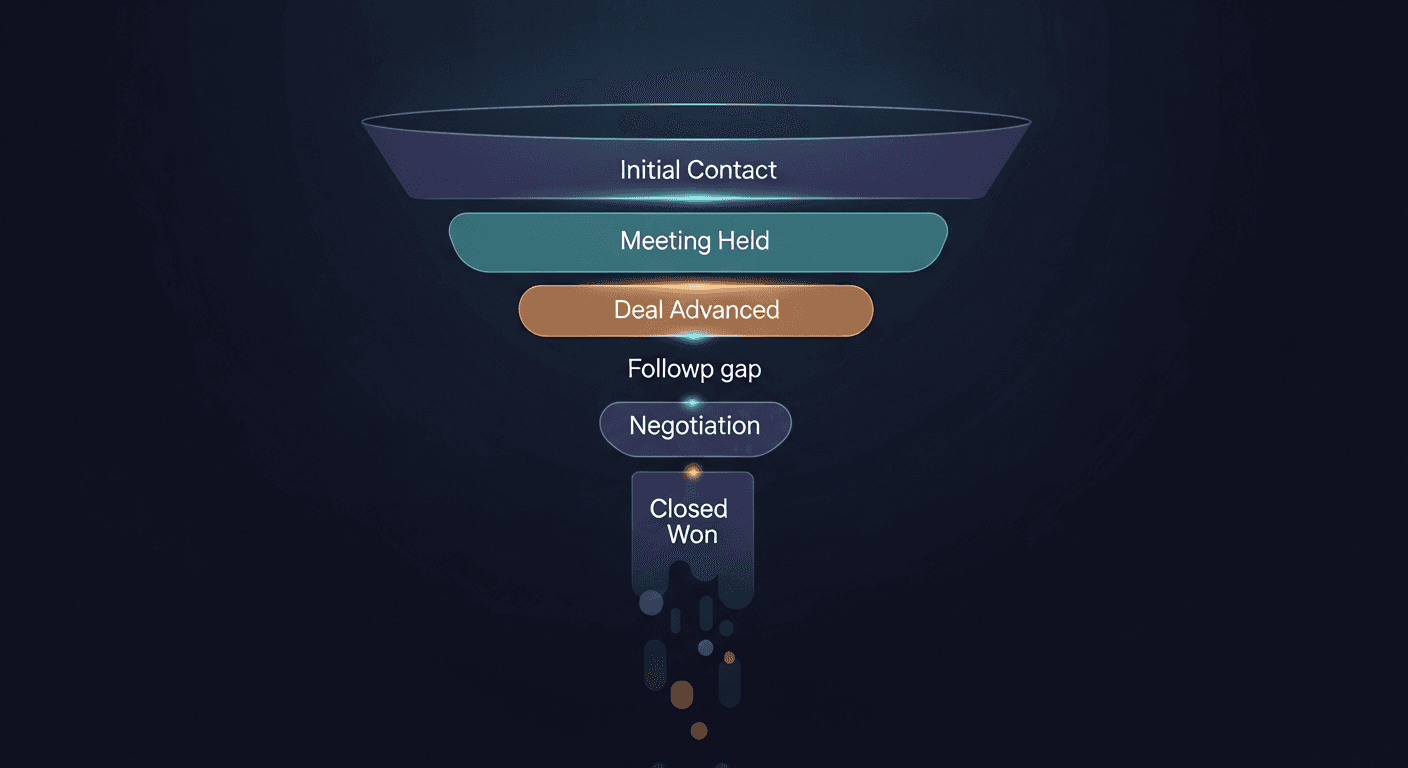
The ROI of AI sales automation is measurable, but most teams measure it wrong. They chase cost savings and ignore the thing that actually moves revenue: what happens after the meeting ends.
Here's a framework for thinking about AI sales automation ROI honestly, what the research says, where the value actually lives, and where most tools quietly underdeliver.
The Problem: Measuring the Wrong Things
Most ROI calculations for AI sales tools focus on time saved in the meeting itself. Did the AI summarize faster? Did it cut note-taking from 20 minutes to five? That's real, but it's the wrong unit of analysis.
The meeting is already a sunk cost. You showed up. Your prospect showed up. That hour is spent regardless of whether an AI was in the room.
The value is in what happens after the call. And that's where most tools stop.
According to research from HubSpot, 44% of salespeople give up after one follow-up, even though studies consistently show it takes 5–12 touchpoints to close most deals. The gap isn't preparation, reps know what was discussed. The gap is execution. Writing a coherent, personalized follow-up email after five calls in a day is genuinely hard, and most reps either skip it, send something generic, or send it 48 hours too late.
That's the problem AI sales automation tools should be solving. Most of them don't.
Where AI Sales Automation Actually Creates Value
Break the ROI of AI sales automation into three buckets:
1. Time reclaimed (hard cost)
Research from McKinsey estimates that sales reps spend roughly 28% of their week on email, writing, reading, and chasing responses. Even conservative automation that cuts follow-up drafting time from 30 minutes to under two minutes per call compounds fast for anyone running a full pipeline.
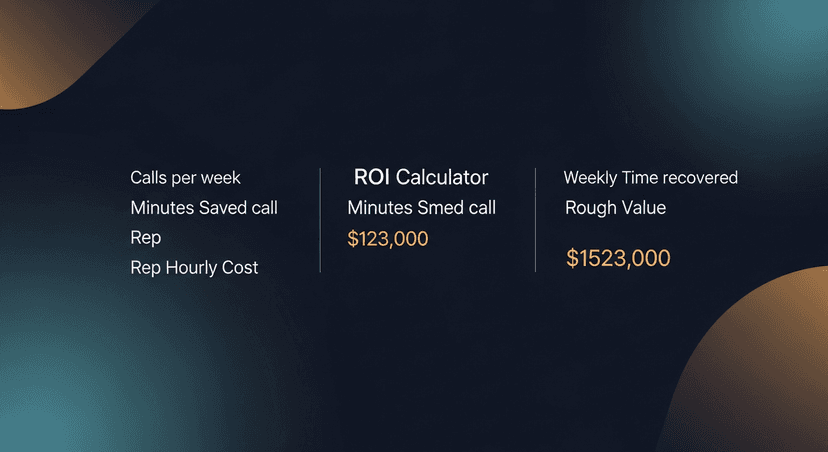
Do the math on a rep running 10 discovery calls a week:
- Old world: 5 hours/week on post-call follow-ups
- With AI drafting: under 30 minutes
- Recovered time: 4.5 hours/week, every week
At a fully-loaded rep cost of $80–120K/year, that recovered time has real dollar value. But it only matters if the rep uses those hours on pipeline activity: not admin.
2. Speed-to-follow-up (revenue impact)
This is the one most ROI calculators ignore. Research from the Harvard Business Review found that companies that followed up with web leads within an hour were 7x more likely to qualify those leads than companies that waited even an hour longer. The same decay curve applies to post-meeting follow-up.
A prospect leaves a great call warm. Twenty-four hours later, three competitors have landed in their inbox. Forty-eight hours later, your deal is competing with recency bias working against you.
Speed is a revenue variable, not an efficiency variable. AI tools that close the gap between transcript and sent follow-up email are directly affecting win rates, even if your CRM can't easily attribute it.
3. Consistency at scale (pipeline quality)
One-off follow-up emails are fine for a single rep. But when you're managing five reps across 50 active opportunities, quality variance is a real problem. Some reps send tight, specific follow-ups that recap the pain points discussed and set a clear next step. Others send a two-line "great chatting today" email.
AI tools that learn from your best reps' patterns (what HubSpot research calls "codifying winning behaviors") narrow that variance. Every follow-up reflects what was actually discussed, not a generic template.
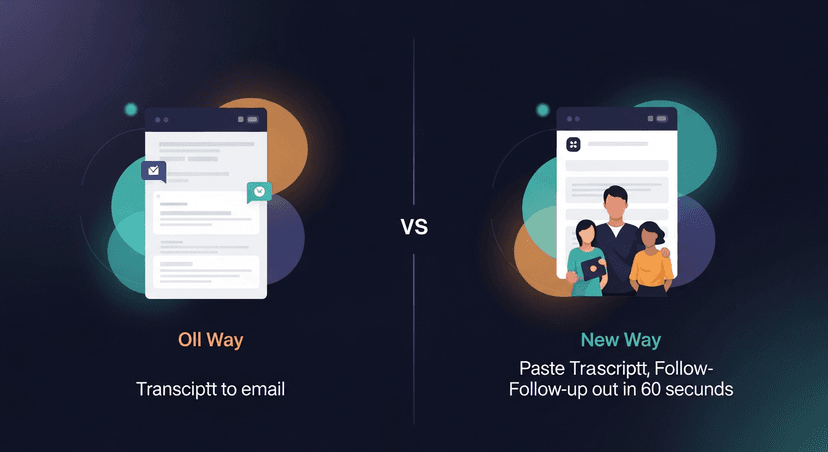
ReplySequence does this automatically, paste any transcript, get a branded follow-up sequence back in 60 seconds.
The Hidden Cost: Tools That Create New Admin
Here's the irony most AI sales tool vendors won't say out loud: a badly implemented AI tool can increase admin, not reduce it.
If a tool requires:
- A dedicated bot invite to every meeting
- Manual syncing between your recorder and the automation layer
- Copying summaries into a separate tool to trigger sequences
- Reviewing three different AI-generated outputs before one email gets sent
...then your ROI is negative before you've even measured it.
The tools that deliver real sales automation ROI are the ones that fit into existing workflows without introducing new friction. That's why the BYOT (Bring Your Own Transcript) model matters. You already have a recorder, Fireflies, Otter, Fathom, Granola, Zoom, Teams, Meet. You're already getting transcripts. The question is what happens to that transcript after the call ends.
If the answer is "I paste it somewhere and a follow-up email comes out," that's a workflow. If the answer is "I have to configure a seven-step Zapier chain and remember to click four buttons," that's not automation: that's more work dressed up as automation.
How to Actually Measure AI Sales Automation ROI
If you're evaluating tools (or trying to make the case to a manager) here's a practical measurement framework.
Before you buy, baseline these metrics:
- Average time from call end to follow-up email sent
- Percentage of calls that get a same-day follow-up
- Average open rate and reply rate on follow-up emails
- How often deals stall after the first meeting with no documented next step
After 30 days with an AI tool, measure:
- Did average follow-up send time drop?
- Did same-day follow-up percentage go up?
- Did reply rates change? (This is a quality signal, generic emails get ignored)
- Did your pipeline advance rate improve for deals with AI-assisted follow-up vs. without?
You don't need a data science team to run this. A simple spreadsheet tracking those five numbers for 30 days gives you more signal than any vendor ROI calculator.
One thing to watch for: AI tools that auto-send without human review will eventually cause a trust problem. A mis-attributed quote, a wrong next step, a personalization that misfired: one bad auto-sent email can set a deal back further than no email at all. Draft-first is non-negotiable. The rep should be reviewing before anything hits a prospect's inbox.
The Pricing Reality Check
ROI also depends on what you're paying. The math looks very different at:
- $29/month (a solo AE running their own sequences)
- $39/user/month (a 5-person SDR team)
- $450+/seat/month (HubSpot Sales Hub Pro, which bundles sequences inside a full CRM platform)
For teams that just want post-meeting sequences without buying into an enterprise CRM stack, the cost-to-value calculation is straightforward. You're not paying for features you'll never use. Sequences without the enterprise CRM tax.
For teams already deep in Salesforce or HubSpot, the question is whether the native sequence tooling is actually getting used, or whether reps are defaulting to Gmail because the native tool is too slow to set up after a call.
The Real Question
The ROI of AI sales automation isn't about replacing reps: it's about closing the gap between "the meeting went great" and "then nothing happened."
Every meeting that doesn't get a fast, specific, personalized follow-up is a meeting that cost money to run and failed to fully capitalize on the momentum it created. That's the problem worth solving. That's where the real ROI of AI sales automation lives.
Measure the right things. Pick tools that remove friction instead of adding it. Review before you send.
The math takes care of itself.
—-
If you're running discovery calls and writing follow-ups manually, try ReplySequence free, 10 drafts a month, no credit card. Paste your transcript, get a branded follow-up sequence back in under 60 seconds. Start at replysequence.com.
Related reading
- Sales Automation: Beyond Time Savings in 2026
- The Hidden Cost of Manual Sales Follow-Up (Time Study)
- How Much Time Do Salespeople Spend on Admin? (And How to Cut It)
Get the weekly ReplySequence newsletter for more post-meeting follow-up tactics, subscribe at replysequence.com/newsletter.
How ReplySequence handles this
ReplySequence takes any meeting transcript, paste it in from Zoom, Teams, Meet, WebEx, Fireflies, Granola, or wherever, and drafts a context-rich follow-up email in about 8 seconds. You review it, make any edits, and approve. Deal intelligence builds automatically.