Follow-Up Best Practices for B2B Sales Teams
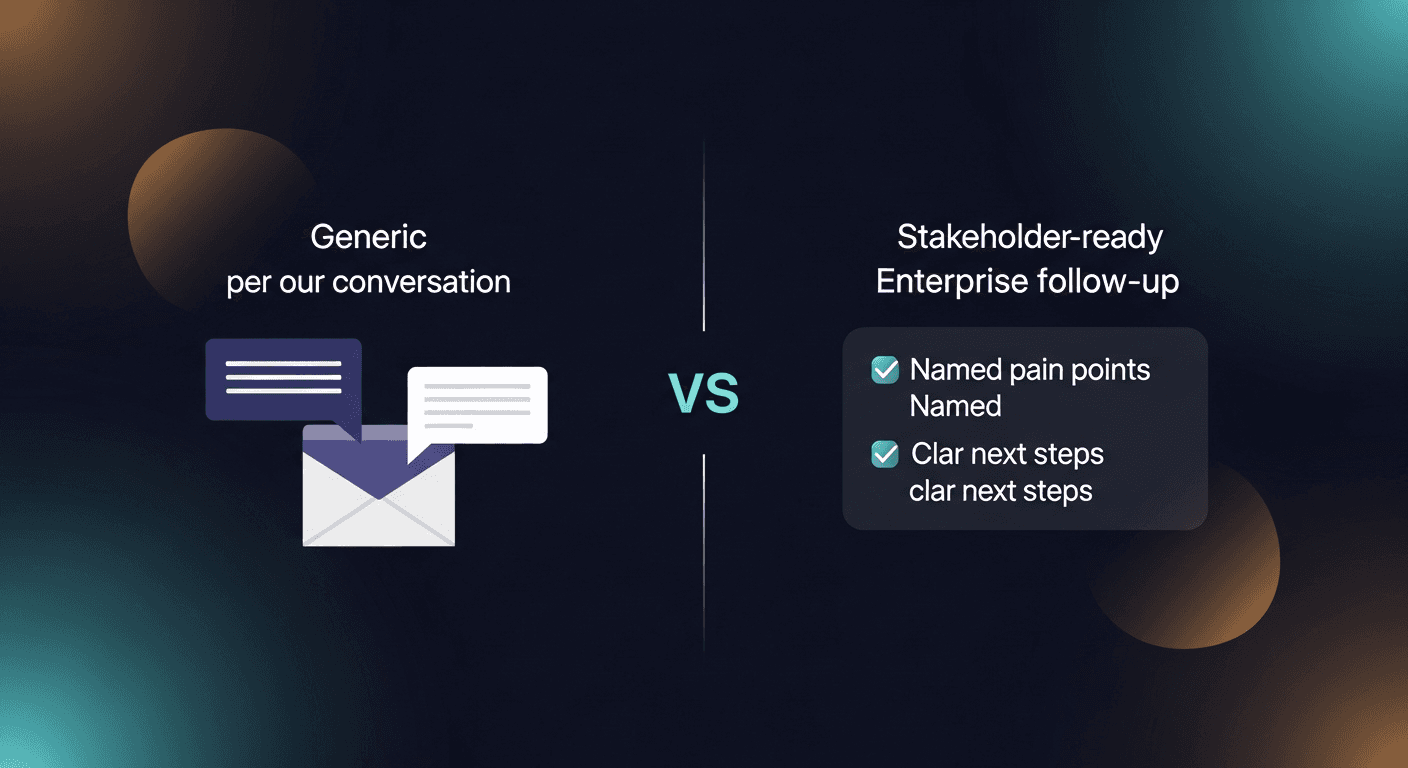
B2B enterprise sales follow-up is where most deals actually die. Not in the meeting, after it. The discovery call goes well, the champion is nodding, the demo lands. Then someone sends a generic "per our conversation" email and the deal goes cold for three weeks.
Enterprise cycles are long, stakeholders are many, and follow-up emails are read by people who weren't in the room. Getting this right isn't optional.
Why Enterprise Follow-Up Is a Different Animal
Selling into a 500-person company isn't like closing an SMB in two calls. According to Gartner research, the typical B2B buying group for a complex solution involves 6 to 10 decision-makers, each consuming independent information before they ever align. Your follow-up email isn't just going to your champion: it's getting forwarded to a VP, a procurement lead, and possibly legal.
That changes everything about how you write it.
A few realities that make enterprise follow-up harder than it looks:
- Deals span months, not days. A single follow-up email isn't closing anything. You're managing a sequence of touchpoints across a long arc.
- Your champion has to sell internally. The best thing you can do is write an email they can forward without editing. Give them the ammunition.
- Stakeholders who weren't in the meeting will judge you on that email. It's your proxy in every room you're not invited to.
- Every follow-up competes with hundreds of other vendor emails. Generic loses. Specific wins.
The mistake most reps make: they write the follow-up for themselves. Recap, action items, calendar link. Done. That's not a deal-moving email: that's a receipt.
The Core Problems With Most Enterprise Follow-Ups
Problem 1: They Summarize Instead of Advance
Recapping what was said is table stakes. The enterprise buyer doesn't need a transcript: they need a signal that you understood what mattered to them and you have a path forward.
A recap email says: "Here's what we talked about."
A deal-advancing email says: "Here's what we heard, here's what it means for your Q3 rollout, and here's the one thing we need to resolve before your IT team can sign off."
The difference is narrative. You're not filing minutes: you're moving a deal.
Problem 2: They're Written for One Stakeholder
Your champion is not the buyer. They're the internal advocate. Write the follow-up assuming it will be forwarded. That means:
- Use the prospect's language, not your product's language
- Name the business outcome they mentioned, not the feature you pitched
- Make the ROI case legible to someone who wasn't in the room
A recruiter running executive search, a consultant selling a transformation engagement, a solo founder selling into a mid-market IT team: the dynamic is the same. Your email is going to travel without you. Write it for the journey.
Problem 3: The Sequence Falls Apart After Email 1
Most reps nail the first follow-up. The summary is clean, the next step is clear. Then they wait. No response. A week passes. They send a "just checking in" email that does nothing. Two weeks later, the deal is cold.
Industry research consistently shows that 80% of sales require five or more follow-up touchpoints, but most reps stop at one or two (HubSpot). Enterprise deals don't close on the first follow-up. They close because someone stayed present, relevant, and non-annoying across a sequence of contacts.
The sequence problem is a systems problem. Most reps don't have one: they're running follow-up from memory and a messy inbox.
ReplySequence does this automatically, paste any transcript, get a branded follow-up sequence back in 60 seconds.
What Good Enterprise Follow-Up Actually Looks Like
1. Lead With the Problem They Named, Not the Feature You Pitched
If your champion said "our biggest issue is that onboarding takes 90 days and we lose half our users in week two," your follow-up subject line shouldn't be "[Company] + [YourProduct] Next Steps." It should be something like "Cutting your 90-day onboarding, path forward."
Specificity signals listening. Listening signals trust. Trust moves enterprise deals.
2. Make the Internal Sell Easy
Include a one-paragraph "executive summary" at the top of any follow-up that's going to a VP or C-suite stakeholder. Three sentences max:
- What problem you're solving
- What the approach looks like
- What the proposed next step is
Your champion will thank you. They literally don't have to write anything: they forward your email.
3. Assign Clear Ownership to Every Action Item
Vague follow-ups create vague deals. Don't write "we'll circle back on the security review." Write:
- [Their Name] shares the security questionnaire by [date]
- [Your Name] delivers completed SOC 2 documentation by [date]
- [Both] meet on [date] to align before the procurement call
Named owners, named dates. This isn't aggressive: it's professional. Enterprise buyers expect it. They're managing ten vendors at once.
4. Build a Sequence, Not a Single Email
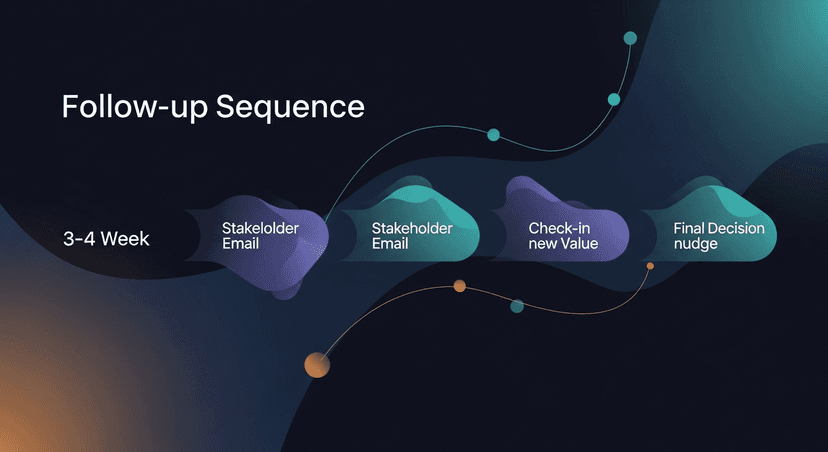
The first follow-up is not the last touchpoint. Map it out before you hit send on email one:
- Email 1 (same day or within 24 hours): Full recap, stakeholder-ready summary, named action items, proposed next meeting
- Email 2 (day 4-5 if no response): One new piece of value: a case study, a relevant benchmark, a direct answer to an objection they raised
- Email 3 (day 10-12): Light check-in with a specific question, not a generic "touching base"
- Email 4 (day 18-21): Breakup or re-engage, give them an easy out or a reason to come back
Each email in the sequence should stand alone. Forwarded, it should make sense. Read in isolation, it should advance the deal.
5. Voice Matters More Than Template
Enterprise buyers are drowning in vendor emails that all sound the same, same structure, same phrases, same GPT-default tone. The follow-up that gets read and forwarded is the one that sounds like a person wrote it.
This is where voice-fingerprint matters. If you're using AI to draft follow-ups (and at this scale, you should be, otherwise you're writing these by hand after every long meeting), the output should sound like you. Not like a template. Your word choices, your sentence rhythm, your way of framing the problem. That's the difference between a follow-up that gets forwarded and one that gets archived.
The Tools Problem (and Why Most Reps Wing It)
Enterprise sales teams usually have recorders, Gong, Chorus, Fathom, Fireflies. Transcripts exist. But the transcript doesn't turn itself into a follow-up. Someone has to read it, extract the key moments, and write an email that advances the deal. That takes 30-45 minutes per call if you're doing it right. Across a full enterprise pipeline, that's hours a week.
The irony: the tools that capture the meeting stop at the transcript. Nobody built the post-meeting layer.
I built ReplySequence because I kept seeing this gap. Transcript in, follow-up out. Paste a transcript from Fathom, Fireflies, Otter, Gong, Granola (or any source) and get a full branded sequence back. The voice-fingerprint layer learns from your edits over time so drafts stop sounding generic.
For teams priced out of HubSpot Sales Hub Pro (which starts at $450+/seat/month for sequences), it's sequences without the enterprise CRM tax. Pro is $29/month. Team plans start at $39/user/month with a 3-seat minimum.
The One Thing That Separates Good From Great Enterprise Follow-Up
Consistency. Not cleverness, not length, not the perfect subject line.
Enterprise deals close because someone stayed present across a 3-month cycle and kept showing up with relevant, useful, non-annoying touchpoints. The rep who does that (every time, not just when they feel like it) wins more than the rep who writes one brilliant email and ghosts for two weeks.
The system is the edge. Build one. Run it after every call. Treat the follow-up as part of the meeting, not an afterthought.
The meeting went great. Now send the email that keeps it alive.
—-
Start free at replysequence.com, 10 drafts/month, no credit card required. If you're running a full enterprise pipeline, the 14-day Pro trial gives you unlimited drafts, voice-fingerprint, and full sequences to test it on your real calls.
Get the weekly ReplySequence newsletter for more post-meeting follow-up tactics, subscribe at replysequence.com/newsletter.
Related reading
- How SaaS AEs Should Follow Up After Every Demo
- How to Automate Meeting Follow-Up Emails
- Multi-Touch Sales Sequence: Phone + Email + LinkedIn After Every Meeting
—-
What you should do next…
Depending on where you're at, here are three ways to keep going:
- Grab the free playbook, "The 8-Second Follow-Up Playbook" lands in your inbox. You'll also get Close The Loop, weekly notes on post-meeting follow-up (unsubscribe anytime, no pitch).
- Try it with your own transcript, paste any meeting transcript, get a drafted follow-up in 30 seconds. No signup, no OAuth.
- Talk directly with Jimmy, 15-min intro or 30-min walkthrough. Founder-led, no sales team.
How ReplySequence handles this
ReplySequence takes any meeting transcript, paste it in from Zoom, Teams, Meet, WebEx, Fireflies, Granola, or wherever, and drafts a context-rich follow-up email in about 8 seconds. You review it, make any edits, and approve. Deal intelligence builds automatically.