 ReplySequence






How Hybrid Sales Teams Can Keep Meeting Notes Consistent Across the Team
```json
{
"title": "How Hybrid Sales Teams Can Keep Meeting Notes Consistent",
"slug": "how-hybrid-sales-teams-can-keep-meeting-notes-consistent-across-the-team",
"excerpt": "Hybrid sales teams struggle with inconsistent meeting notes. Here's a practical how-to for building a consistent post-meeting workflow across remote and in-office reps.",
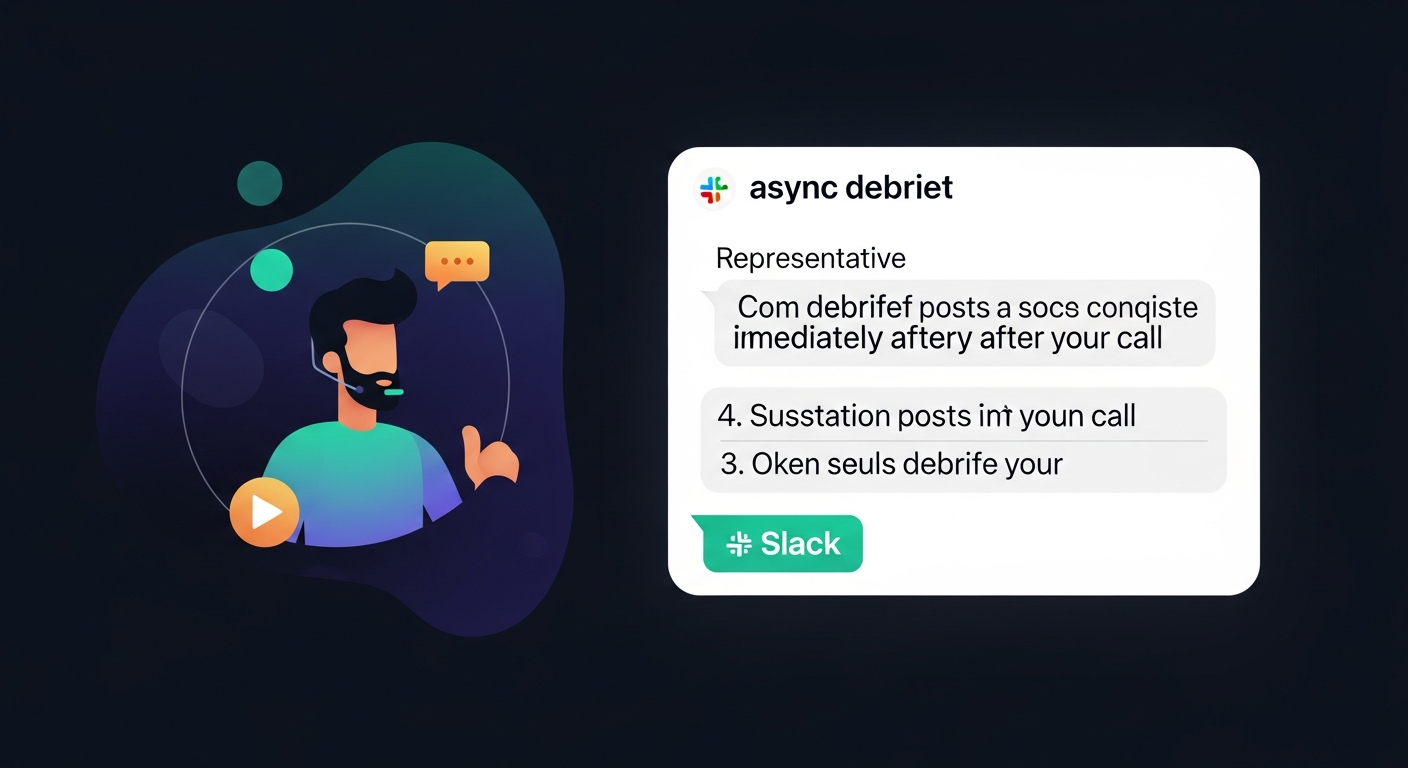
"content": "Hybrid sales team meeting notes consistency is one of those problems that looks small until a deal slips because one rep captured the pain point and another missed it entirely. The fix isn't a longer notes template — it's a shared post-meeting workflow that doesn't depend on individual memory, motivation, or typing speed.\n\nHere's how to actually build one.\n\n## Why Hybrid Teams Break Down at the Note-Taking Layer\n\nIn-office reps scribble on whiteboards. Remote reps type furiously into Notion or nowhere at all. Your manager asks for a deal update and gets three different formats from three different people — one a wall of text, one a bullet list, one a Slack message with vibes only.\n\nThis isn't a discipline problem. It's a systems problem.\n\nResearch consistently shows that sales reps spend 21% of their working hours writing emails and 17% entering data (HubSpot State of Sales). That's nearly a full day per week on administrative work — and inconsistent note-taking multiplies the cost because someone downstream has to reconcile the gaps.\n\nIn a fully in-office team, informal norms fill the gap. People overhear each other. They debrief in the hallway. In a hybrid setup, that invisible glue disappears. What's left is whatever each rep decides to do after the call ends, which is usually nothing structured.\n\nThe problem compounds fast:\n- Handoffs break. An AE passes a deal to a CSM with notes that say "interested in reporting" and nothing else.\n- Coaching gets harder. Managers can't coach on what they can't read.\n- CRM data goes stale. Fields get filled inconsistently or not at all.\n- Follow-up emails diverge. One rep sends a crisp recap, another sends a wall of text, another sends nothing.\n\n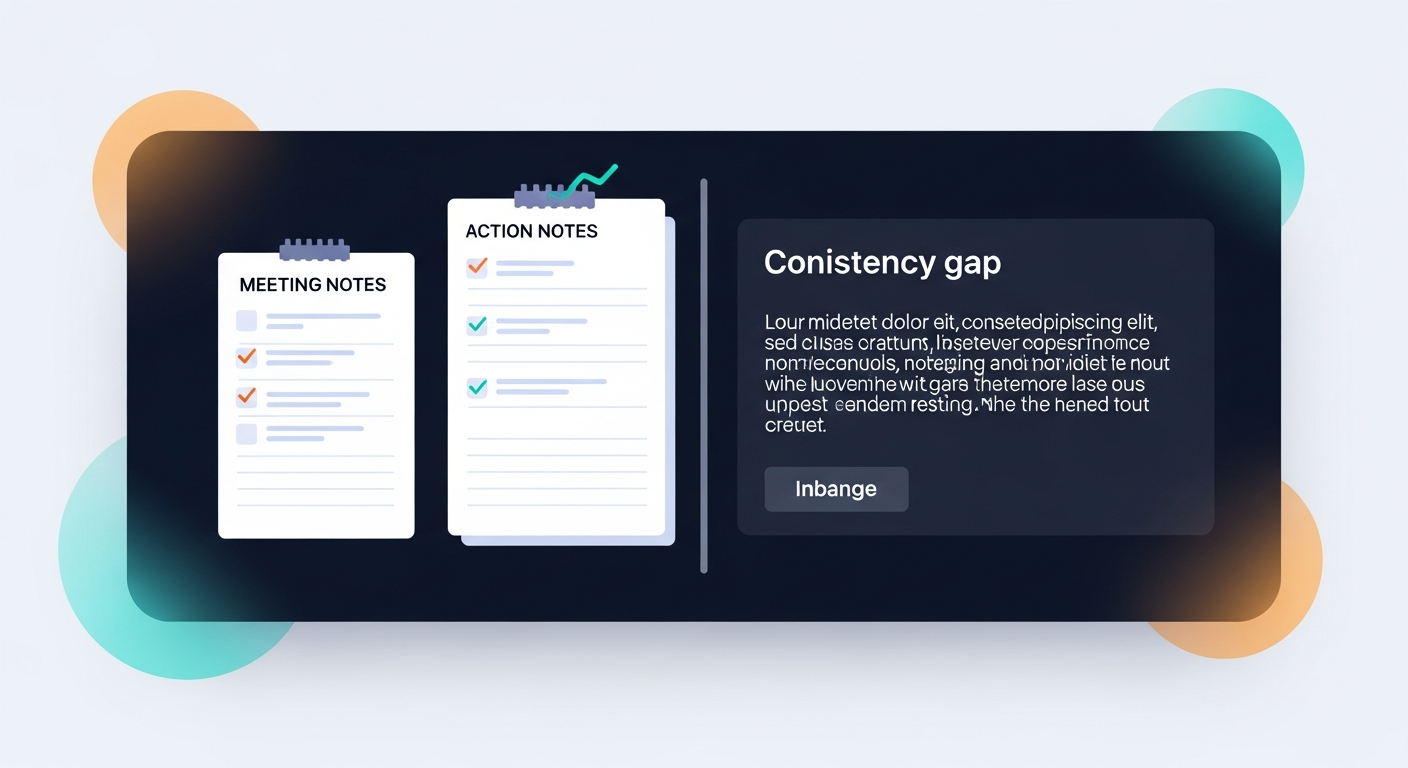 \n\n## Build a Transcript-First Workflow (Not a Notes Template)\n\nThe traditional fix is a notes template: a shared doc with fields everyone is supposed to fill in. This fails for one reason — it adds work to an already full post-call window, and reps skip it under pressure.\n\nThe better foundation is transcript-first. Instead of asking reps to interpret and summarize in the moment, capture a raw transcript of every meeting. Then structure it after.\n\nHere's what that looks like in practice:\n\nStep 1: Standardize your transcript source.\nPick one recorder per meeting type. For customer calls: Fireflies, Fathom, or Gong. For internal: Granola or Otter. The specific tool matters less than the consistency. Every call in the same format, every time.\n\nStep 2: Define your non-negotiables.\nWhat does your team actually need from every sales meeting? Keep it short. A realistic minimum:\n- Decision-maker confirmed (yes/no)\n- Primary pain point stated by prospect\n- Next step with a date\n- Any blockers or objections mentioned\n- Budget signal (if surfaced)\n\nAnything beyond five fields is optional. If it's optional, it won't happen consistently.\n\nStep 3: Turn the transcript into a structured output automatically.\nThis is where most teams still have a manual gap. The transcript exists — but someone has to read it, extract the five fields, update the CRM, and write the follow-up. That \"someone\" is usually the rep, usually exhausted, usually running late to the next call.\n\nReplySequence does this automatically — paste any transcript, get a branded follow-up sequence back in 60 seconds.\n\nStep 4: Create a shared template for follow-up emails.\nThis is where consistency becomes customer-facing. If your follow-up email structure is standardized — subject line format, recap section, next step CTA — prospects get a consistent brand experience regardless of which rep ran the call.\n\nShared templates + individual voice-fingerprinting is the combo. The structure is consistent. The tone sounds like each rep, not like a robot.\n\nStep 5: Log to CRM immediately, not at end of day.\nEnd-of-day CRM logging is where accuracy goes to die. The further from the call, the more gets lost. Build the CRM log into the same 60-second post-call window as the follow-up draft.\n\n## The Async Debrief: How Hybrid Teams Stay Aligned Without Meetings About Meetings\n\nOne underrated tool for hybrid sales team meeting notes consistency is the async debrief. Instead of a weekly 30-minute pipeline review where everyone reads notes they half-remember, each rep posts a structured call summary immediately after the meeting ends.\n\nThe format can be dead simple:\n\n1. Who I met with and their role\n2. The one thing they care most about right now\n3. What I said we'd do next\n4. What I need from the team (if anything)\n\nFour lines. Thirty seconds. Drops into a shared Slack channel or CRM feed. Managers can scan twelve of these in the time it used to take to read one wall-of-text summary.\n\nThis only works if the transcript-to-summary step is fast. If it takes a rep ten minutes to produce those four lines, they won't do it. If it takes sixty seconds — because the transcript is already processed — they will.\n\n
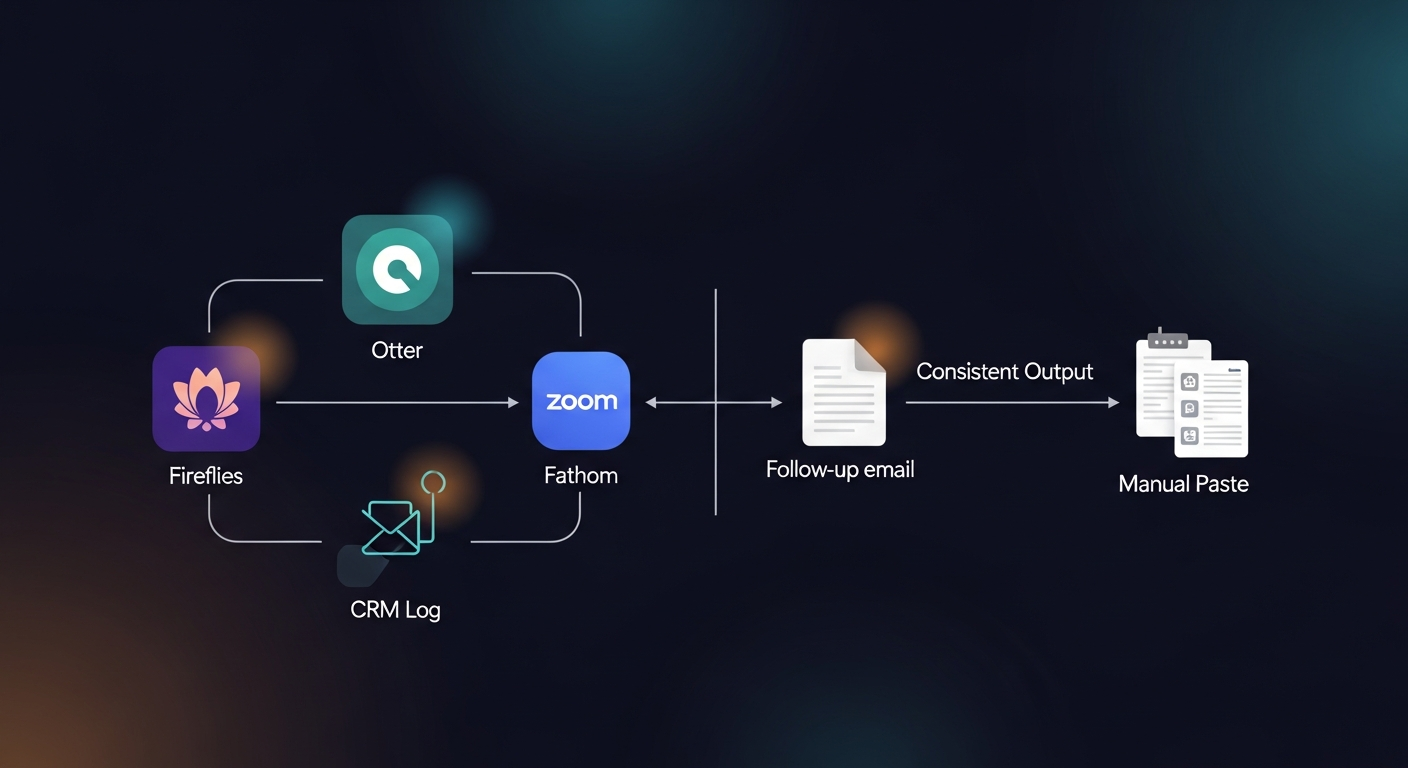
 \n\n## Shared Templates vs. Individual Voice: How to Get Both\n\nThe pushback I hear on shared templates: \"Our reps sound like robots when they use them.\" Fair. A fill-in-the-blank template produces fill-in-the-blank email.\n\nBut the alternative — no template at all — is worse. You get reps whose follow-ups range from three-sentence texts to 600-word essays. Prospects notice.\n\nThe answer is structure at the skeleton level, voice at the sentence level.\n\nHere's what that means concretely:\n\n- Skeleton (shared): Subject line format. Section order (recap → next step → resources). Sign-off format.\n- Voice (individual): How each rep phrases the recap. Their word choices. Their level of formality. Whether they use em-dashes or not.\n\nVoice-fingerprinting is how you automate the second part. A system that learns from a rep's edits over time will start producing drafts that already sound like them — not like a generic GPT output that every rep then has to rewrite anyway.\n\nFor a recruiter sending candidate debriefs, a solo founder following up on partnership calls, or an AE at a 50-person SaaS company — the skeleton stays consistent. The voice stays human.\n\n## What to Do When Your Team Uses Multiple Recorders\n\nHybrid teams often end up with a recorder zoo. Some reps use Fireflies. Some use Otter. Some use Zoom's built-in transcription. Someone's on a client call that prohibits bots and is copy-pasting from a Word doc.\n\nThe worst response to this is picking one tool and mandating it company-wide. You'll spend three months on a rollout and still have half the team using what they were using before.\n\nThe better response: be transcript-agnostic at the output layer.\n\nIf your post-meeting workflow accepts any transcript — regardless of source — the input chaos stops mattering. Fireflies user pastes their Fireflies transcript. Otter user pastes their Otter transcript. Person on the bot-free call pastes their manual notes. Everyone gets the same structured output on the other side.\n\nBYOT — bring your own transcript — is the actual wedge here. The consistency lives in what comes out, not what goes in.\n\n
 \n\n## A Practical Rollout Plan for Hybrid Sales Teams\n\nDon't try to fix everything at once. Here's a staged approach:\n\nWeek 1-2: Audit current state.\n- Survey your reps: how long does post-call admin take? What format do they use?\n- Pull five recent follow-up emails from different reps. Compare them. That's your consistency baseline.\n\nWeek 3-4: Define minimum standards.\n- Pick your five non-negotiable fields.\n- Agree on subject line format and email skeleton.\n- Don't mandate a specific recorder yet.\n\nWeek 5-6: Pilot the transcript-first flow.\n- Three reps, two weeks. Each one pastes their transcript (from wherever) into the new workflow after every external call.\n- Track: time saved, CRM fill rate, follow-up send rate.\n\nWeek 7+: Roll out and refine.\n- Share results from the pilot with the full team.\n- Let adoption pull the rollout — when reps see the time savings, they convert.\n\n## Consistency Is a Systems Problem, Not a Culture Problem\n\nHybrid sales team meeting notes consistency doesn't improve by telling reps to \"take better notes.\" It improves when the system makes consistent notes the path of least resistance.\n\nTranscript-first workflow. Shared skeleton. Individual voice. Async debrief. Transcript-agnostic output layer. That's the stack.\n\nThe meeting went great — then nothing happened. That's the gap worth closing.\n\n—-\n\nIf you want to try the transcript-first approach without buying a whole new stack, start at replysequence.com. Free tier includes 10 drafts/month — no credit card required. Paste any transcript, get a consistent branded follow-up back in 60 seconds.\n\nGet the weekly ReplySequence newsletter for more post-meeting follow-up tactics — subscribe at replysequence.com/newsletter.",
"date": "2026-04-29",
"author": "Jimmy Hackett",
"tags": ["hybrid sales team", "meeting notes consistency", "sales workflow", "post-meeting follow-up", "sales productivity"],
"readingTime": 7,
"faqs": [
{
"question": "Why do hybrid sales teams struggle with consistent meeting notes?",
"answer": "Hybrid teams lose the informal norms that fill the gap in fully in-office environments — hallway debriefs, overheard calls, whiteboard snapshots. Without a shared system, each rep defaults to their own format, producing inconsistent notes that break handoffs, complicate coaching, and leave CRM data incomplete."
},
{
"question": "What's the best way to standardize meeting notes across a hybrid sales team?",
"answer": "Start transcript-first: capture a raw transcript of every meeting using whatever recorder your reps already use, then process it into a structured output — five non-negotiable fields, a shared email skeleton, and an async debrief summary. The consistency lives in the output layer, not the input."
},
{
"question": "How do you keep follow-up emails consistent without making reps sound like robots?",
"answer": "Use structure at the skeleton level (subject line format, section order, sign-off) and preserve individual voice at the sentence level. Voice-fingerprinting tools that learn from a rep's edits produce drafts that already sound like that rep — not generic AI output everyone has to rewrite."
},
{
"question": "What if my hybrid team uses multiple meeting recorders like Fireflies, Otter, and Zoom?",
"answer": "Be transcript-agnostic at the output layer. If your post-meeting workflow accepts any pasted transcript regardless of source, the recorder zoo stops mattering. Each rep pastes from their own tool and gets the same consistent structured output on the other side."
},
{
"question": "How long does it take to roll out a consistent meeting notes workflow for a hybrid sales team?",
"answer": "A practical staged rollout takes about seven weeks: two weeks auditing current state, two weeks defining minimum standards, two weeks piloting with three reps, then a full rollout driven by adoption rather than mandate."
}
],
"jsonLd": "{\"@context\":\"https://schema.org\",\"@type\":\"FAQPage\",\"mainEntity\":[{\"@type\":\"Question\",\"name\":\"Why do hybrid sales teams struggle with consistent meeting notes?\",\"acceptedAnswer\":{\"@type\":\"Answer\",\"text\":\"Hybrid teams lose the informal norms that fill the gap in fully in-office environments — hallway debriefs, overheard calls, whiteboard snapshots. Without a shared system, each rep defaults to their own format, producing inconsistent notes that break handoffs, complicate coaching, and leave CRM data incomplete.\"}},{\"@type\":\"Question\",\"name\":\"What's the best way to standardize meeting notes across a hybrid sales team?\",\"acceptedAnswer\":{\"@type\":\"Answer\",\"text\":\"Start transcript-first: capture a raw transcript of every meeting using whatever recorder your reps already use, then process it into a structured output — five non-negotiable fields, a shared email skeleton, and an async debrief summary. The consistency lives in the output layer, not the input.\"}},{\"@type\":\"Question\",\"name\":\"How do you keep follow-up emails consistent without making reps sound like robots?\",\"acceptedAnswer\":{\"@type\":\"Answer\",\"text\":\"Use structure at the skeleton level (subject line format, section order, sign-off) and preserve individual voice at the sentence level. Voice-fingerprinting tools that learn from a rep's edits produce drafts that already sound like that rep — not generic AI output everyone has to rewrite.\"}},{\"@type\":\"Question\",\"name\":\"What if my hybrid team uses multiple meeting recorders like Fireflies, Otter, and Zoom?\",\"acceptedAnswer\":{\"@type\":\"Answer\",\"text\":\"Be transcript-agnostic at the output layer. If your post-meeting workflow accepts any pasted transcript regardless of source, the recorder zoo stops mattering. Each rep pastes from their own tool and gets the same consistent structured output on the other side.\"}},{\"@type\":\"Question\",\"name\":\"How long does it take to roll out a consistent meeting notes workflow for a hybrid sales team?\",\"acceptedAnswer\":{\"@type\":\"Answer\",\"text\":\"A practical staged rollout takes about seven weeks: two weeks auditing current state, two weeks defining minimum standards, two weeks piloting with three reps, then a full rollout driven by adoption rather than mandate.\"}}]}"
}
```
—-
What you should do next…
Depending on where you're at, here are three ways to keep going:
- Grab the free playbook — "The 8-Second Follow-Up Playbook" lands in your inbox. You'll also get Close The Loop, weekly notes on post-meeting follow-up (unsubscribe anytime, no pitch).
- Try it with your own transcript — paste any meeting transcript, get a drafted follow-up in 30 seconds. No signup, no OAuth.
- Talk directly with Jimmy — 15-min intro or 30-min walkthrough. Founder-led, no sales team.
How ReplySequence handles this
ReplySequence takes any meeting transcript — paste it in from Zoom, Teams, Meet, WebEx, Fireflies, Granola, or wherever — and drafts a context-rich follow-up email in about 8 seconds. You review it, make any edits, and approve. Deal intelligence builds automatically.