 ReplySequence






How to Get Your Sales Team to Actually Adopt New AI Tools
```json
{
"title": "How to Get Your Sales Team to Actually Adopt New AI Tools",
"slug": "how-to-get-your-sales-team-to-actually-adopt-new-ai-tools",
"excerpt": "Sales team AI tool adoption fails when it's mandated, not earned. Here's the change management playbook that actually gets reps to use AI.",
"content": "Sales team AI tool adoption fails for one reason: the tool gets announced, not sold. Reps didn't ask for it, the workflow benefit isn't obvious in the first five minutes, and nobody has time to figure it out between calls. So it dies quietly in a browser tab nobody opens.\n\nThis post is the change management playbook I wish existed when I was researching why AI rollouts stall. Here's what the data and the patterns actually say — and how to fix it.\n\n## Why AI Adoption Fails on Sales Teams\n\nGartner research consistently shows that technology adoption failure is a people and process problem, not a technology problem. McKinsey's 2024 State of AI report found that only 11% of companies report being satisfied with their AI deployment ROI — and implementation friction is the top reason cited. Not the AI itself. The rollout.\n\nSales teams are especially resistant for a few structural reasons:\n\n- Reps are measured on outcomes, not process. If a new tool adds steps without obviously adding pipeline, it's noise.\n- The demo never matches the daily grind. IT demos in a clean environment. Real life has back-to-back calls, CRM fields nobody filled in, and a prospect who replied in the wrong thread.\n- Fear of replacement is real, even when unspoken. Framing matters enormously. "This tool will help you" lands differently than "this tool will do your job for you."\n- Tool sprawl is already exhausting. The average sales rep touches 10+ tools daily (Salesforce, LinkedIn, Slack, Zoom, Gong, Outreach — the list goes on). Every new addition gets a skeptical look.\n\nNone of that is irrational. It's just human.\n\n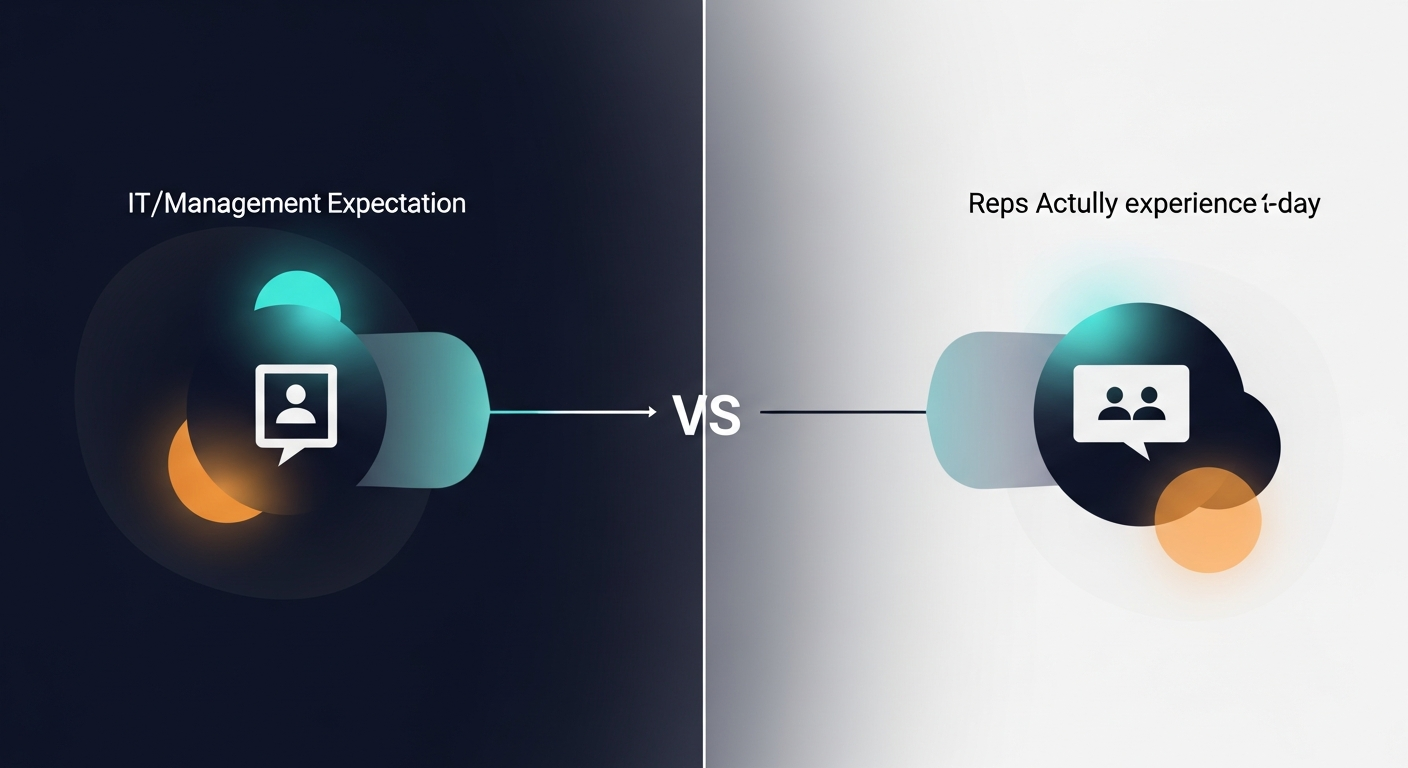 \n\n## The Framework That Actually Works\n\nAfter digging into change management literature — Prosci's ADKAR model, Kotter's 8-step model, and a stack of sales ops postmortems — the same pattern shows up in successful AI rollouts. I'll break it down.\n\n### 1. Start with the friction, not the feature\n\nDon't lead with "this AI tool does X." Lead with "what part of your week sucks the most?" Then map the tool to that exact answer.\n\nFor sales teams, the answers cluster around three things:\n- Researching prospects before calls\n- Logging notes in CRM after calls\n- Writing follow-up emails after calls\n\nThat last one is consistently underestimated. Industry research from Salesforce's State of Sales report puts post-call admin at 30%+ of a rep's non-selling time. And the follow-up email specifically — the one that recaps the conversation, confirms next steps, and moves the deal forward — takes 20-40 minutes per call for most reps. That's time not spent on calls.\n\nIf you're evaluating an AI tool that touches post-call workflow, the pitch to reps isn't "here's a cool AI feature." It's "you just got 30 minutes back per call."\n\nReplySequence does this automatically — paste any transcript, get a branded follow-up sequence back in 60 seconds.\n\n### 2. Make the first win happen in under 5 minutes\n\nThis is non-negotiable. The Time-to-First-Value (TTFV) window for SaaS tools is somewhere between 3-8 minutes before a new user decides subconsciously whether to continue or abandon (this aligns with activation research from Reforge and ProductLed). If a rep can't see the payoff in that window, you've lost them.\n\nFor AI tools specifically:\n- Don't start with setup. Start with the output. Show a sample before asking for any configuration.\n- Pre-load a demo transcript or example. Let them click one button and see a real result.\n- Defer integrations. CRM sync can come in week two. The first session is about "wow, that actually works."\n\nA solo founder running their own discovery calls — someone who lives in Notion and Calendly and has no ops team — doesn't need a 40-minute onboarding webinar. They need to paste a transcript and see a follow-up email in under a minute. That's the moment.\n\n### 3. Pick your champions before the rollout\n\nChange management 101, but it's skipped constantly. Find 2-3 reps who are already curious about AI — not the skeptics, not the top performers who don't want to change anything that's working. Find the ones who are already googling "how to write better follow-up emails faster."\n\nGive them early access. Let them break things. Let them tell you what's wrong. When the broader team sees a peer using a tool — not management pushing one — adoption velocity changes completely.\n\nProsci's ADKAR data backs this up: peer influence is the single highest-rated factor in sustained behavior change at work, above management directive and above training quality.\n\n### 4. Reduce the activation cost to zero\n\nEvery friction point between "tool exists" and "tool is being used" is a dropout risk. Audit the flow:\n\n- Does the rep have to create a new account? (Can you SSO this?)\n- Does the tool require a new browser extension? New app install?\n- Does it require the rep to change how they run their meetings?\n- Does it require IT approval that takes 3 weeks?\n\nThe best AI tools for sales teams are transcript-in, output-out. No bot in the meeting. No calendar connection required. Bring your own transcript — paste it from Fireflies, Otter, Fathom, Granola, Zoom, Teams, wherever — and the tool does the work. That's BYOT (Bring Your Own Transcript). The activation cost is near zero because nothing changes upstream.\n\n
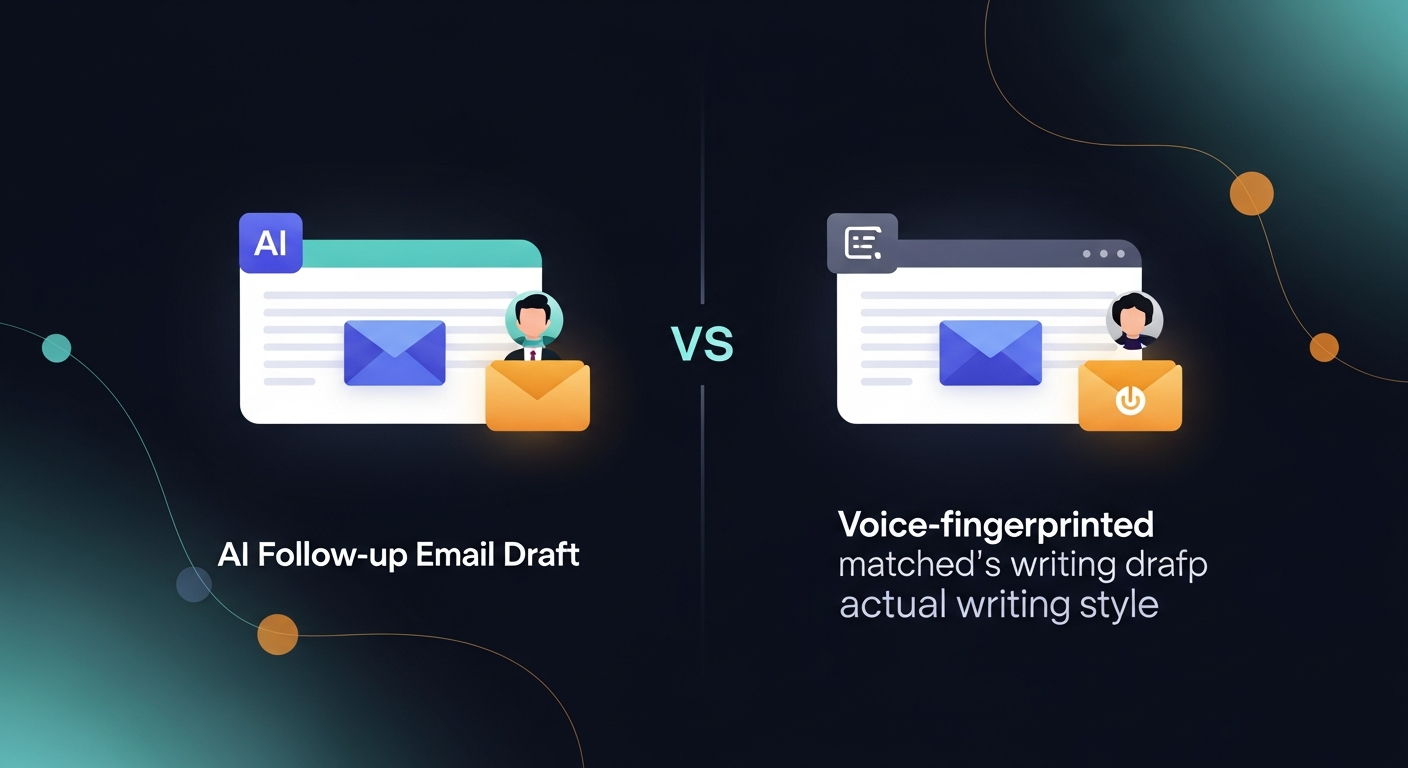
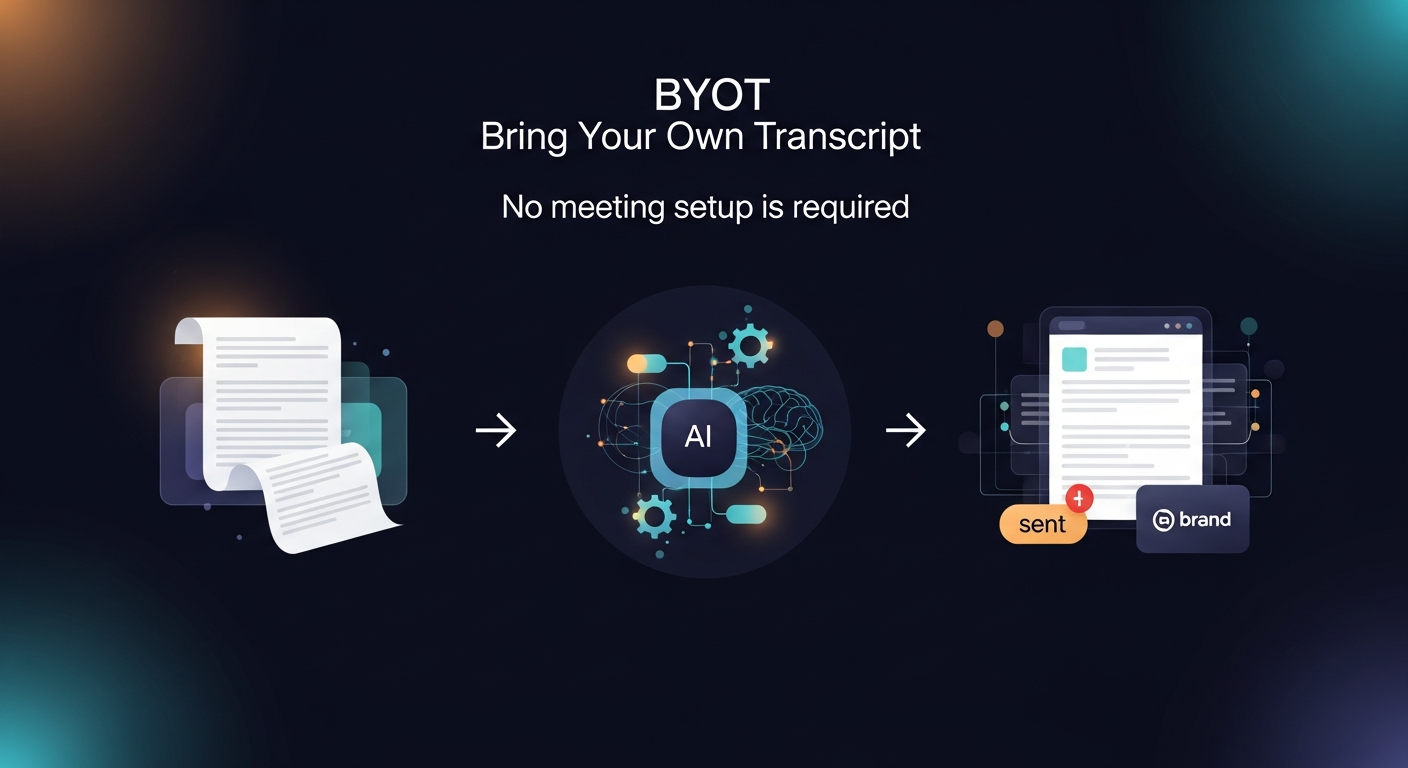 \n\n### 5. Measure what reps care about, not what managers care about\n\nManagers want to see: time saved, adoption rate, pipeline influenced.\n\nReps want to know: did my reply rate go up? Did that deal move forward? Did I look good in that email?\n\nIf you're tracking AI adoption by login counts, you're measuring the wrong thing. Track outcomes reps feel. Response rates on follow-up emails. Time from meeting to follow-up sent. Deal stage progression after touchpoints.\n\nWhen reps start seeing their own outcomes improve, adoption stops being a management initiative and becomes a personal habit. That's the inflection point.\n\n### 6. Address the fear of sounding like AI\n\nThis one's underrated. Reps worry the AI output will sound generic — and they're right to worry. Most AI writing defaults to the same tone: professional, slightly robotic, devoid of personality. When a rep's follow-up suddenly reads like a press release, their credibility takes a hit.\n\nThe fix is voice-learning, not just templates. Tools that learn from a rep's edits — adjusting tone, vocabulary, length based on how they actually write — close this gap fast. Voice-fingerprint isn't a luxury feature. It's the difference between "the AI draft I send" and "the AI draft I have to rewrite before I can send it."\n\nA recruiter after a candidate screen, for example, has a very specific voice. Direct, warm, fast. An AI draft that sounds like a Fortune 500 HR portal kills the vibe immediately. A tool that learns from three sessions of edits and starts matching their cadence? That's adoption.\n\n
 \n\n## The Short Version\n\nSales team AI tool adoption isn't a technology problem. It's a rollout problem, a friction problem, and a trust problem.\n\n- Lead with the pain, not the feature\n- Get to value in under 5 minutes\n- Use peer champions, not top-down mandates\n- Kill every activation friction point you can\n- Measure what reps care about, not just what your dashboard shows\n- Build in voice-learning so the output sounds human\n\nDo those six things and the tool starts selling itself. Skip them and you've got shelfware.\n\nThe gap I keep coming back to: every meeting tool records. None of them send the follow-up. That last mile — transcript to sent email — is still a manual tax on every rep's day. That's the gap I built ReplySequence to close.\n\n—-\n\nStart free at replysequence.com — 10 drafts/month, no credit card required. If you want to see what the BYOT flow actually looks like, the 14-day Pro trial is there when you're ready.\n\nGet the weekly ReplySequence newsletter for more post-meeting follow-up tactics — subscribe at replysequence.com/newsletter.",
"date": "2026-04-19",
"author": "Jimmy Hackett",
"tags": ["sales team AI tool adoption", "AI adoption sales", "change management sales", "sales productivity", "get reps to use AI"],
"readingTime": 8,
"faqs": [
{
"question": "Why do AI tools fail to get adopted by sales teams?",
"answer": "Sales team AI tool adoption fails because the tool gets announced rather than sold to reps. Reps are measured on outcomes, not process — so if a new tool adds steps without obviously improving pipeline or saving time, it gets ignored. Framing, activation speed, and peer champions matter more than the technology itself."
},
{
"question": "What is the fastest way to get sales reps to actually use a new AI tool?",
"answer": "Make the first win happen in under 5 minutes. Show reps the output before asking for any setup or configuration. Pre-load a demo and let them see a real result immediately — the Time-to-First-Value window is 3-8 minutes before a user decides to engage or abandon."
},
{
"question": "How do you reduce friction in a sales AI tool rollout?",
"answer": "Audit every step between 'the tool exists' and 'the tool is being used.' Remove any requirement that changes how reps run meetings — the best tools let reps bring their own transcript from any source (BYOT), require no new bot in meetings, and deliver output in one paste-and-click action."
},
{
"question": "What is BYOT in sales AI tools?",
"answer": "BYOT stands for Bring Your Own Transcript. It means a sales AI tool works with transcripts from any source — Fireflies, Otter, Fathom, Granola, Zoom, Teams, or a pasted document — without requiring a specific recorder, calendar connection, or meeting bot. It eliminates upstream activation friction."
},
{
"question": "How does voice-fingerprint help with AI tool adoption on sales teams?",
"answer": "Voice-fingerprint is a feature that learns from a rep's edits to match their actual writing tone, vocabulary, and length. It closes the biggest trust gap in AI-drafted follow-ups — reps stop rewriting outputs from scratch and start sending drafts that already sound like them, which drives sustained adoption."
}
],
"jsonLd": "{\"@context\":\"https://schema.org\",\"@type\":\"FAQPage\",\"mainEntity\":[{\"@type\":\"Question\",\"name\":\"Why do AI tools fail to get adopted by sales teams?\",\"acceptedAnswer\":{\"@type\":\"Answer\",\"text\":\"Sales team AI tool adoption fails because the tool gets announced rather than sold to reps. Reps are measured on outcomes, not process — so if a new tool adds steps without obviously improving pipeline or saving time, it gets ignored. Framing, activation speed, and peer champions matter more than the technology itself.\"}},{\"@type\":\"Question\",\"name\":\"What is the fastest way to get sales reps to actually use a new AI tool?\",\"acceptedAnswer\":{\"@type\":\"Answer\",\"text\":\"Make the first win happen in under 5 minutes. Show reps the output before asking for any setup or configuration. Pre-load a demo and let them see a real result immediately — the Time-to-First-Value window is 3-8 minutes before a user decides to engage or abandon.\"}},{\"@type\":\"Question\",\"name\":\"How do you reduce friction in a sales AI tool rollout?\",\"acceptedAnswer\":{\"@type\":\"Answer\",\"text\":\"Audit every step between 'the tool exists' and 'the tool is being used.' Remove any requirement that changes how reps run meetings — the best tools let reps bring their own transcript from any source (BYOT), require no new bot in meetings, and deliver output in one paste-and-click action.\"}},{\"@type\":\"Question\",\"name\":\"What is BYOT in sales AI tools?\",\"acceptedAnswer\":{\"@type\":\"Answer\",\"text\":\"BYOT stands for Bring Your Own Transcript. It means a sales AI tool works with transcripts from any source — Fireflies, Otter, Fathom, Granola, Zoom, Teams, or a pasted document — without requiring a specific recorder, calendar connection, or meeting bot. It eliminates upstream activation friction.\"}},{\"@type\":\"Question\",\"name\":\"How does voice-fingerprint help with AI tool adoption on sales teams?\",\"acceptedAnswer\":{\"@type\":\"Answer\",\"text\":\"Voice-fingerprint is a feature that learns from a rep's edits to match their actual writing tone, vocabulary, and length. It closes the biggest trust gap in AI-drafted follow-ups — reps stop rewriting outputs from scratch and start sending drafts that already sound like them, which drives sustained adoption.\"}}]}"
}
```
How ReplySequence handles this
ReplySequence takes any meeting transcript — paste it in from Zoom, Teams, Meet, WebEx, Fireflies, Granola, or wherever — and drafts a context-rich follow-up email in about 8 seconds. You review it, make any edits, and approve. Deal intelligence builds automatically.