 ReplySequence






How to Handle Objections in Your Post-Meeting Follow-Up Email
```json
{
"title": "How to Handle Objections in Your Post-Meeting Follow-Up Email",
"slug": "how-to-handle-objections-in-your-post-meeting-follow-up-email",
"excerpt": "Learn how to handle objections in your post-meeting follow-up email — turn 'too expensive' and 'not the right time' into open conversations that keep deals alive.",
"content": "The best place to handle objections isn't on the call. It's in the follow-up email you send right after. When you name the concern in writing, attach context to it, and give the prospect something concrete to react to, you keep the deal alive instead of letting it stall in silence.\n\nMost reps either ignore the objection in their follow-up (hoping it'll go away) or over-correct and write a wall of defensive text. Neither works. Here's how to thread the needle.\n\n## Why Objections Left Unaddressed Kill Deals After the Call\n\nResearch from Gartner consistently shows that B2B buyers spend only about 17% of their total purchase process time actually talking to vendors — the rest is internal deliberation, research, and consensus-building. That means what you send after the meeting does more heavy lifting than most reps realize.\n\nWhen a prospect raises a concern on the call — price, timing, competitor comparison, internal buy-in — and then gets a generic recap email that pretends the objection never happened, two things occur:\n\n- The concern doesn't disappear. It sits with the prospect, unresolved, and starts to feel bigger than it actually is.\n- You signal that you weren't really listening. A follow-up that ignores the thing they clearly cared about is a trust killer.\n\nA HubSpot analysis of sales cycles found that deals with no follow-up email after the first meeting close at significantly lower rates than those with a structured follow-up sequence. The gap widens when objections were raised and not addressed. The follow-up email isn't a formality. It's part of the sale.\n\n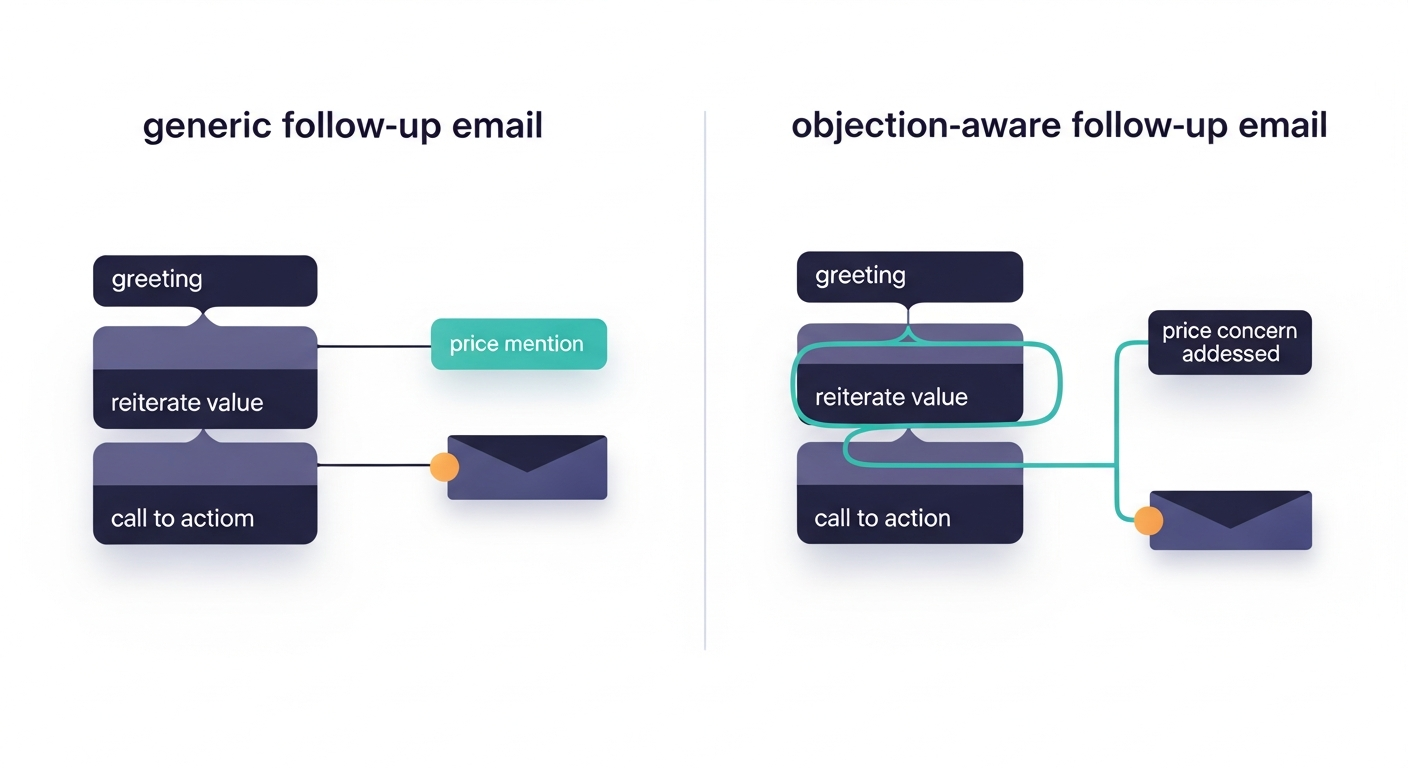 \n\n## The Four Most Common Objections and How to Address Them in Writing\n\nLet's get specific. Here are the four objections that surface most often in discovery and demo calls — and exactly how to handle each one in a post-meeting follow-up email.\n\n### 1. "It's too expensive."\n\nDon't defend the price. Reframe the value-to-cost ratio instead.\n\nWhat to write:\n> "You flagged the price during our call — I want to make sure I give that the right context. The way most teams think about it: [specific outcome they mentioned wanting] typically costs [time/resource they described] right now. At $X/month, the math usually looks like [simple framing]. Happy to walk through a stripped-back option if that's more useful as a starting point."\n\nKey moves here:\n- Acknowledge the concern by name. Don't dance around it.\n- Tie the cost back to their language — the problem they described, not your feature list.\n- Offer an off-ramp (a lower tier, a pilot) without being desperate about it.\n\n### 2. "The timing isn't right."\n\nThis is the sneakiest objection because it feels polite but often means something else. Could be internal politics, budget cycle, or genuine overwhelm. Your job in the follow-up is to surface which one.\n\nWhat to write:\n> "Totally hear you on timing. A couple of things came up in our conversation that I wanted to flag before we table it: [specific pain point they described]. That's not going away on its own. What does 'right timing' actually look like for you — is it Q3 budget, a specific project wrapping up, or something else? Even knowing that helps me figure out whether I can do anything useful now."\n\nKey moves:\n- Don't accept "bad timing" as a closed door. Ask what would make timing good.\n- Reference the specific pain point they mentioned. Vague follow-ups get vague responses.\n- The question at the end is doing work — it separates "not yet" from "not ever."\n\n### 3. "We're also looking at [Competitor]."\n\nThis is actually one of the easier objections to address in writing, because you have time to be precise instead of reactive.\n\nWhat to write:\n> "Makes sense — you should be evaluating options. The thing I'd focus your comparison on is [one specific differentiator that maps to what they said they care about]. Where I've seen [Competitor] fall short for teams in your situation is [specific scenario]. Not trying to trash them — just want to make sure you're comparing the right variables. Happy to put together a one-pager on the specific difference if that's useful."\n\nKey moves:\n- Lead with one differentiator, not five. Five reads as defensive. One reads as confident.\n- Map it to what they said they cared about — not your generic competitive deck.\n- Offer something concrete (the one-pager) to give them a reason to re-engage.\n\n### 4. "I need to get buy-in from my team / boss / IT / legal."\n\nThe internal stakeholder objection is about friction, not about you. Your follow-up email can actively reduce that friction.\n\nWhat to write:\n> "Totally understand — happy to make that process easier. I can put together a short exec summary (one page, PDF) covering [their key concerns], the integration requirements, and the security basics that usually come up in these reviews. Would that be useful to share internally? I can also jump on a 15-minute call with whoever has the toughest questions."\n\nKey moves:\n- Offer to create the artifact they need for internal selling.\n- Name the specific stakeholders they mentioned (IT, legal, CFO) so it feels tailored.\n- Offer a stakeholder call. A lot of reps don't do this. It shows confidence in the product.\n\nReplySequence does this automatically — paste any transcript, get a branded follow-up sequence back in 60 seconds, with objection flags pulled directly from what was said on the call.\n\n
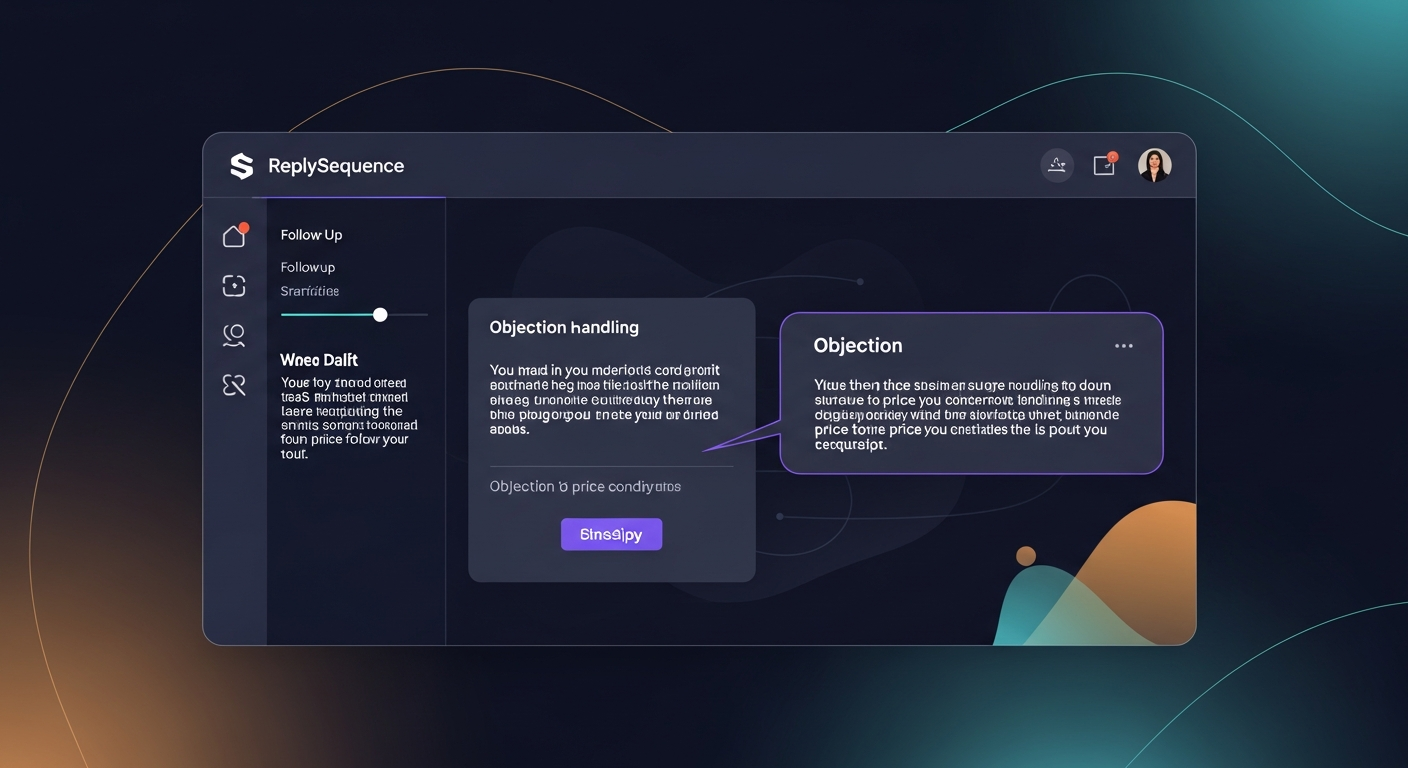 \n\n## How to Structure an Objection-Handling Follow-Up Email\n\nFormat matters. A wall of text addressing concerns reads as anxious. A well-structured email reads as prepared.\n\nHere's the structure that works:\n\nSubject line: Don't be clever. Be direct.\n- "Following up — the pricing question you raised"\n- "Re: [Company] / [Your Company] — a couple of things from our call"\n- "Quick note on the timing concern you mentioned"\n\nOpening (1-2 sentences): Thank them for the call and immediately anchor on the concern.\n> "Good talking today. I want to address the [pricing / timing / competitor / buy-in] question you raised — I don't want it to sit unanswered."\n\nBody (3-5 sentences per objection): Use the frameworks above. If multiple objections came up, prioritize the one that felt most weighted — don't try to address four concerns in one email. One email, one objection, full attention.\n\nNext step (1-2 sentences): Always close with a specific ask — not "let me know if you have questions." Give them one clear action.\n> "Does a call Thursday work to dig into this further? Or if it's easier — reply with what's most uncertain and I'll address it in writing."\n\nKeep it short. Under 200 words for the body. Longer emails get skimmed or deferred. Every sentence should earn its place.\n\n## The Biggest Mistake Reps Make in Objection-Handling Emails\n\nThey write for themselves, not for the reader.\n\nA follow-up that leads with your company's history, your product roadmap, or your personal enthusiasm for solving the problem — that's noise. The prospect raised a concern. They want to know you heard it and you have an answer. Nothing else.\n\nHere's a quick diagnostic. Before you send, ask:\n- Does my email use their exact language from the call?\n- Am I addressing one objection clearly, or rambling across three?\n- Is there a single, obvious next step?\n- Could a colleague who wasn't on the call read this and understand the context?\n\nIf the answer to any of these is no, rewrite before you hit send.\n\nOne more thing: timing matters. Industry research (including studies from Yesware and Boomerang) consistently shows that follow-up emails sent within 2 hours of a meeting see substantially higher open and reply rates than those sent the next day. The concern is freshest when the meeting just ended. That's when your email lands hardest.\n\n
 \n\n## A Note on Tone: Confident, Not Defensive\n\nThe subtext of every objection-handling email is: I heard you, I'm not rattled, and here's why this still makes sense.\n\nDefensive language does the opposite. Phrases like "I just want to clarify," "I know it might seem like," or "I understand if you have concerns" — these telegraph anxiety. Cut them.\n\nReplace with direct acknowledgment and calm specificity:\n- ❌ "I just want to make sure I explained the pricing correctly"\n- ✅ "The pricing question you raised — here's the clearest way I can frame it"\n\nSame information. Totally different signal.\n\nA solo founder running their own discovery calls, a recruiter following up after a candidate screen, an AE with a full pipeline — whoever you are, the discipline is the same. Hear the objection on the call, name it in the follow-up, address it cleanly, and give them one thing to do next.\n\nThat's the job.\n\n—-\n\nStart free at replysequence.com — 10 drafts a month, no credit card required. Paste a transcript from Fireflies, Fathom, Otter, or anywhere else, and get a follow-up email back in 60 seconds with objection-handling baked in. Pro trial is 14 days, no card needed.\n\nGet the weekly ReplySequence newsletter for more post-meeting follow-up tactics — subscribe at replysequence.com/newsletter.",
"date": "2026-04-27",
"author": "Jimmy Hackett",
"tags": ["objection handling", "follow-up email", "sales email", "post-meeting", "deal velocity"],
"readingTime": 7,
"faqs": [
{
"question": "How do you handle objections in a post-meeting follow-up email?",
"answer": "Name the objection directly in the email, tie your response to the specific language the prospect used on the call, and close with one clear next step. Don't ignore concerns hoping they'll disappear — a follow-up that addresses the objection head-on signals that you were listening and keeps the deal moving."
},
{
"question": "When should you send a follow-up email after a sales meeting with unresolved objections?",
"answer": "Within 2 hours of the meeting ending. Research from Yesware and Boomerang consistently shows that follow-up emails sent within 2 hours see substantially higher open and reply rates than those sent the next day — and the concern is freshest immediately after the call."
},
{
"question": "What's the best structure for an objection-handling follow-up email?",
"answer": "Lead with a direct acknowledgment of the concern, address one objection per email with 3-5 sentences of specific context, and close with a single clear call to action. Keep the body under 200 words — longer emails get skimmed or deferred."
},
{
"question": "How do you respond to 'the timing isn't right' in a follow-up email?",
"answer": "Don't accept it as a closed door. Reference the specific pain point they raised on the call, then ask what 'right timing' actually looks like — is it a budget cycle, a project wrapping up, or something else? That question separates 'not yet' from 'not ever.'"
},
{
"question": "How do you address a competitor comparison objection in a sales follow-up email?",
"answer": "Lead with one specific differentiator that maps to what the prospect said they care about — not a list of five. Offer something concrete like a comparison one-pager to give them a reason to re-engage, and frame it as helping them compare the right variables rather than attacking the competitor."
}
],
"jsonLd": "{\"@context\":\"https://schema.org\",\"@type\":\"FAQPage\",\"mainEntity\":[{\"@type\":\"Question\",\"name\":\"How do you handle objections in a post-meeting follow-up email?\",\"acceptedAnswer\":{\"@type\":\"Answer\",\"text\":\"Name the objection directly in the email, tie your response to the specific language the prospect used on the call, and close with one clear next step. Don't ignore concerns hoping they'll disappear — a follow-up that addresses the objection head-on signals that you were listening and keeps the deal moving.\"}},{\"@type\":\"Question\",\"name\":\"When should you send a follow-up email after a sales meeting with unresolved objections?\",\"acceptedAnswer\":{\"@type\":\"Answer\",\"text\":\"Within 2 hours of the meeting ending. Research from Yesware and Boomerang consistently shows that follow-up emails sent within 2 hours see substantially higher open and reply rates than those sent the next day — and the concern is freshest immediately after the call.\"}},{\"@type\":\"Question\",\"name\":\"What's the best structure for an objection-handling follow-up email?\",\"acceptedAnswer\":{\"@type\":\"Answer\",\"text\":\"Lead with a direct acknowledgment of the concern, address one objection per email with 3-5 sentences of specific context, and close with a single clear call to action. Keep the body under 200 words — longer emails get skimmed or deferred.\"}},{\"@type\":\"Question\",\"name\":\"How do you respond to 'the timing isn't right' in a follow-up email?\",\"acceptedAnswer\":{\"@type\":\"Answer\",\"text\":\"Don't accept it as a closed door. Reference the specific pain point they raised on the call, then ask what 'right timing' actually looks like — is it a budget cycle, a project wrapping up, or something else? That question separates 'not yet' from 'not ever'.\"}},{\"@type\":\"Question\",\"name\":\"How do you address a competitor comparison objection in a sales follow-up email?\",\"acceptedAnswer\":{\"@type\":\"Answer\",\"text\":\"Lead with one specific differentiator that maps to what the prospect said they care about — not a list of five. Offer something concrete like a comparison one-pager to give them a reason to re-engage, and frame it as helping them compare the right variables rather than attacking the competitor.\"}}]}"
}
```
—-
What you should do next…
Depending on where you're at, here are three ways to keep going:
- Grab the free playbook — "The 8-Second Follow-Up Playbook" lands in your inbox. You'll also get Close The Loop, weekly notes on post-meeting follow-up (unsubscribe anytime, no pitch).
- Try it with your own transcript — paste any meeting transcript, get a drafted follow-up in 30 seconds. No signup, no OAuth.
- Talk directly with Jimmy — 15-min intro or 30-min walkthrough. Founder-led, no sales team.
How ReplySequence handles this
ReplySequence takes any meeting transcript — paste it in from Zoom, Teams, Meet, WebEx, Fireflies, Granola, or wherever — and drafts a context-rich follow-up email in about 8 seconds. You review it, make any edits, and approve. Deal intelligence builds automatically.