 ReplySequence






What Great Sales Reps Do Differently in the First 24 Hours After a Meeting
```json
{
"title": "What Great Sales Reps Do Differently in the First 24 Hours After a Meeting",
"slug": "what-great-sales-reps-do-differently-in-the-first-24-hours-after-a-meeting",
"excerpt": "What great sales reps do after a meeting separates closed deals from ghosted threads. Here are the 7 habits that matter in the first 24 hours.",
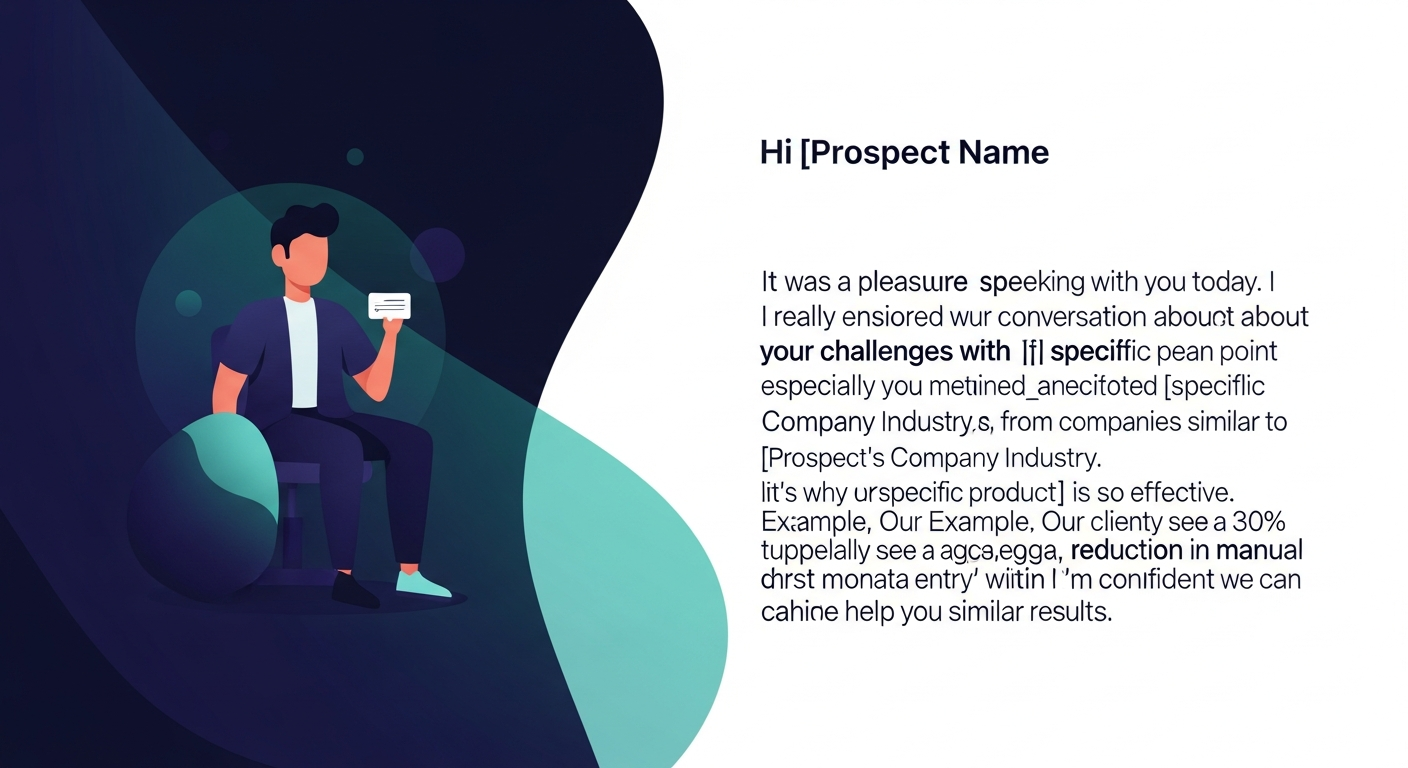
"content": "What great sales reps do after a meeting isn't a secret — it's a handful of deliberate habits, executed fast, before the conversation goes cold. The meeting went great. Then nothing happened. That gap is where most deals die.\n\nHere's what separates the top 10% from everyone else in the first 24 hours.\n\n## 1. They Send the Follow-Up Email Within the Hour\n\nSpeed is the first signal. Research from HubSpot consistently shows that response speed correlates directly with deal momentum — the longer you wait, the colder the prospect gets. Top reps don't wait until tomorrow morning. They send a recap email while the conversation is still fresh in both people's minds.\n\nThis isn't a vague "great chatting with you" note. It's a structured email that:\n\n- Recaps the key pain points the prospect mentioned\n- Confirms the next step (date, time, action item)\n- Attaches any promised resources\n- Sets the tone for the relationship moving forward\n\nA solo founder running five discovery calls a week who fires off a sharp follow-up within 60 minutes looks like a company of fifty. A rep at a 50-person SaaS who waits until the next morning looks like they don't care.\n\n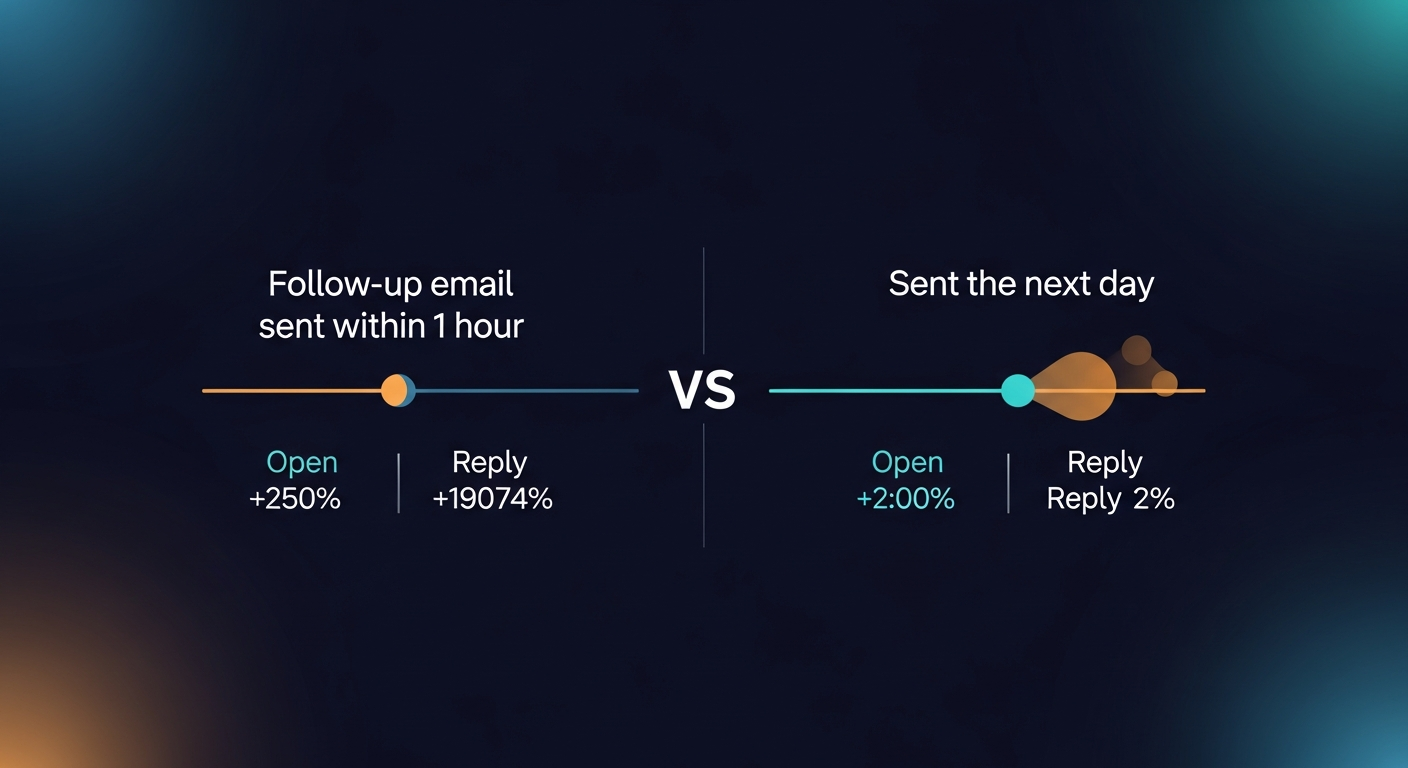 \n\n## 2. They Personalize — They Don't Template-Blast\n\nEvery rep has templates. Great reps treat them as starting points, not finished products. The difference is specificity. A generic follow-up that could have been sent to anyone signals that you weren't really listening. A follow-up that references the exact phrase the prospect used — "you mentioned your team loses two hours every Friday updating the CRM manually" — signals that you were.\n\nIndustry research shows personalized follow-up emails have 2x the reply rate of generic ones. That's not a minor edge. That's the difference between a deal that moves and a thread that goes cold.\n\nWhat to personalize:\n\n- Mirror the prospect's own language, not your product language\n- Reference a specific moment from the conversation\n- Acknowledge any tension or objection they raised — don't pretend it wasn't said\n- Tailor the next-step ask to their actual timeline, not your quota\n\nReplySequence does this automatically — paste any transcript, get a branded follow-up sequence back in 60 seconds.\n\n## 3. They Update the CRM Before the Next Meeting, Not Before the Quarter Close\n\nThis one's unsexy but it matters. CRM hygiene is a leading indicator of deal hygiene. Reps who log call notes, update deal stage, and capture next steps immediately after a meeting are the same reps who never get blindsided in a pipeline review.\n\nWhat top reps log right after a meeting:\n\n- Prospect's stated priorities and pain points (in their words)\n- Objections raised and how they were handled\n- Next steps with owner and due date\n- Sentiment — was this warm, skeptical, enthusiastic?\n- Any names dropped: champions, blockers, other vendors being evaluated\n\nA recruiter after a candidate screen who logs the candidate's salary expectation, start date flexibility, and red flags immediately after the call will never fumble those details in a hiring manager debrief. Same principle applies to every sales conversation.\n\n## 4. They Research What the Prospect Said They Cared About\n\nGreat reps don't just document — they dig. If a prospect mentioned a competitor, top reps spend 10 minutes understanding that competitor's positioning before the next touchpoint. If the prospect referenced a specific industry trend or internal initiative, they find one relevant data point they can bring to the next conversation.\n\nThis isn't about showing off. It's about arriving at the next meeting with something useful, not just a "checking in" ask. A follow-up that includes a relevant article, stat, or insight tied to something the prospect said in the meeting is how you become the rep they actually want to hear from.\n\n
 \n\n## 5. They Confirm the Next Step — In Writing, Immediately\n\nVerbally agreeing on a next step in a meeting is worth about half of what you think it is. People leave calls with different mental models of what was agreed. Great reps lock it in writing before 24 hours pass.\n\nThis does two things:\n\n1. It creates a shared record — no ambiguity about who's doing what by when\n2. It tests commitment — if the prospect won't confirm the next step in writing, that's signal, not silence\n\nThe follow-up email is the natural place to do this. "I've put Thursday at 2 PM on the calendar — you should have the invite. If that doesn't work, just reply here." Clean, direct, low friction.\n\n## 6. They Loop in Internal Stakeholders Fast\n\nIf the deal requires a solution engineer, a manager, a legal review, or a custom pricing conversation, top reps start that process within 24 hours. They don't wait until the prospect asks "so when can I talk to your technical team?" to realize they haven't even put in the request.\n\nDeals stall in internal queues, not just in prospect inboxes. The best reps treat their internal process with the same urgency they'd apply to an external response.\n\nA concrete example: an AE at a 40-person SaaS who wraps a discovery call at 3 PM and immediately Slacks the SE team with context from the conversation is weeks ahead of the AE who waits until the follow-up call is already booked to think about who needs to be in the room.\n\n## 7. They Review Their Own Performance — Briefly, Honestly\n\nThis one's the habit most reps skip because it's uncomfortable. Top performers do a quick self-debrief after every significant meeting. Not a formal retrospective — just three questions:\n\n- What landed? (What did I say that got a real reaction?)\n- What didn't? (Where did I lose momentum or talk too much?)\n- What would I do differently? (One thing.)\n\nThis isn't about beating yourself up. It's about compounding. A rep who gets 1% better at reading a room after every call will lap the rep who just runs the same playbook on repeat.\n\nIf you record your calls with Fireflies, Otter, or Fathom, the transcript is sitting there. You don't need to rewatch the whole thing. Skim the spots where the energy shifted. That's where the learning is.\n\n
 \n\n## The Pattern Underneath All of This\n\nLook at those seven habits. Every single one is about reducing the gap between what happened in the meeting and what happens next. Fast follow-up. Specific personalization. Immediate CRM updates. Next steps confirmed in writing. Internal loops started early. Self-review before the next call.\n\nNone of these require a new tool, a new quota, or a new manager. They require a decision: am I going to treat the 24 hours after a meeting as seriously as the meeting itself?\n\nMost reps don't. That's exactly why the ones who do win a disproportionate share of deals.\n\nIf the friction point is the follow-up email itself — that 30-minute "what do I even write" tax that hits after every call — I built ReplySequence to eliminate it. Paste your transcript from Fireflies, Otter, Granola, or wherever you record, and get a personalized, branded follow-up sequence back in 60 seconds. Draft-first, always — you review before anything sends.\n\n—-\n\nStart free at replysequence.com — 10 drafts a month, no credit card required. If you want unlimited drafts and voice-fingerprint (so sequences sound like you, not like GPT), Pro is $29/mo with a 14-day free trial.\n\nGet the weekly ReplySequence newsletter for more post-meeting follow-up tactics — subscribe at replysequence.com/newsletter.",
"date": "2026-04-28",
"author": "Jimmy Hackett",
"tags": ["sales best practices", "post-meeting follow-up", "top sales rep habits", "24 hours after meeting", "sales productivity"],
"readingTime": 7,
"faqs": [
{
"question": "What should a great sales rep do in the first 24 hours after a meeting?",
"answer": "Great sales reps send a personalized follow-up email within the hour, update their CRM immediately, confirm next steps in writing, and loop in internal stakeholders before the deal stalls. Speed and specificity are the two things that separate top performers from average ones."
},
{
"question": "How quickly should you send a follow-up email after a sales meeting?",
"answer": "Within one hour if possible, and always within 24 hours. HubSpot research consistently links faster follow-up response times to higher deal conversion rates. The longer you wait, the colder the prospect gets."
},
{
"question": "Why is personalizing a post-meeting follow-up email important?",
"answer": "Personalized follow-up emails have roughly 2x the reply rate of generic templates, according to industry research. Referencing the prospect's exact words and specific moments from the conversation signals that you were actually listening — and that signal builds trust."
},
{
"question": "What should a sales rep log in their CRM right after a meeting?",
"answer": "Log the prospect's stated pain points in their own words, any objections raised, next steps with owners and due dates, deal stage, overall sentiment, and any names mentioned — champions, blockers, or competing vendors."
},
{
"question": "How do top sales reps confirm next steps after a meeting?",
"answer": "They confirm next steps in writing within 24 hours — typically in the follow-up email itself. A verbal agreement in the meeting is ambiguous; a written confirmation creates a shared record and tests the prospect's actual commitment to moving forward."
}
],
"jsonLd": "{\"@context\":\"https://schema.org\",\"@type\":\"FAQPage\",\"mainEntity\":[{\"@type\":\"Question\",\"name\":\"What should a great sales rep do in the first 24 hours after a meeting?\",\"acceptedAnswer\":{\"@type\":\"Answer\",\"text\":\"Great sales reps send a personalized follow-up email within the hour, update their CRM immediately, confirm next steps in writing, and loop in internal stakeholders before the deal stalls. Speed and specificity are the two things that separate top performers from average ones.\"}},{\"@type\":\"Question\",\"name\":\"How quickly should you send a follow-up email after a sales meeting?\",\"acceptedAnswer\":{\"@type\":\"Answer\",\"text\":\"Within one hour if possible, and always within 24 hours. HubSpot research consistently links faster follow-up response times to higher deal conversion rates. The longer you wait, the colder the prospect gets.\"}},{\"@type\":\"Question\",\"name\":\"Why is personalizing a post-meeting follow-up email important?\",\"acceptedAnswer\":{\"@type\":\"Answer\",\"text\":\"Personalized follow-up emails have roughly 2x the reply rate of generic templates, according to industry research. Referencing the prospect's exact words and specific moments from the conversation signals that you were actually listening — and that signal builds trust.\"}},{\"@type\":\"Question\",\"name\":\"What should a sales rep log in their CRM right after a meeting?\",\"acceptedAnswer\":{\"@type\":\"Answer\",\"text\":\"Log the prospect's stated pain points in their own words, any objections raised, next steps with owners and due dates, deal stage, overall sentiment, and any names mentioned — champions, blockers, or competing vendors.\"}},{\"@type\":\"Question\",\"name\":\"How do top sales reps confirm next steps after a meeting?\",\"acceptedAnswer\":{\"@type\":\"Answer\",\"text\":\"They confirm next steps in writing within 24 hours — typically in the follow-up email itself. A verbal agreement in the meeting is ambiguous; a written confirmation creates a shared record and tests the prospect's actual commitment to moving forward.\"}}]}"
}
```
—-
What you should do next…
Depending on where you're at, here are three ways to keep going:
- Grab the free playbook — "The 8-Second Follow-Up Playbook" lands in your inbox. You'll also get Close The Loop, weekly notes on post-meeting follow-up (unsubscribe anytime, no pitch).
- Try it with your own transcript — paste any meeting transcript, get a drafted follow-up in 30 seconds. No signup, no OAuth.
- Talk directly with Jimmy — 15-min intro or 30-min walkthrough. Founder-led, no sales team.
How ReplySequence handles this
ReplySequence takes any meeting transcript — paste it in from Zoom, Teams, Meet, WebEx, Fireflies, Granola, or wherever — and drafts a context-rich follow-up email in about 8 seconds. You review it, make any edits, and approve. Deal intelligence builds automatically.