 ReplySequence






Deal Risk Detection: How to Know When a Deal Is About to Die
```json
{
"title": "Deal Risk Detection: How to Know When a Deal Is About to Die",
"slug": "deal-risk-detection-how-to-know-when-a-deal-is-about-to-die",
"excerpt": "Most deals don't blow up suddenly — they bleed out slowly. Here's how to spot deal risk signals before it's too late to save the opportunity.",
"content": "Deal risk detection comes down to pattern recognition: most at-risk deals send clear warning signals weeks before they go dark — you just have to know where to look. The problem isn't that reps miss the close, it's that they miss the moment the deal started dying. Here's how to read those signals and what to do about them.\n\n## Why Deals Die Slowly (Not Suddenly)\n\nSales losses feel sudden. They aren't. Research from Gartner shows that B2B buyers are 57% of the way through the purchase decision before they ever engage a sales rep directly — which means by the time a deal goes quiet, the buyer's internal conversation has already moved on without you.\n\nThe pattern is almost always the same:\n\n- The meeting goes great\n- The rep sends a follow-up (or doesn't)\n- The prospect says they'll loop in finance / legal / the VP\n- Then nothing\n- Two weeks later, the rep marks it \"stalled\"\n- At the end of the quarter, it gets pushed to next quarter, then quietly dies\n\nThere's no dramatic rejection. No hard no. Just silence. And silence is the hardest deal risk signal to act on because it doesn't feel like a signal — it feels like patience.\n\nThe key insight: deals don't die at the end, they die in the middle. The close is just when you find out.\n\n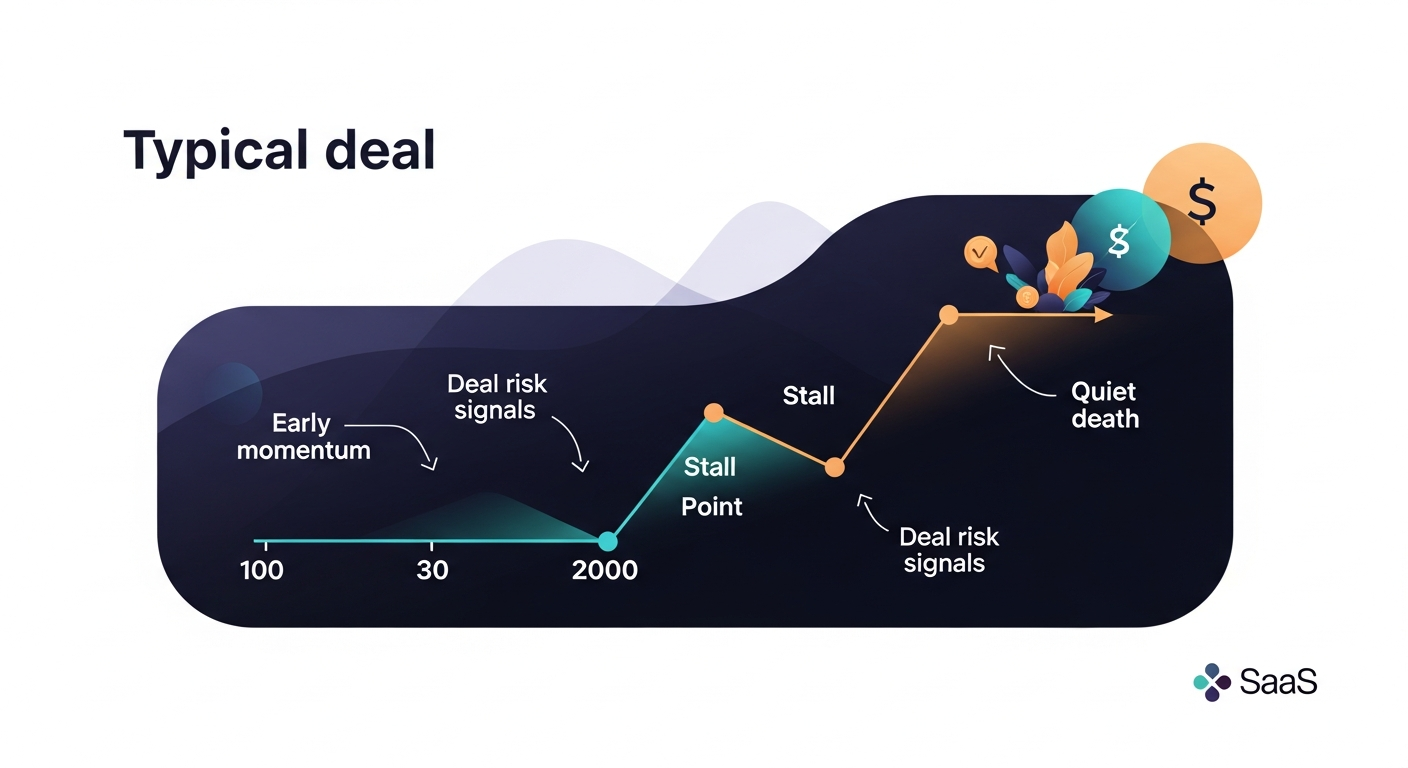 \n\n## The 7 Deal Risk Signals You're Probably Ignoring\n\nThese aren't gut feelings. Each of these maps to observable, trackable behavior.\n\n### 1. Response time is getting longer\n\nA prospect who used to reply within a few hours is now taking 3-4 days. That delta matters. Harvard Business Review found that response rate to sales outreach drops 10x after the first hour — the same principle applies in reverse. When a champion slows down, their internal energy around the deal is probably cooling too.\n\n### 2. The champion stops asking questions\n\nIn early-stage deals, engaged prospects ask questions. They want to know about integrations, pricing edge cases, timelines, references. When the questions stop, one of two things happened: they got everything they needed from a competitor, or they've quietly deprioritized the decision. Both are bad.\n\n### 3. Multi-threading collapsed\n\nYou had three contacts at the company engaged. Now only one responds — and it's not the decision-maker. This is one of the most underrated at-risk deal signals in B2B sales. Deals that stay single-threaded close at significantly lower rates. When the broader buying committee goes quiet, it means the internal champion has lost altitude.\n\n### 4. The follow-up meeting never got scheduled\n\nAt the end of a good meeting, someone books the next one. If a rep left the call without a next step — or worse, if a "tentative" calendar invite was never confirmed — that deal is already at risk. The absence of a booked next step is one of the strongest predictors of deal stall, according to Chorus (now ZoomInfo) conversation data analysis.\n\n### 5. Objections shifted from tactical to strategic\n\nEarly objections are about price, features, timeline — solvable things. Late-stage deals that shift to \"we're reconsidering our approach\" or \"we need to revisit our priorities\" aren't really objections anymore. They're exits dressed up as conversations. That language shift is a critical deal risk signal.\n\n### 6. Post-meeting engagement dropped off\n\nIf you sent a follow-up email and the prospect didn't open it, click it, forward it, or reference it in any subsequent communication — the follow-up didn't land. This is a data problem as much as a behavior problem. Most reps send one email after a meeting and call it done. Industry benchmarks from Yesware and Salesloft consistently show that 80% of sales require 5+ follow-up touches — but the average rep sends 1.3 after a meeting.\n\n### 7. The transcript tells a different story than the rep's CRM note\n\nThis one's subtle but important. When a rep logs \"great meeting, moving forward\" but the actual transcript of the call includes phrases like \"we'd need to check with our board,\" \"we're not sure about timing,\" or \"let me think about it\" — those are red flags that weren't captured anywhere. The transcript is the ground truth. The CRM note is the rep's optimistic interpretation.\n\n
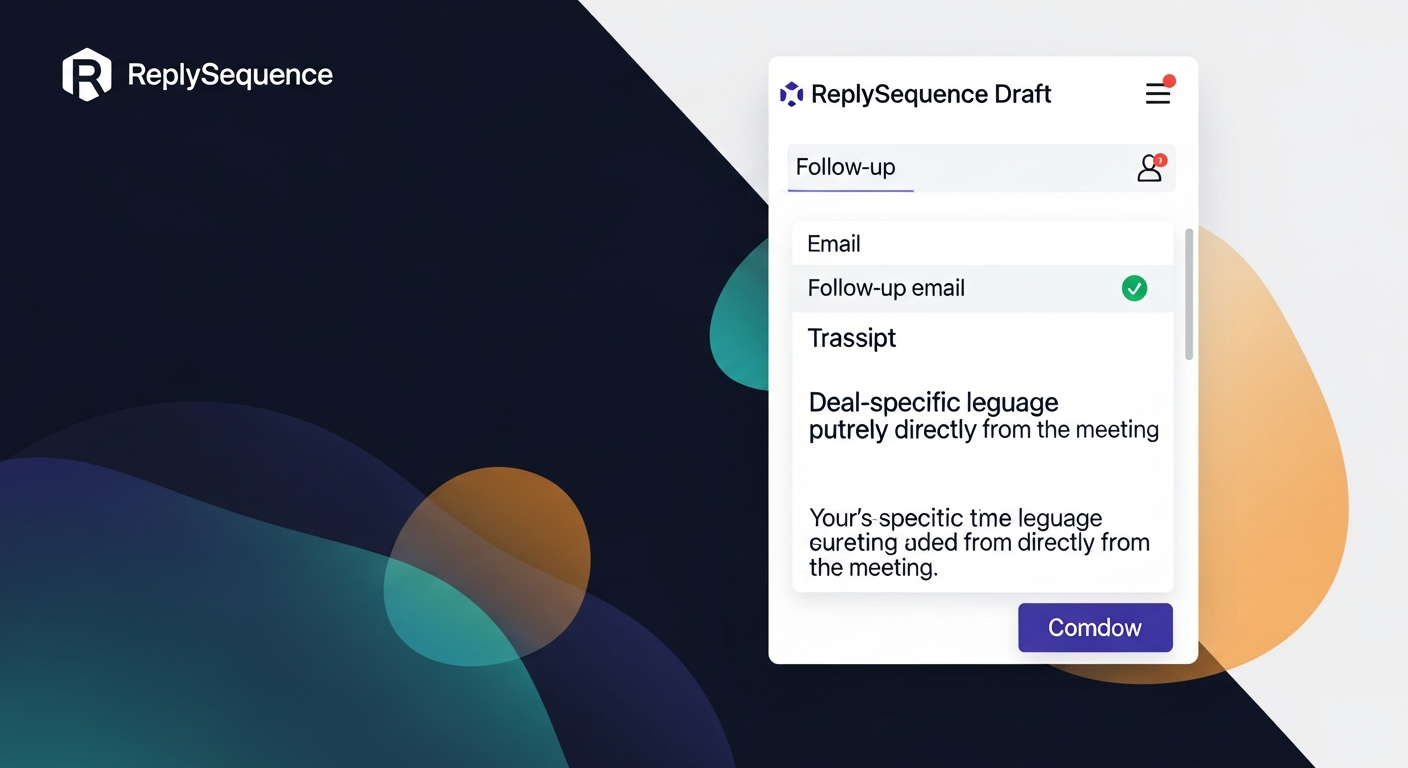
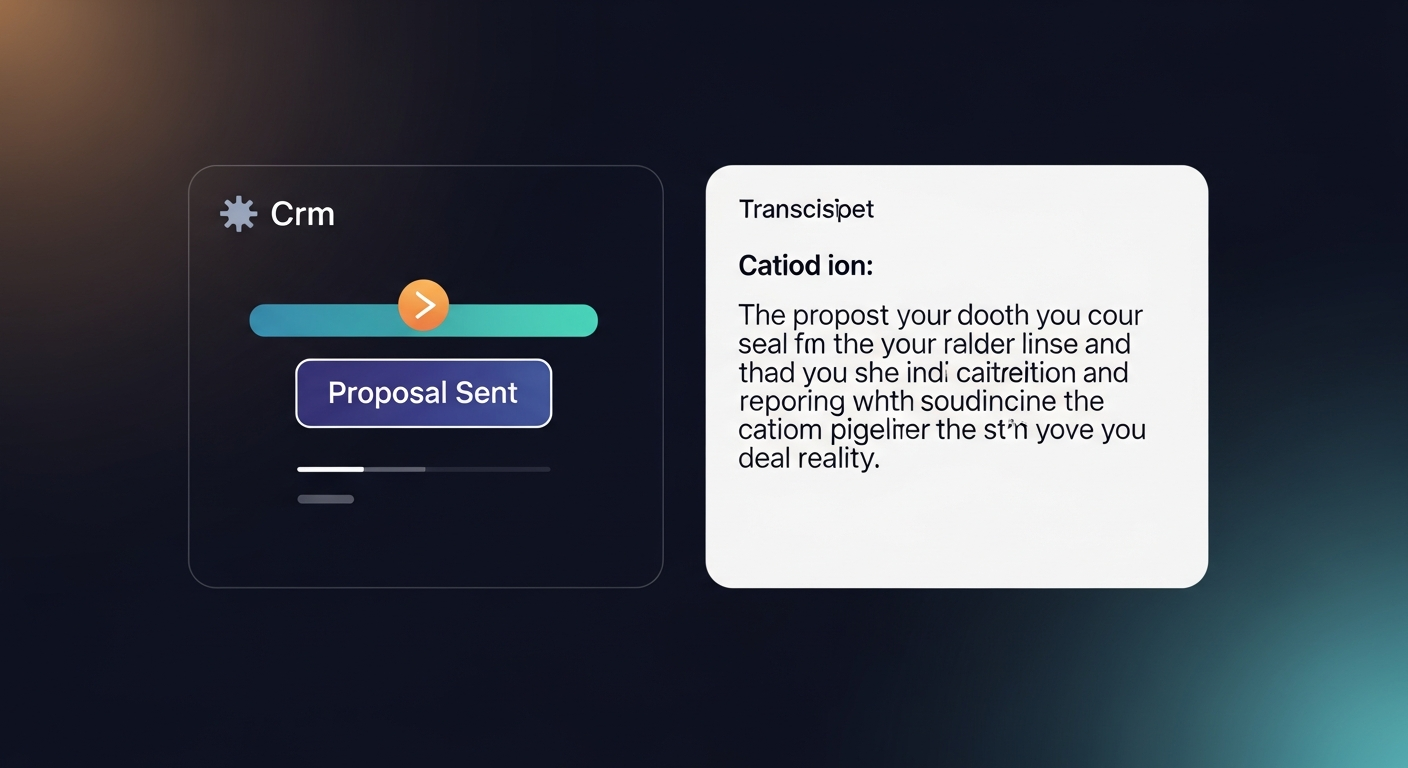 \n\nReplySequence does this automatically — paste any transcript, get a branded follow-up sequence back in 60 seconds.\n\n## How to Build a Deal Risk Detection System That Actually Works\n\nMost CRMs have a \"deal health\" score somewhere. Most reps ignore it because it's based on activity metrics (calls logged, emails sent) rather than signal quality. Here's a more practical framework for deal risk detection in sales:\n\n### Step 1: Audit your last 10 lost deals for the moment they actually stalled\n\nNot when they closed-lost in your CRM. When the energy actually shifted. Pull the transcripts if you have them. Look for the last meeting where follow-up was agreed on but never happened, or where language got vague. That's your reference point.\n\n### Step 2: Define 3-4 company-specific risk triggers\n\nEvery sales motion has its own version of the stall. For a SaaS AE, it might be \"no next meeting booked within 5 days of a demo.\" For a recruiter, it might be \"hiring manager hasn't responded to candidate summary in 72 hours.\" For a solo founder doing their own sales, it might be \"follow-up email sent but never opened.\" Pick the triggers that are specific to your deal cycle — not generic best-practice advice.\n\n### Step 3: Make the follow-up faster and better\n\nHere's the part most deal risk frameworks skip: the intervention. Detecting risk is only useful if you can act on it fast enough to matter. The single highest-leverage action after a stalled or slipping meeting is a sharp, personalized follow-up that re-anchors the value, re-states the next step, and makes it easy for the prospect to re-engage.\n\nMost reps don't send that email because it takes 25-30 minutes to write something good. So they send a weak \"just checking in\" instead — which confirms to the prospect that nothing important is happening.\n\nThe follow-up is the intervention. It's not a nice-to-have.\n\n### Step 4: Use transcript data to catch what the rep missed\n\nIf you're using a recorder like Fireflies, Otter, Fathom, or Granola, you have a goldmine of signal in every transcript. The buyer's exact words are in there. The unanswered objections are in there. The vague commitments that never got pinned down are in there. Running that transcript through a structured follow-up workflow — one that actually references what was said, not a generic template — is how you close the loop between what happened in the meeting and what happens next.\n\nI built ReplySequence specifically because this gap was obvious: every tool records the meeting, none of them handle the follow-up. Paste any transcript from any recorder, and RS turns it into a sent follow-up sequence in 60 seconds. The draft sounds like you, not like a generic AI email, because the voice-fingerprint learns from your edits over time.\n\n
 \n\n## The At-Risk Deal Checklist\n\nBefore you mark a deal as active, run it against this list:\n\n- Next meeting booked? If no, risk flag.\n- Champion still responsive within 24-48 hours? If slowing, risk flag.\n- Multiple stakeholders still engaged? If single-threaded, risk flag.\n- Follow-up email sent within 24 hours of the meeting? If no, risk flag.\n- Transcript reviewed for vague commitments or objections? If no, you're flying blind.\n- Prospect has asked a question in the last 7 days? If no, risk flag.\n\nSix checkboxes. If three or more are flagged, the deal needs active intervention — not a \"just checking in\" email, but a real re-engagement with new value or a direct ask.\n\n## Deal Risk Detection Is a System, Not a Feeling\n\nThe best sales reps I've watched (and studied) aren't more optimistic than everyone else — they're more honest about deal signals earlier. They don't wait for the prospect to say no. They read the behavior, they act fast, and they treat every follow-up as a chance to either accelerate or get a real answer.\n\nDeal risk detection in sales is the discipline of reading those signals before the deal bleeds out. The transcript is your best evidence. The follow-up is your best intervention.\n\nDon't let another deal die in the middle because the meeting went great and nothing happened after.\n\n—-\n\nStart catching deal risk before it's too late — try ReplySequence free at replysequence.com. 10 drafts/month, no credit card required. Paste any transcript from any recorder and get a branded follow-up sequence back in 60 seconds.\n\nGet the weekly ReplySequence newsletter for more post-meeting follow-up tactics — subscribe at replysequence.com/newsletter.",
"date": "2026-04-18",
"author": "Jimmy Hackett",
"tags": ["deal risk detection sales", "deal risk signals", "at-risk deal", "churn prediction sales", "sales follow-up"],
"readingTime": 7,
"faqs": [
{
"question": "What are the most common deal risk signals in B2B sales?",
"answer": "The most common deal risk signals include slowing prospect response times, a champion who stops asking questions, collapsed multi-threading (only one stakeholder still responding), no next meeting booked after a call, and post-meeting follow-up emails that go unopened or unreferenced."
},
{
"question": "How do you detect when a deal is at risk before it goes dark?",
"answer": "Audit your last 10 lost deals to find when the energy actually shifted — not when it closed-lost in your CRM. Then define 3-4 company-specific risk triggers (e.g., no next meeting booked within 5 days of a demo) and review meeting transcripts for vague buyer language that didn't make it into the CRM note."
},
{
"question": "Why do most deals die silently instead of with a clear rejection?",
"answer": "Research from Gartner shows B2B buyers are 57% through the purchase decision before engaging a sales rep, meaning the internal conversation has often moved on before the rep realizes the deal stalled. There's no dramatic rejection — just slower responses, fewer questions, and eventually silence."
},
{
"question": "What should a rep do when they spot an at-risk deal?",
"answer": "The highest-leverage action is a sharp, personalized follow-up that re-anchors value, re-states the next step, and makes it easy for the prospect to re-engage. A generic 'just checking in' email confirms nothing important is happening — the follow-up is the intervention."
},
{
"question": "How does reviewing meeting transcripts help with deal risk detection?",
"answer": "Transcripts capture the buyer's exact words — including vague commitments, unanswered objections, and cautious language that reps often log optimistically in the CRM. The transcript is the ground truth; the CRM note is the rep's interpretation. Reviewing transcripts closes the gap between what happened and what needs to happen next."
}
],
"jsonLd": "{\"@context\":\"https://schema.org\",\"@type\":\"FAQPage\",\"mainEntity\":[{\"@type\":\"Question\",\"name\":\"What are the most common deal risk signals in B2B sales?\",\"acceptedAnswer\":{\"@type\":\"Answer\",\"text\":\"The most common deal risk signals include slowing prospect response times, a champion who stops asking questions, collapsed multi-threading (only one stakeholder still responding), no next meeting booked after a call, and post-meeting follow-up emails that go unopened or unreferenced.\"}},{\"@type\":\"Question\",\"name\":\"How do you detect when a deal is at risk before it goes dark?\",\"acceptedAnswer\":{\"@type\":\"Answer\",\"text\":\"Audit your last 10 lost deals to find when the energy actually shifted — not when it closed-lost in your CRM. Then define 3-4 company-specific risk triggers (e.g., no next meeting booked within 5 days of a demo) and review meeting transcripts for vague buyer language that didn't make it into the CRM note.\"}},{\"@type\":\"Question\",\"name\":\"Why do most deals die silently instead of with a clear rejection?\",\"acceptedAnswer\":{\"@type\":\"Answer\",\"text\":\"Research from Gartner shows B2B buyers are 57% through the purchase decision before engaging a sales rep, meaning the internal conversation has often moved on before the rep realizes the deal stalled. There's no dramatic rejection — just slower responses, fewer questions, and eventually silence.\"}},{\"@type\":\"Question\",\"name\":\"What should a rep do when they spot an at-risk deal?\",\"acceptedAnswer\":{\"@type\":\"Answer\",\"text\":\"The highest-leverage action is a sharp, personalized follow-up that re-anchors value, re-states the next step, and makes it easy for the prospect to re-engage. A generic 'just checking in' email confirms nothing important is happening — the follow-up is the intervention.\"}},{\"@type\":\"Question\",\"name\":\"How does reviewing meeting transcripts help with deal risk detection?\",\"acceptedAnswer\":{\"@type\":\"Answer\",\"text\":\"Transcripts capture the buyer's exact words — including vague commitments, unanswered objections, and cautious language that reps often log optimistically in the CRM. The transcript is the ground truth; the CRM note is the rep's interpretation. Reviewing transcripts closes the gap between what happened and what needs to happen next.\"}}]}"
}
```
How ReplySequence handles this
ReplySequence takes any meeting transcript — paste it in from Zoom, Teams, Meet, WebEx, Fireflies, Granola, or wherever — and drafts a context-rich follow-up email in about 8 seconds. You review it, make any edits, and approve. Deal intelligence builds automatically.