 ReplySequence






Why Deals Die After a Great Meeting (And How to Stop It)
```json
{
"title": "Why Deals Die After a Great Meeting (And How to Stop It)",
"slug": "why-deals-die-after-a-great-meeting-and-how-to-stop-it",
"excerpt": "Deals die after good meetings more often than most reps realize. Here's why deal momentum collapses post-call — and the fix that takes 60 seconds.",
"content": "Deals die after good meetings all the time. The call ends, the prospect is nodding, someone says "let's loop in legal" — and then nothing. No reply. Deal goes cold. It's one of the most common and least-talked-about failure modes in B2B sales.\n\nThe meeting wasn't the problem. What happened after it was.\n\n## The Gap Nobody Talks About\n\nThere's a well-documented phenomenon in sales research called the \"post-meeting drop.\" A study by Gong found that deals are most likely to die in the 24-48 hours following a positive discovery or demo call — not during objection handling, not at pricing, but right after the moment that felt like a win.\n\nWhy? Because that window is where deal momentum either gets locked in or quietly evaporates.\n\nThe prospect walks out of the meeting genuinely interested. But they also walk back into their day — Slack pinging, other vendors following up, a fire drill from their VP. Your deal wasn't urgent before the meeting. It isn't automatically urgent after it either. You have a narrow window to make it feel real, specific, and worth their attention.\n\nMost reps don't capitalize on that window. Not because they're lazy. Because they're buried.\n\n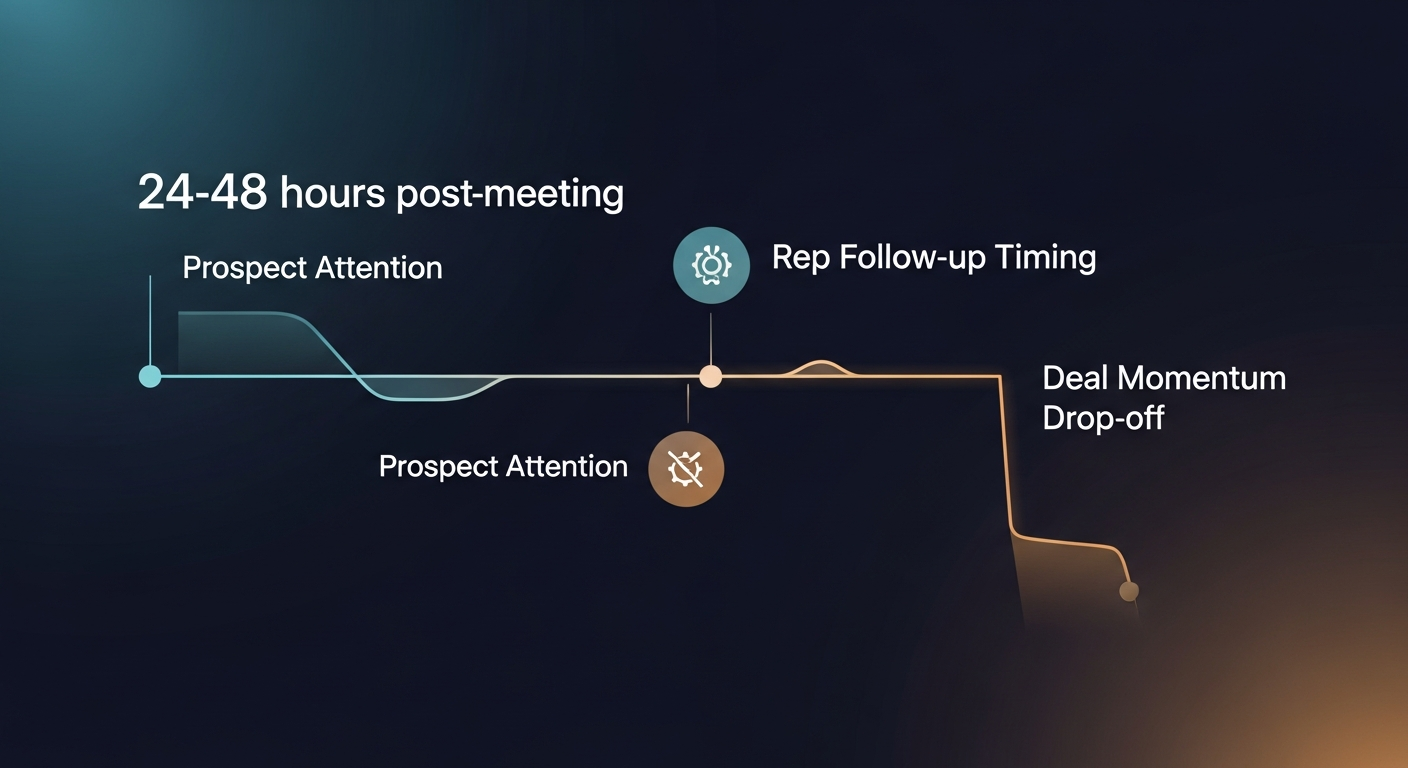 \n\n## What Actually Kills Deal Momentum\n\nLet's be specific. Here's what researchers and sales analysts consistently point to as the causes of post-meeting deal loss:\n\n1. The follow-up email arrives too late — or not at all.\n\nInsideSales (now XANT) research found that 35-50% of deals go to the vendor that responds first. That stat is usually applied to inbound leads, but the same logic applies post-meeting. The prospect's attention is highest immediately after the call. A follow-up that lands 24 hours later is competing with a different version of their priorities.\n\nThe average rep takes 2-3 hours to send a post-meeting email — if they send one at all. A significant chunk never do. Not because they forgot the meeting mattered. Because writing a good follow-up from scratch is genuinely hard when you just ran three calls back-to-back.\n\n2. The follow-up email is too generic.\n\n"Great speaking with you today. As discussed, here are the next steps..." — this is the email equivalent of a handshake from someone who already forgot your name. It doesn't reflect what was actually said. It doesn't show the prospect that you were listening.\n\nGeneric follow-ups don't kill deals outright. They just quietly deflate them. The prospect reads it, feels nothing, and moves on.\n\n3. Action items and next steps get lost in translation.\n\nThe meeting had specifics. The prospect mentioned their Q3 deadline. They flagged a concern about their current vendor. Someone said they'd introduce you to the IT lead. None of that is in the follow-up email because the rep either didn't take good notes or ran out of time to incorporate them.\n\nWhen the prospect reads an email that doesn't reflect their actual conversation, the subtext is: this vendor isn't paying attention. That's a trust problem. Trust problems kill deals.\n\n4. No clear single next step.\n\nVague follow-ups produce vague responses. "Let me know if you have any questions" is not a next step. It's an invitation to go silent. Research from HubSpot found that follow-up emails with a single, specific CTA get significantly higher reply rates than those with multiple asks or open-ended language.\n\n
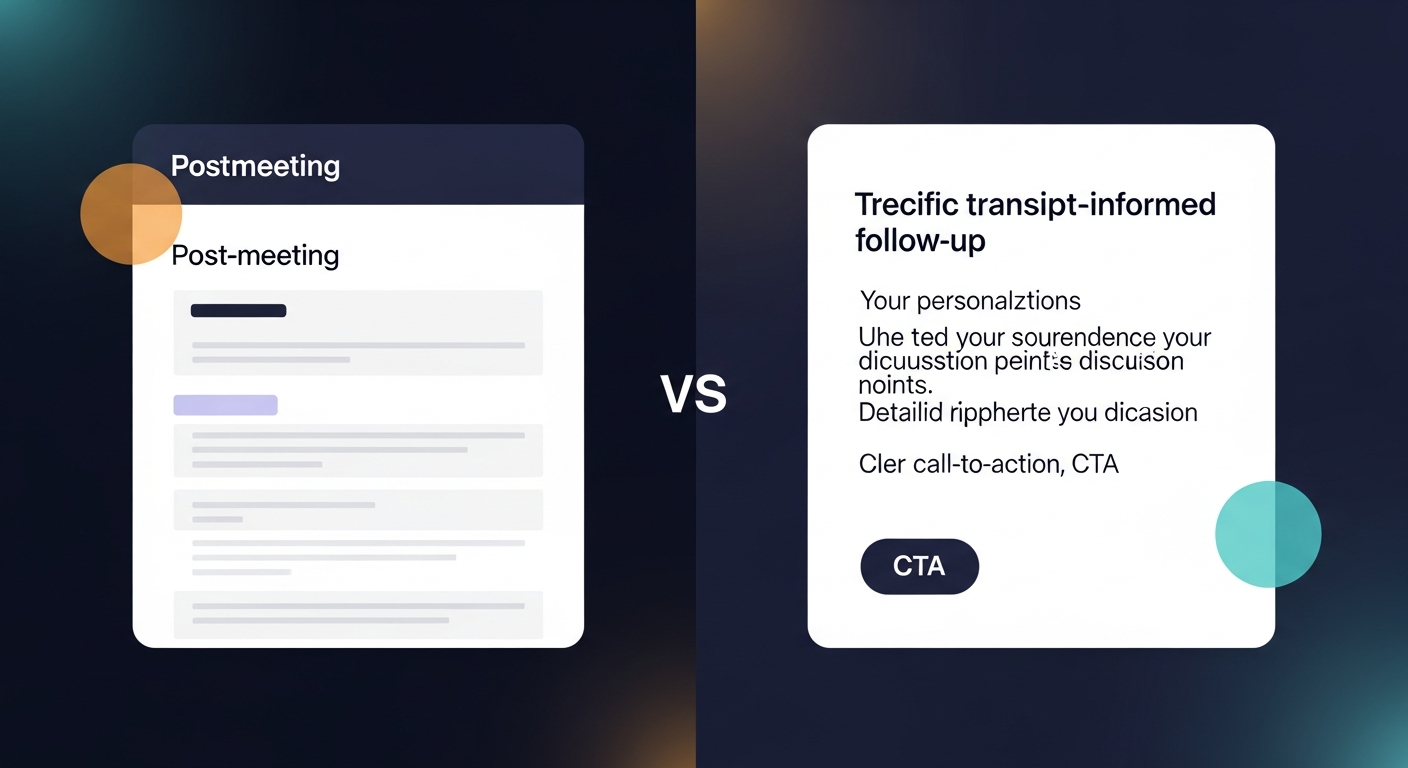 \n\n## The Pattern Behind Post-Meeting Deal Loss\n\nHere's what I've found consistently when talking to AEs and SDR managers: the reps who close more deals aren't necessarily better on the call. They're better in the 30 minutes after it.\n\nThey send faster. They're more specific. They include exactly what was discussed, who owns what, and what happens next.\n\nThat's not a natural talent. That's a system.\n\nThe reps who lose deals after good meetings usually share one trait: they're trying to reconstruct the conversation from memory while also managing their next task. Memory is unreliable. The follow-up reflects that.\n\nThe fix isn't "be more disciplined." The fix is removing the reconstruction step entirely.\n\nThis is the problem I built ReplySequence to solve. You paste your transcript from Fireflies, Otter, Granola — wherever you're already getting it — and it generates a ready-to-send follow-up email in under 60 seconds. Transcript in, follow-up out. You review it, tweak if needed, send. The email reflects the actual conversation because it was built from the actual conversation.\n\nI'm not trying to replace your recorder. Fireflies transcribes. ReplySequence follows up. That last mile — from transcript to sent email — is where most deals quietly die.\n\n## What a Good Post-Meeting Email Actually Does\n\nThis is worth spelling out because "good follow-up" gets said a lot without specifics.\n\nA good post-meeting follow-up does four things:\n\n- Confirms what was heard. Shows the prospect you were actually listening. References specifics from their situation — their timeline, their objections, their goals.\n- Restates the value in their language. Not your pitch. What they said they needed and how what you're offering connects to it.\n- Assigns clear ownership. Who's doing what. By when. No ambiguity.\n- Proposes one specific next step. Not "circle back next week." A day, a time, a purpose.\n\nWhen a follow-up does all four, it keeps the deal on rails. The prospect doesn't have to do any work to remember why they cared. You've done it for them.\n\n## Three Scenarios Where This Actually Plays Out\n\nScenario 1: The warm discovery call that went quiet.\nAn AE at a 40-person SaaS company runs a 45-minute discovery call. Great conversation. Prospect shares their exact pain points, mentions a competitor they're unhappy with, says they want to move before end of quarter. The AE sends a follow-up two days later that says "great to connect — attached is our one-pager." Prospect doesn't reply. Deal marked cold in 3 weeks.\n\nThe one-pager email addressed none of what the prospect actually shared. It signaled that the AE was going through the motions.\n\nScenario 2: The multi-stakeholder demo.\nFive people on the prospect side. Everyone's nodding. Three different people asked specific questions that need answers. The rep gets off the call, has a 1:1 in 20 minutes, and fires off a quick "thanks for joining" email. The IT lead who asked about SSO integration never gets an answer. That becomes a blocker three weeks later when legal is already involved.\n\nOne missed follow-up detail. Real consequence.\n\nScenario 3: The SDR who books but doesn't follow up.\nSDR runs a 15-minute discovery call, qualifies the lead, books a demo with the AE. Sends a calendar invite. No recap, no confirmation of what was discussed, no warm handoff email. The prospect shows up to the demo having mentally reset. The AE starts from scratch. The meeting went great — then nothing happened.\n\n
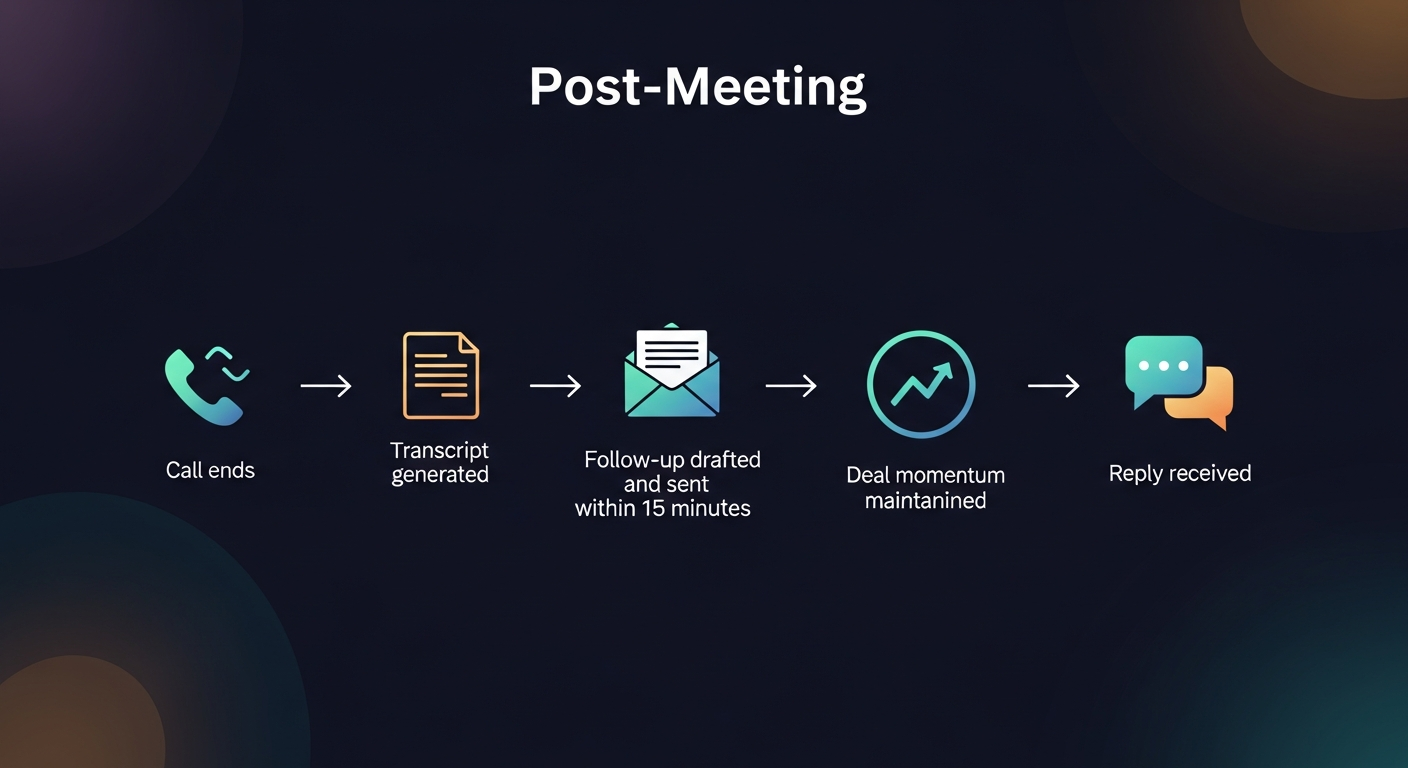 \n\n## How to Stop Losing Deals After Good Meetings\n\nPractically speaking, here's what works:\n\n1. Use your transcript, not your memory. If you're already using Fireflies, Otter, or Granola — you have everything you need. The transcript is the raw material. Use it.\n\n2. Send within 30 minutes. Not tomorrow. Not end of day. Before your next call. The prospect's attention window is short.\n\n3. Start with what they said, not what you sell. Mirror their language. Reference their specific situation. Show you heard them.\n\n4. One next step. That's it. "Would Tuesday at 2pm work to get your IT lead on a 20-minute call?" is a next step. "Let me know if you have questions" is not.\n\n5. Review before you send. Always. Auto-send is a trust problem waiting to happen. The draft should be fast. The review should be yours.\n\nThat last point is non-negotiable for me. ReplySequence drafts — always. You send. Because a bad automated email does more damage than a slightly delayed good one.\n\n## The Bottom Line\n\nDeals die after good meetings because the gap between "that went well" and "I got the follow-up out" is bigger than most people admit. The meeting built the momentum. The follow-up either locks it in or lets it drain away.\n\nThis isn't a discipline problem. It's a systems problem. And the solution is faster than most reps think.\n\nIf you're already recording and transcribing your calls, you're one step away from fixing this. Take a look at replysequence.com — paste a transcript, see what comes out. It takes less time than the follow-up email you were going to write anyway.",
"date": "2026-04-14",
"author": "Jimmy Hackett",
"tags": ["deal momentum", "post-meeting follow-up", "sales productivity", "lost deals", "follow-up email"],
"readingTime": 7,
"faqs": [
{
"question": "Why do deals die after a good meeting?",
"answer": "Deals most commonly die in the 24-48 hours after a positive call because follow-up emails arrive too late, are too generic, or fail to reflect what was actually discussed. The prospect's attention is highest right after the meeting — and most reps miss that window."
},
{
"question": "How quickly should you send a follow-up email after a sales meeting?",
"answer": "Within 30 minutes of the call ending. Research consistently shows that deal momentum drops sharply after the first few hours post-meeting, and follow-ups sent same-day significantly outperform those sent 24+ hours later."
},
{
"question": "What should a good post-meeting follow-up email include?",
"answer": "A strong post-meeting follow-up should confirm what you heard in the prospect's own words, restate the value in their terms, assign clear ownership of next steps, and propose one specific next action — not an open-ended ask."
},
{
"question": "What causes post-meeting deal loss in B2B sales?",
"answer": "The four most common causes are slow follow-up timing, generic emails that don't reflect the actual conversation, missing action items or next steps, and vague CTAs that invite silence instead of a reply."
},
{
"question": "How can sales reps maintain deal momentum after a discovery call?",
"answer": "Use your transcript — not memory — to write the follow-up. Reference specific things the prospect said, assign clear next steps, and send within 30 minutes of the call. The faster and more specific the follow-up, the more likely the deal stays alive."
}
]
}
```
How ReplySequence handles this
ReplySequence takes any meeting transcript — paste it in from Zoom, Teams, Meet, WebEx, Fireflies, Granola, or wherever — and drafts a context-rich follow-up email in about 8 seconds. You review it, make any edits, and approve. Deal intelligence builds automatically.